

Chased by a Shadow Dream Meaning: The Unnamed Fear Behind You
Why a shadow chases you in dreams: fear without a name, Jung's shadow concept, the sleep paralysis link, and spiritual readings, explained calmly and clearly.
 Featured
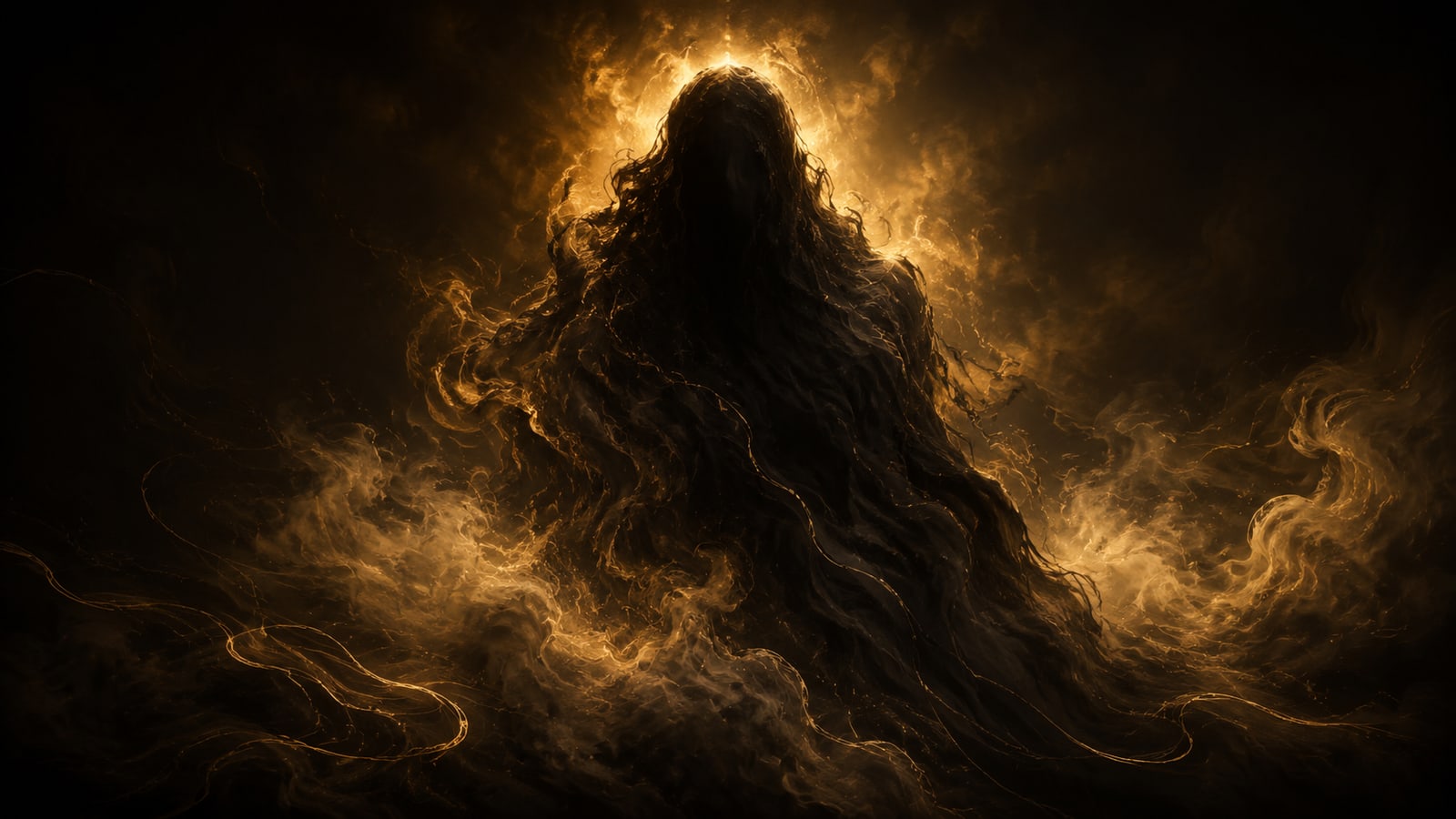
A shadow chasing you in a dream usually points to fear that has not yet found a name. The dark figure gives a threatening feeling a shape when its source is not clear, which is why the pursuer has no face, no features, and no identity you can pin down. It is not evidence of a spirit, an entity, or a hidden enemy. And if the figure shows up while you are half awake and briefly unable to move, there is a well-known sleep experience worth ruling in or out before any symbolism at all: sleep paralysis.
Key Takeaways
Fear without a face
A shadow pursuer often stands for a worry whose source is not yet clear, so the mind gives it an unclear form.
Not an entity
A dream cannot establish that a spirit, demon, or enemy is real. The figure is an image, not a visitor.
Jung's lens
The "shadow self" reading comes from Carl Jung's psychology. It is an interpretive framework, not a diagnosis.
The sleep paralysis check
A dark figure plus brief immobility at the edge of sleep points to sleep paralysis, a known and harmless state.
Facing it counts
Turning toward the shadow, or seeing light scatter it, often mirrors courage and regained agency.
01The most common meaning
The scene tends to run the same way. Something dark is behind you. You cannot see a face, and you may not be able to describe it at all beyond a shape, a mass, or a darkness that moves. You run anyway, because whatever it is, every part of you agrees it should not catch you. People wake from this dream unsettled in a particular way, because a pursuer they could name would almost be easier. A stranger, a dog, an old boss: those give the mind something to work with. A shadow gives it nothing.

That nothing is the point. The most grounded reading is that the shadow is fear that has not yet been named. Something in waking life feels threatening, but its meaning or its source is not yet clear to you, so the dream supplies a pursuer with the same properties: present, pressing, and undefined. A vague money worry, a tension you have not admitted to yourself, a change you sense coming but cannot describe. When the worry has no clear shape, the pursuer often has no face.
This dream sits inside a much larger family. Chase dreams are one of the most familiar dream patterns there is, and most of what is true of them generally is true here: the urge to escape usually matters more than the identity of the pursuer, and the dream tends to track avoidance, of a feeling, a decision, or a situation, rather than predicting any real pursuit. The full pattern is covered in our guide to being chased in a dream, and the shadow version is that pattern with the pursuer's identity dialed all the way down. What is left when you remove the face is the purest form of the chase: fear itself, with nothing specific to attach to.
One reassurance belongs up front. A shadow chasing you is a frightening image, and frightening images invite frightening explanations. But a dream figure, however dark, is not evidence of a presence, a warning, or an enemy working against you. It is your own mind doing what minds do with unprocessed unease: giving it a form so the story can run.
02The psychology of a faceless pursuer
If any single name owns this territory, it is Carl Jung. Jung used the word shadow for the parts of ourselves we push out of view: the traits, impulses, and feelings we would rather not own, which do not disappear just because we stop looking at them. In his framework, those disowned parts tend to show up in dreams as dark, threatening, or unknown figures, and a pursuer you flee but never face is almost a textbook illustration. Under a Jungian reading, the shadow chasing you is not an outside force at all. It is something of yours, asking to be acknowledged, and it chases precisely because you keep running.
It is worth being honest about what kind of idea this is. Jung's shadow is an interpretive lens from depth psychology, not a laboratory finding. No one can verify that a specific dark figure in your dream is a disowned part of your personality, and modern dream research does not work in those terms. What the lens offers is a useful question rather than a proven answer: is there something you are avoiding looking at, in yourself or in your life, that keeps finding its way back? Plenty of people find that question lands. That is a reason to sit with it, not a reason to treat it as fact.
There is also a plainer psychological reading that needs no theory at all. Dreams routinely give feelings a form, and an ambiguous feeling tends to get an ambiguous form. When anxiety is specific, dreams can cast specific threats; when the mind casts a distinct human attacker instead, that is its own variant, covered in our guide to being chased by a killer. When anxiety is diffuse, a faceless darkness fits better than any particular monster could. On this reading, the shadow is not hiding its identity from you. It has no identity, because the worry it carries has not resolved into one yet.
Either way, the practical move is the same. Rather than asking what the shadow is, ask what in your waking life currently feels threatening but unclear. The dream cannot answer that for you, and it does not prove anything about your circumstances. It can only show you where the sense of something behind you is strongest right now.
03How the scene changes the meaning
The details around the shadow shift the likely reading. Where it appears, what it does, and how the chase ends all matter more than the darkness itself. Use this grid as a prompt, not a verdict.
Hover or tap a row to highlight it.
| Scene | What it often reflects | Emotional read |
|---|---|---|
| A faceless shadow follows you | Uncertainty; a worry with no clear source yet | Unease more than outright terror |
| A dark figure in your bedroom | Fear at the edge of sleep and waking | Dread, a sense of being watched |
| The shadow comes with being unable to move | Possible sleep paralysis at the sleep-wake boundary | Panic that fades once fully awake |
| Light drives the shadow away | Regained agency; fear losing its grip | Relief, control returning |
| The shadow catches you | Finally confronting the fear instead of outrunning it | Intensity, sometimes an odd calm |
| Many shadows at once | Overload; several pressures arriving together | Feeling surrounded or outnumbered |
| The shadow speaks in a familiar voice | An association with that relationship, not proof about the person | Confusion, mixed feelings |
Two rows deserve a flag. A dark figure in your actual bedroom, especially one you see while feeling awake, is the scene most likely to involve the sleep-wake boundary rather than ordinary dreaming, and the spiritual section below takes it up directly. And a shadow that speaks with a familiar voice can be disturbing in its own way, but it works like the rest of the dream: it reflects an association your mind holds around that relationship. It is not evidence about the real person, and it is not a message from them.
04Spiritual readings of a shadow chase
Everything in this section is belief and tradition, offered as such. These frameworks give people language for darkness in dreams; none of them can establish what a dream figure actually is.
In the Bible, darkness appears as an image long before anyone theorized about dreams. Psalm 23 speaks of walking through the valley of deep darkness without fear, because the psalmist is not walking it alone. Ephesians 6 uses darkness as a metaphor in describing spiritual struggle. Job 4 recounts a frightening night vision, a form passing before a man's face in the night, dread included. What is worth noticing is what these passages do not do: none of them says that a dark figure in a dream is an entity, or gives a method for reading one. They offer language for the experience of darkness and a posture toward fear, not a diagnosis of your dream.
That matters because a lot of what ranks for this search is scarier than the sources it leans on. Some teaching circles call a shadow pursuer a monitoring spirit or a satanic attack, and if you arrived here already frightened by that framing, it deserves a kind and direct answer: a dream cannot establish any of it. Labeling a dream figure an attacking spirit adds fear without adding evidence, and the fear is usually the whole cost. Within the Bible's own imagery, the recurring counsel around darkness is not panic but the absence of it. If your faith matters to you here, praying about a disturbing dream and letting it go sits comfortably inside that tradition; treating the dream as proof of an assault does not have the scriptural support the scary framing implies.
Islamic tradition has its own long relationship with dreams. Surah Yusuf, the twelfth chapter of the Qur'an, centers on dreams taken seriously and interpreted with care, so the tradition treats dreaming as meaningful territory. Later dream-interpretation literature sometimes associates a dark or unknown pursuer with fear or an enemy, but that is the voice of later interpreters, not a rule from the Qur'an itself. The guidance attributed to the Prophet in Sahih Muslim 2262 is strikingly practical: on waking from a disturbing dream, seek refuge in God, and do not go around retelling it. As advice for a shadow nightmare, that is hard to improve on. Take it seriously enough to settle yourself, and do not feed it.
Other traditions reach for their own figures. Greek myth places Hades over the unseen world below, the realm of what cannot be looked at directly. Japanese folklore has the yurei, pale ghost figures bound to the living world. In Hindu tradition, the goddess Kali confronts destructive darkness rather than fleeing it, though she is a theological figure, not a dream omen. Modern spiritual writing, borrowing loosely from Jung, often calls the pursuer your shadow self and frames the chase as an invitation to integration. Each of these is a framework a believer may find meaningful. None is a finding about what chased you last night.
One adjacent experience needs naming, because it sits behind many of the scariest stories. People who experience sleep paralysis sometimes report a dark human-like figure, often called a shadow man, in the room with them: they are at the boundary between sleep and waking, briefly unable to move, and they feel a presence they can almost see. This is a recognized sleep experience, not a visitation, and the felt presence is the half-awake brain filling a strange state with a story, the same way it fills a dream. If your shadow appears in your real bedroom while you are frozen and aware, that points to sleep paralysis rather than symbolism or spirits. It is harmless, though genuinely frightening, and it deserves the boring explanation first.
05Key scenarios and variants
A few versions of the shadow chase come up often enough to walk through on their own, and several connect to experiences that have their own full guides.
When the shadow catches you, the dream has done the thing you spent the whole chase preventing, and many people are surprised by what follows: sometimes fear, sometimes nothing, occasionally an odd stillness. Being caught tends to read as contact with the fear itself, the moment of confronting what you were outrunning, and it is often less catastrophic inside the dream than the chase implied it would be. That whole endgame, and what it tends to mean, is covered in our guide to being caught while chased.
When you hide from the shadow instead of running, the dream shifts from flight to concealment, holding still and hoping the darkness passes. That variant leans harder on avoidance, and it has its own logic, unpacked in our guide to hiding in a dream.
When your body fails during the chase, the shadow is only half the story. Legs that turn to lead have a well-documented physical explanation rooted in how REM sleep works, which our guide to not being able to run in a dream walks through, and a scream that makes no sound is the vocal version of the same thing, covered in the guide to not being able to scream in a dream. A shadow chase with frozen legs is frightening arithmetic, but each half has an ordinary explanation.
When light defeats the shadow, take the win. A dream where the darkness scatters at a lamp, a doorway, or daybreak often mirrors regained agency, fear losing its grip as something becomes clearer or more manageable. And when there are many shadows rather than one, the multiplication usually tracks quantity in waking life too: several pressures arriving at once rather than one large unnamed thing.
06Common questions about shadow chase dreams
Is the shadow chasing me a demon or evil spirit?
A dream cannot establish that. The shadow is an image your mind produced during sleep, and no feature of a dream, however dark or vivid, can prove an external entity was involved. The more grounded reading is that the figure gives an unclear fear an unclear form. If the demonic framing is the part that scares you most, it is worth knowing that the scriptural passages usually cited about darkness offer language for fear, not a method for diagnosing a dream.
Could my shadow dream actually be sleep paralysis?
Yes, if the details fit. Sleep paralysis happens at the boundary between sleep and waking: you become aware, you briefly cannot move or speak, and you may sense or see a dark presence in the room. If your shadow appears in your real bedroom while you feel awake and frozen, that is the likelier explanation. It is a recognized, harmless sleep experience. A shadow chasing you through an ordinary dream landscape, with no waking immobility, is just a dream.
Why does the shadow dream keep coming back?
Recurring nightmares tend to have ordinary drivers. Stress and disrupted sleep can both contribute, and a fear that stays unresolved in waking life gives the dream a reason to reuse the image. The repetition is not escalation and not a countdown. If the dream repeats often enough to wreck your sleep or follow you into the day, our nightmares guide covers when recurring bad dreams are worth raising with a professional.
What does the shadow actually represent?
No one can say for certain, and anyone who claims otherwise is guessing with confidence. The most likely reading: a threatening feeling whose source is not yet clear, given a form that matches its vagueness. Jung's framework would call it disowned material asking for attention, which is a lens worth trying rather than a fact. The most useful version of the question is not what the shadow is but what, in your waking life, currently feels pressing and hard to name.
What if the shadow catches me?
Being caught usually reads as contact with the fear rather than defeat by it, and many dreamers find the moment of catching stranger and quieter than the chase suggested. It is not a bad omen, and it sometimes marks the point where avoidance stops working as a strategy, in the dream and occasionally in the life around it. The full picture is in our guide to being caught while chased, linked above.
Should I be worried about these dreams?
An occasional shadow chase is a normal nightmare and nothing more. The situations worth acting on are practical ones: repeated sleep paralysis that frightens you, nightmares frequent enough to damage your sleep, or dream distress that bleeds into your days. Those are reasons to talk to a doctor or therapist, not because the shadow means anything dangerous, but because good sleep is worth protecting.
Reading your shadow chase dream
A shadow chasing you in a dream is best understood as:
A dark figure in your bedroom while you are briefly unable to move points to:
In Jung's framework, the shadow refers to:
Pick an answer to begin.
Whatever shape the darkness took, the same first steps apply: rule out the sleep-wake boundary if the figure came with frozen awareness, then ask what in your waking life feels pressing but unnamed. You can read the full symbol entry for being chased at DreamTold, or open the dream dictionary for any other image that stayed with you after waking. This is a reflection tool, not medical advice; if nightmares or sleep paralysis are disrupting your sleep or your days, please reach out to a doctor or therapist.
Dream terms
Tap a term to see what it means.
Shadow (Jungian). Carl Jung's term for the parts of the personality a person keeps out of view, which he believed appeared in dreams as dark or unknown figures.
Sleep paralysis. A brief inability to move or speak at the boundary of sleep and waking, often with a sensed dark presence; a recognized and harmless sleep experience.
Felt presence. The strong sense during sleep paralysis that someone or something is in the room, produced by a half-awake brain filling a strange state with a story.
Hypnagogic state. The borderland between waking and sleep where dreamlike images and sensations can surface while some awareness remains.
Nightmare. A disturbing dream vivid enough to wake the sleeper; occasional nightmares are normal, and frequent ones are worth raising with a professional.
07Sources
Every claim on this page that comes from somewhere else, with the somewhere else. Scripture and hadith are linked so you can read them in context rather than trusting a paraphrase.
- BibleGateway: Ephesians 6
- BibleGateway: Job 4
- BibleGateway: Psalm 23
- Sunnah.com: Sahih Muslim 2262
Related
articles.

Caught While Being Chased Dream Meaning: What Capture Reframes
What it means when the pursuer finally catches you in a chase dream: why capture often marks arrival, not defeat, and how the feeling at capture reads.
Read: Caught While Being Chased Dream Meaning
Chased by a Killer Dream Meaning: A Life-Sized Shape for Intense Fear
A killer chasing you in a dream gives a fear a human face. What the chase, the catch, and the masked stranger mean, and why it does not predict violence.
Read: Chased by a Killer Dream Meaning
Being Chased in a Dream: What It Means
Being chased in a dream usually points to something you are avoiding. Read what the pursuer, the fear, and not being able to run really mean.
Read: Being Chased in a Dream