

Dragonfly Spiritual Meaning: Traditions, Luck and Loved Ones
What a dragonfly is said to mean, tradition by tradition: Japanese luck, Navajo water purity, British wishes, the loved-one belief, and why one may land on you.
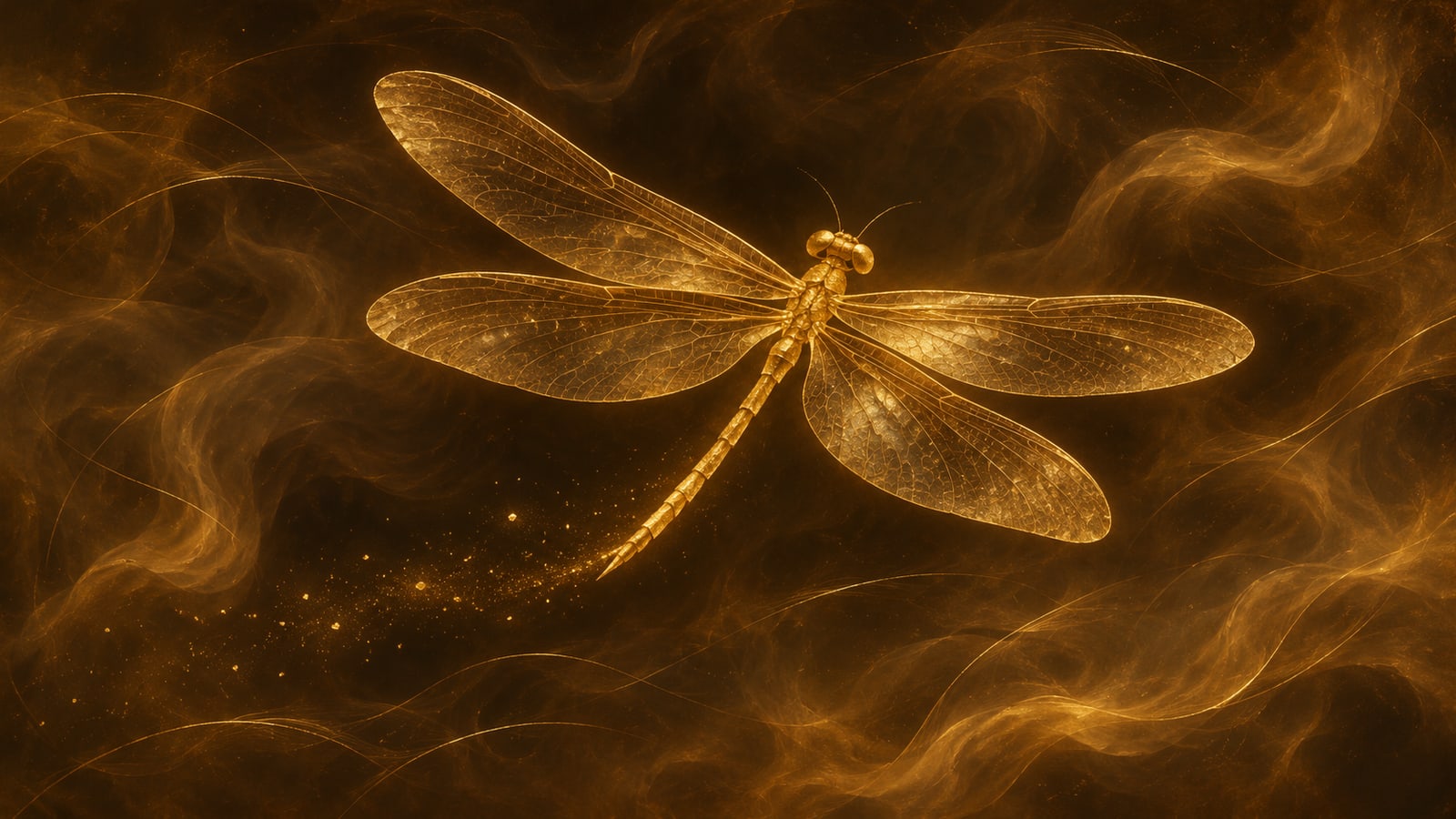 Featured
If a dragonfly caught your attention, the meaning you will find depends on whose tradition is telling it. Japanese records tie dragonflies to victory and courage, the Navajo are said to see them as a symbol of water purity, and a British folk belief says seeing one is a reason to make a wish. Each of those is a belief, held by the people who hold it.
The idea that a dragonfly can be a loved one is one that many grieving people hold, and it is a personal belief rather than a teaching of a named tradition. If you have been seeing dragonflies since someone died, nothing here asks you to set that comfort aside.
A dragonfly landing on you also has an ordinary side, and the sections below take the beliefs first, then the habits of the insect that bring it close to people.
Key Takeaways
Japanese tradition
Dragonflies are regarded as insects that bring victory, and Japanese art and samurai tradition link them with courage and determination.
Navajo attribution
The National Park Service says the Navajo have long regarded dragonflies as a symbol of water purity.
British folk belief
A 1986 note records a Cambridgeshire belief that a dragonfly is an omen of good luck, a reason to cross your fingers and wish.
A loved one's visit is a personal belief
Grieving people describe it, and it is not the documented teaching of a named tradition.
Landing has an ordinary side
Dragonflies hunt near water from perches, and a still person in the sun can be one.
Transformation is a recent favorite
It appears on many modern spiritual websites and has a basis in the dragonfly's change from underwater nymph to flying adult.
01What a dragonfly is said to mean, tradition by tradition
Japanese tradition. Hideto Hoshina's 2022 paper on insects in Japanese myth says that since ancient times the Japanese have felt an affinity for dragonflies and have regarded them as insects that bring victory.
The oldest chronicles, the Kojiki and the Nihonshoki, give two dragonfly scenes. In one, a dragonfly seizes a biting fly that had bitten Emperor Yuryaku on a hunt, and he names the field Akitsuno, "dragonfly field." In the other, Emperor Jinmu compares his mountain-ringed land to a pair of mating dragonflies, and the country comes to be called Akitsu-shima, the Dragonfly Isles. The paper treats these as cultural texts. It does not present them as evidence that a dragonfly carries a message to the person who sees one.
Navajo attribution. The U.S. National Park Service's Species Spotlight on dragonflies says Navajo culture has long regarded dragonflies as a symbol of water purity. The page notes that to the fact that many dragonfly species need good water quality to thrive. An educational table of insect myths, Insect Myths: An Interdisciplinary Approach by D. A. Prischmann, S. A. Steffan and C. M. Anelli, also lists a Navajo dragonfly story about the importance of leading a balanced life.
Zuni tradition. The same table lists a Zuni dragonfly story in which the dragonfly is an origin figure and a messenger between God and humans, tied to respect for nature. It cites a 1991 retelling by Rodanas, so it is a secondary educational summary and not a ceremonial text. It is a story about origins, not a rule for reading a sighting.
British folk belief. A 1986 note, "Notes on the folklore of dragonflies" in the Journal of the British Dragonfly Society, records that in Cambridgeshire dragonflies were considered omens of good luck, and that people who saw one were said to cross their fingers and make a wish. It also records an Isle of Wight belief that dragonflies showed good boys where the fish were settling but attacked bad boys.
Darker European and Dakota readings. The same British note records the old name "Devil's Darning Needle" and a belief that dragonflies were linked to snakes. A Yorkshire Naturalists' Union bulletin on dragonfly folklore says that among the Dakota, and in Italy, the insect was known as a witch's animal, and it lists names such as Devil's Grandmother in Germany and Devil's Riding Horse in Denmark. So the folklore is not all luck. Several regions treated the dragonfly with suspicion.
02Where the popular meanings come from
A short list turns up again and again: transformation, renewal, adaptability, spiritual awakening, a message from the universe. Those meanings fill recent spiritual websites, and they are usually repeated without a named tradition behind them. When a page says "Native American belief" or "ancient Celtic belief" about a dragonfly without naming a nation or a record, there is nothing to check it against.
Transformation does have something real underneath it. A dragonfly spends its early life as a nymph underwater and then climbs out as a winged adult. A Mexican cultural-entomology article by J. Antonio Gómez-Anaya and Rodolfo Novelo-Gutiérrez on dragonflies in art reads that change as a symbol of renewal and adaptability. The same article links Japanese dragonflies with courage, happiness and victory, and describes Maya and Aztec art that ties dragonflies to water, fertility and change. It describes symbolism in art, and it does not say that a dragonfly seen today is a personal omen.
03Is a dragonfly a loved one visiting?
Many people feel it is. Dragonflies often appear in grief stories, and the idea that one can be a loved one stopping by shows up in modern spiritual writing and in what mourners say to each other. It is a personal belief and a source of comfort. None of the traditions above teaches it, and a dragonfly cannot be shown to carry a message from someone who has died.
One account shows how the feeling forms. Ruth Wiley, writing for the Tragedy Assistance Program for Survivors in a 2021 article about dragonflies, describes reading the children's story "Water Bugs and Dragonflies" at her son Jim's funeral. At the reception afterward, she writes, the largest dragonfly she had ever seen flew back and forth in the room, circled her head twice and flew out the door. She took it as Jim telling her he was safe and loved her. She offers it as her own interpretation, and it has plainly stayed with her.
The story she read is a modern comfort story that compares a dragonfly's life cycle to the death of a loved one. Neither Christian doctrine nor a passage of scripture makes a dragonfly a sign, so the story is best read as one family's chosen symbol, in the way other families choose a song or a flower. Many families tell the same kind of story about a red bird at the window, and our page on the spiritual meaning of cardinals covers that belief.
If the sightings keep coming and the grief behind them is heavy, a counselor, a clergy member or a friend you trust can carry some of it with you. You do not need to settle what the dragonfly was before you ask.
04Why a dragonfly comes close to people
Dragonflies are tied to fresh water. According to Idaho State University's digital atlas of dragonflies, females usually lay eggs in or near aquatic plants, nymphs live underwater, and adults catch small flying insects such as mosquitoes, mayflies, flies and small moths. The National Park Service adds that dragonflies can hover and fly sideways and backward, and that mosquitoes and midges are most often their targets.
That habit explains many sightings. A dragonfly patrolling a shoreline, a garden pond or a sunny path is following its food, and it passes close to whoever is standing there. One that settles on a hat, an arm or a shoulder is using something still as a perch while it watches for prey. Nothing in how dragonflies hunt rules out a person standing in the sun serving as that perch. It is also why people notice them most at a lake, a river or on a warm day, when both people and insects are outside.
None of that cancels what a moment means to you. A beautiful, close-up encounter can matter to a person for reasons of their own, and a belief about it can sit beside the knowledge of why the insect was there.

Hover or tap a row to highlight it.
| Tradition or source | What it holds | Kind of record |
|---|---|---|
| Japanese | Insects that bring victory; courage; Akitsu-shima, the Dragonfly Isles | Ancient chronicles discussed in a 2022 paper |
| Navajo | A symbol of water purity | National Park Service attribution |
| Zuni | An origin figure and messenger between God and humans | Educational table citing a 1991 retelling |
| Cambridgeshire, England | An omen of good luck; cross your fingers and wish | 1986 note in a dragonfly society journal |
| Dakota and Europe | A witch's animal, the devil's animal, a Devil's Darning Needle | Folklore bulletin and 1986 note |
| Modern online spirituality | Transformation, renewal, messages, loved ones | Recent websites and personal accounts |
05Dragonflies in dreams
A dragonfly in a dream is a different question from one in the garden. The records above describe waking encounters and art, not dream readings, so there is no traditional text to point to for a dream. What people draw from a dream dragonfly tends to follow the same threads as the waking beliefs: change, renewal, lightness, a memory of a person or a place by water. The more reliable guide is your own: what was the dragonfly doing, how did you feel, and what was happening in your life that week?
For a wider look at how traditions treat signs in waking life and in sleep, see our guide to dream omens and warnings. If you dreamed of one, the dream dictionary is the place to look up the other images that came with it. The same question comes up for a hummingbird that hovers close and a ladybug that lands on you.
06Common questions about dragonfly meanings
What does it mean when a dragonfly lands on you?
In ordinary terms, it found a still, sunny perch while hunting near water. In belief, some people read a landing as a moment of protection, luck or a message, and that is a personal or modern spiritual reading. The Cambridgeshire belief ties seeing a dragonfly to good luck, and neither it nor the Japanese records speak of landings in particular.
Are dragonflies good omens?
In some records, yes. Japanese tradition regards them as insects that bring victory, and a Cambridgeshire belief made seeing one a reason to wish. Other European and Dakota records link them to witches and devils, so the answer depends on which tradition you ask.
What do Native Americans believe about dragonflies?
No single belief covers every nation. The National Park Service says the Navajo have long regarded dragonflies as symbols of water purity, and an educational table lists a Navajo story about leading a balanced life and a Zuni story of a dragonfly as an origin figure and messenger. The Dakota are recorded as seeing the dragonfly as a witch's animal.
Is a dragonfly a loved one visiting?
Many grieving people hold that belief, and it is a personal one. It is not the documented teaching of a named tradition, and nothing shows that a dragonfly carries a message from someone who has died. If it comforts you, it can stand as your own remembrance.
Is a dragonfly a message from heaven or from God?
Neither Christian doctrine nor a biblical passage makes a dragonfly a sign. A modern grief story compares a dragonfly's life cycle to death and new life, and many people find comfort in it, but it is a contemporary story and not scripture.
What is the old wives' tale about dragonflies?
Folklore records several. A Cambridgeshire belief says to cross your fingers and wish on seeing one, while the old name Devil's Darning Needle and the link to snakes come from the darker side of the same folklore, recorded in the 1986 note cited above.
What does it mean if a dragonfly hovers in front of you?
Dragonflies can hover, and one holding in place near you may be watching for prey or for a perch. The spiritual readings people attach to hovering are modern and personal.
Why do dragonflies suddenly appear?
They are most often near fresh water, and they follow the flying insects they eat. If you were near a pond, a stream, a garden or a lit patch of sun, one passing through is expected.
Dragonfly traditions
What does Japanese tradition call dragonflies, according to a 2022 paper on insects in Japanese myth?
What does the National Park Service say the Navajo have long regarded dragonflies as?
How is the idea that a dragonfly is a loved one visiting best described?
Pick an answer to begin.
A dragonfly can be a lovely stranger or a reminder of someone you miss, and the useful step is usually small: notice where it was, how you felt, and what it brought to mind. If something from your nights is still on your mind, you can look it up in the dream dictionary on DreamTold. This guide shares what traditions and mourners believe and cannot say what any one dragonfly meant, so if grief feels heavy, please talk with a counselor or someone you trust.
Terms in this page
Tap a term to see what it means.
Kachi-mushi. Japanese for "victory insects," a name given to dragonflies in a cultural belief.
Akitsu-shima. A classical Japanese name for Japan, translated as the Dragonfly Isles.
Nymph. The underwater young stage of a dragonfly, before it climbs out as a winged adult.
Odonata. The insect order that holds dragonflies and damselflies.
Self-report. A person's own account of what happened and what it meant to them.
07Sources
The studies, texts and pages cited above, so you can read each one for yourself.
- british-dragonflies.org.uk: "Notes on the folklore of dragonflies" in the Journal of the British Dragonfly Society
- enhancedbc.tfrec.wsu.edu: Insect Myths: An Interdisciplinary Approach
- inecol.mx: J. Antonio Gómez-Anaya and Rodolfo Novelo-Gutiérrez on dragonflies in art
- isu.edu: digital atlas of dragonflies
- nps.gov: Species Spotlight on dragonflies
- PubMed Central: Hideto Hoshina's 2022 paper on insects in Japanese myth
- staging.ynu.org.uk: bulletin on dragonfly folklore
- taps.org: a 2021 article about dragonflies
Related
articles.

Ringing in Left or Right Ear: Spiritual Meaning by Tradition
Left or right ear ringing: what folklore says each side means, from English and Italian records to Mexican belief, and the signs that need prompt care.
Read: Ringing in Left or Right Ear
Dream About Lice: Folk Beliefs, Money Lore and the Bible
Dreamed about lice? See what Latin American money lore, a dream book tied to Ibn Sirin and Exodus say, and what dream studies link to lice, hair and itching.
Read: Dream About Lice
Branch Falling On You Meaning: Hit vs Near Miss
Branch falling on you meaning: a direct hit and a near miss read very differently. Here is what each one often points to, and what stays belief, not proof.
Read: Branch Falling On You Meaning