

Dream of Not Wearing Pants at Work: What It Really Means
Dreaming you're not wearing pants at work? It's a common anxiety dream about feeling exposed or unprepared, not a prediction. Here's what it usually means.
 Featured
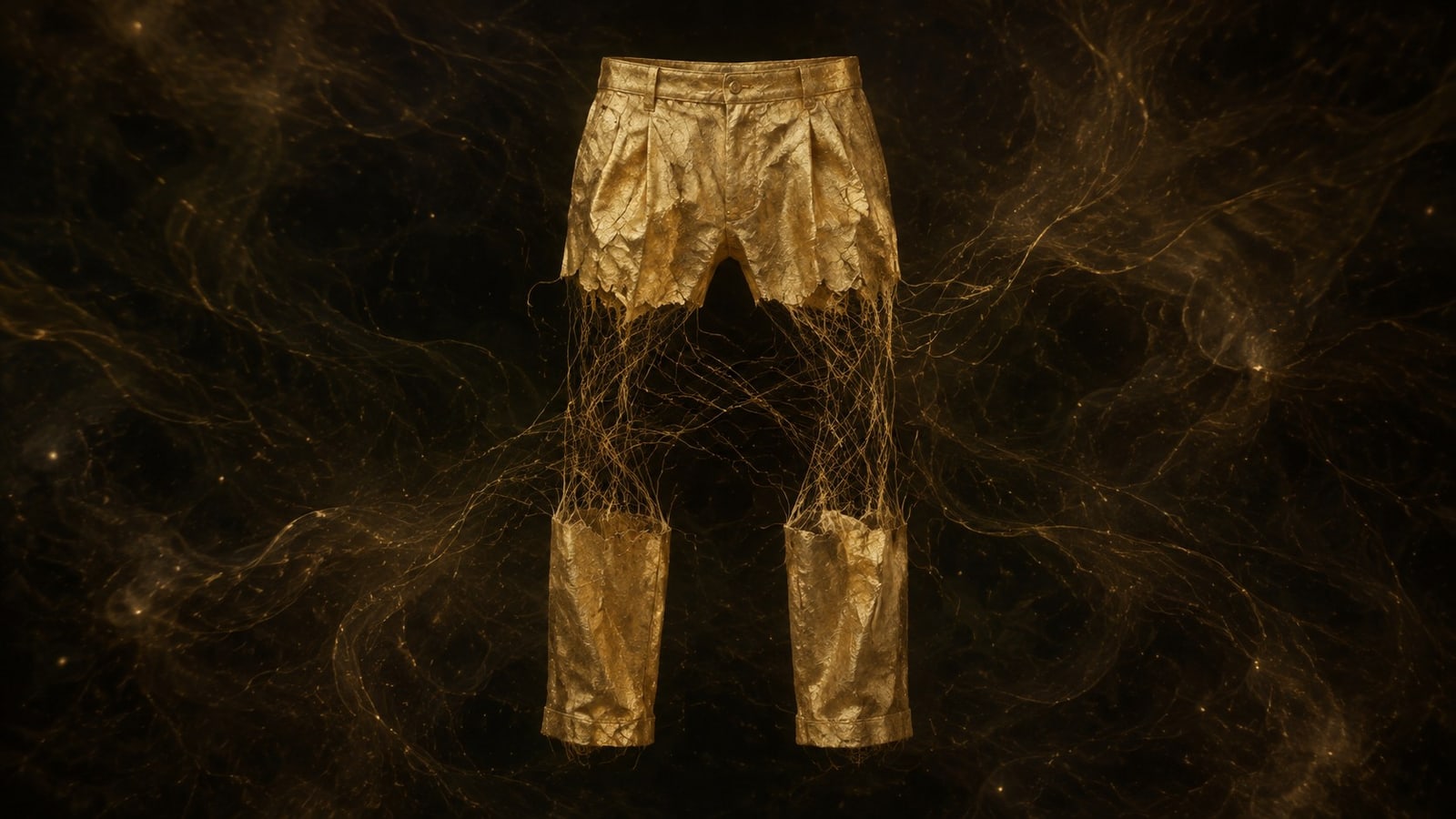
Dreaming that you are at work with no pants on is an anxiety dream about exposure and readiness, and it is one of the most widely shared dreams there is. The setting is doing most of the work. An office, a shop floor, a meeting room or a shift is where adults are watched, measured, and expected to look like they belong, so it is the natural place for the mind to stage a fear of being caught out. The version that sends people looking for an answer is usually the one where nobody reacts, and that detail says more about how closely you feel watched than about how closely anyone was watching.
Key Takeaways
The short answer
An anxiety dream about exposure and readiness, set in the place where you are most often judged on both.
Work is the clue
The office narrows the theme onto competence and belonging rather than onto your body.
Nobody reacting is normal
It is the most commonly reported version, and it points at scrutiny you are generating rather than at anyone's indifference.
Emotion beats symbol
Whether you woke embarrassed, panicked, or oddly calm tells you far more than the missing garment does.
It forecasts nothing
There is no evidence that this dream predicts job loss, a mistake, or public humiliation.
Repeats are the useful part
If it turns up before every review or interview, the timing is worth logging, not the pants.
01Why the dream picks work
Dreams pull from waking life, but not evenly. When Schredl and Hofmann tested it in Consciousness and Cognition in 2003, the material that made it into dream content was weighted heavily toward whatever was emotionally involving, rather than toward whatever simply took up the most hours. That is the first reason work turns up so often. For most people it is not only where the hours go, it is where a large share of the week's worry lives.
The second reason is what clothes are for at work. Almost nothing you wear to a job is chosen purely for you. It is chosen so that other people can place you: this person is staff, this person is senior, this person read the dress code. That makes work clothing a piece of social equipment rather than a comfort, and losing the most ordinary part of it is a compact way for the mind to picture a status that depends on something you did not quite secure.
So the workplace version narrows the theme. A no-pants dream in a shop or a street tends to be about being seen. The same dream at your desk is usually about being assessed. People report it clustering around a first week somewhere new, a probation period ending, an appraisal, work inherited from someone who left without explaining it, and any day where you have to speak while other people watch. It also shows up in weeks with nothing at stake at all, which is worth knowing before you go hunting for the crisis it must be pointing at.

02Why nobody reacts
This is the detail that unsettles people most, and it has two readings that both hold.
The first is plain dream logic. Dreams suspend ordinary social rules constantly, and they do it without flagging that anything unusual has happened. Colleagues who look up, look back down, and carry on with the agenda are behaving the way dream characters behave in every other kind of dream you have had.
The second reading is the one people actually want. When the room does not react, the dream has taken the consequence away and left the feeling standing on its own, which is a fairly precise picture of a fear that lives inside rather than out in the office. The gap between how exposed you feel and how much anyone notices is a real and measurable one in waking life, and our fuller guide to what a not wearing pants dream reflects more generally sets out the study behind it. That guide also covers the biblical and spiritual readings, if that is the version of the question you arrived with.
What the indifferent room is not is evidence about your colleagues. Plenty of people wake from this version relieved. A few wake mildly disappointed, having braced for a scene that never came, and that reaction is worth noticing too.
03The moments in the workday it picks
The scene tends to place itself at one of a small number of points, and the point it picks is usually more informative than the missing clothes.
The commute. You realise on the train, in the car, or in the lift, at the moment when there is theoretically still time to fix it. These versions are rarely about the office at all. They are about the run-up to something, and the dream almost always refuses to give you the time.
Walking in. Reception, the security door, the open-plan floor. The theme is entry and permission, whether you are allowed in the room.
Mid-meeting. The most reported workplace version. You are already seated, already talking, already halfway through the item, and only now do you look down. What that stages is not exposure so much as a late discovery that you have been operating in public on an assumption that was not true.
Standing to present. The sharpest version, because there is nowhere to sit and nothing to stand behind. It tracks straightforward performance pressure more often than anything deeper.
A one to one with a manager. Authority and evaluation. These are the versions people most often connect to a real conversation they are dreading.
An interview or a client. First impressions, and the specific fear of being assessed by somebody who has no other information about you.
A video call. A newer variant with its own logic: the boundary between a private home and a public role, and the small ongoing awareness that the frame only covers part of you.
Hover or tap a row to highlight it.
| Where it happened | What that setting tends to concentrate on | What it does not tell you |
|---|---|---|
| On the commute, before arriving | The run-up to something, and time you feel you do not have | That you are unprepared for a real event |
| Walking in past reception | Entry and permission, whether you belong in the building | Anything about your actual standing |
| At your desk, hours in | A late discovery that an assumption was wrong | That you have made a real mistake |
| Mid-meeting, already speaking | Being assessed while you are mid-performance | How the meeting will go |
| Standing to present | Straightforward performance pressure | That the presentation will fail |
| One to one with a manager | Authority, approval, evaluation | What your manager thinks |
| In an interview or with a client | First impressions and being judged on thin information | The outcome of either |
| On a video call | The boundary between private home and public role | That you have been careless |
| Only in underwear rather than bare | Partial cover: protected, but not properly presented | Anything more or less serious than the bare version |
| Nobody reacts at all | Scrutiny you are generating yourself | What your colleagues actually think |
| Colleagues laugh or point | A live fear of being singled out | That anyone is laughing at you |
04What to actually do with it in the morning
If the dream is bothering you enough that you looked it up, six lines in a notes app will do more than another page of symbol meanings. Write down the setting, who was there, and whether anyone reacted. Write down what you felt during it and what you felt on waking, because they are often different. Then write down the single work situation that has felt most like an evaluation in the past week, without arguing yourself out of the first answer that comes.
Then ask the question the dream keeps circling: is the fear here coming from other people, or from you. If you can name an actual person whose judgment you are worried about, that is a real thing you can do something about. If you cannot name one, the dream is telling you something about the pressure you are applying to yourself, which is also useful and much less alarming.
Keep it short and be willing for the answer to be nothing. Sometimes a stressful week produces a stupid dream about trousers, and the honest reading is that you are tired.
05What the fear is usually about
Underneath the pants, the question people bring to this dream is almost always one of three: am I unprepared, am I being watched, or am I about to be found out. The last one has a name that most people already know from their own vocabulary, impostor feelings, and it fits this dream unusually well because the missing item is the ordinary one that everybody else has and nobody thinks about.
Start with the emotion rather than the object. Embarrassment tends to sit with performance pressure and with caring how you come across. Panic tends to sit with something real and dated in the diary. Calm, and it is more common than people expect, tends to sit with being tired of holding a performance up, and readers often describe those versions afterwards with a laugh rather than a shudder.
Researchers have looked at the general shape of this. Cartwright and colleagues have studied how dreams track waking concerns over time, and Pesant and Zadra followed 28 people across two diary periods to examine whether dream content relates to psychological well-being. Both belong to a body of work about tendencies across groups of people. Neither is a method for reading one person's Tuesday night, and anyone who tells you otherwise is going beyond what the research supports.
There is also a long-standing proposal that dreaming rehearses difficult situations rather than reporting on them, set out in the threat simulation theory of dreaming. It remains a theory and it is argued over, but it fits what this dream feels like from the inside, which is less like a message and more like a badly staged practice run.
06What this dream is not
It is not a prediction. Nothing in dream research supports the idea that a workplace dream forecasts a job loss, a humiliation, a demotion, or a real wardrobe mistake. If you have read that somewhere and it stuck, it is worth putting down.
It is not evidence that you are bad at your job. The dream is generated by a mind that is worried about being judged, and being worried about being judged is not the same as deserving to be. Confident, competent people have this dream constantly.
It is not a diagnosis. A single unpleasant dream, or even a run of them, does not establish anything about your mental health.
It is also not rare, which is often the most useful thing to hear at seven in the morning. Being underdressed in public sits among the small set of scenarios that turn up on almost every list of shared dream themes, alongside falling, being chased, and losing teeth, which our overview of the most common dreams and what they mean sets out in full.

07When it keeps coming back
For some people this is not a one-off funny story. It arrives before every review, every interview, every first day, and it feels exactly as real on the twentieth time as it did on the first. People describe lying there mid-dream actively hoping it is a dream, and then feeling slightly foolish for being rattled by something so silly once they are awake.
If that is you, two things are worth saying plainly. The first is that the repetition is normal and it is not a sign the message is getting more urgent because you failed to decode it. Recurring dreams generally track something still open in waking life rather than escalating a warning, and our guide to why recurring dreams repeat covers that pattern properly. The second is that the recurrence itself is the useful data. If it lands the night before every appraisal, you have learned something specific about which situations register as evaluations for you, which is more actionable than any symbol dictionary.
There is a line where this stops being a curiosity. The American Psychological Association's explainer on what a nightmare is describes the clinical version: a disturbing dream that wakes you and that you remember afterwards. Most no-pants dreams do not reach that. If yours do, and they are frequent enough to be costing you sleep or affecting your days, the American Academy of Sleep Medicine's clinical guidance on nightmare disorder sets out how clinicians assess and treat that, and our guide to what nightmares are and what they mean explains when to raise it with someone qualified. That is a conversation with a clinician, not with a website.
08Common questions about no-pants-at-work dreams
What does not wearing pants in a dream mean?
It generally reflects feeling exposed, unprepared, or more visible than you would like. Where it happens changes the flavour, and at work it narrows onto competence and belonging rather than onto the body. The emotion you woke with is a better guide than the missing item, since the same scene can arrive as panic or as a shrug.
What do pants symbolize in a dream?
Nothing fixed, and any page handing you a one-word definition invented it. In a work setting they function as the most assumed layer of being dressed, the piece nobody checks because everybody has it. Losing exactly that piece tends to point at something else you also assumed was handled.
What does it mean when you dream about yourself not wearing clothes?
Being fully undressed leans toward exposure, being seen with nothing between you and the room, and it has its own reading in our guide to the naked in public dream meaning. Being partly dressed leans toward having skipped a step. Most workplace versions are the partial kind, which is why they carry embarrassment rather than fear.
What does it mean to dream about forgetting to wear pants?
Forgetting is the important word. Unlike a dream where clothes are taken from you, this one implies you did it to yourself by omission, which is exactly why it stings. It tends to turn up in stretches where you are juggling enough that something plausibly could slip, and it is not evidence that anything has.
Why does nobody notice in the dream?
Dream characters routinely fail to react to things that would stop a real room, so part of it is simply how dreams are built. The more useful reading is that removing the reaction leaves your own sense of being watched standing there by itself. It is not information about what your colleagues think of you.
Is this dream a warning about my job?
No. There is no evidence that dream content predicts an employment outcome, and treating it as a warning tends to produce anxiety rather than insight. If you already have a real concern at work, the dream may be reflecting it back at you, but the concern is the thing to act on, not the dream.
Why do I have it before interviews and presentations?
Those are the situations most clearly built around being assessed by other people, and this dream is essentially about being assessed. If it reliably shows up the night before, treat it as a signal about how much the event matters to you rather than as a comment on how it will go.
Does being in underwear change the meaning?
It shifts the theme toward partial cover rather than total exposure: protected, but not properly presented for the room you are in. People report it as marginally less mortifying than the bare version and otherwise very similar. It is not better or worse news, because it is not news.
Reading your no-pants-at-work dream
In this dream, nobody in the office reacting most often points to what?
Which detail usually tells you the most about one of these dreams?
A no-pants-at-work dream that returns before every review is best treated as:
Pick an answer to begin.
Whatever version you woke from, read it against the week you are actually having rather than as a forecast of the week ahead, and let the missing layer point you at whatever you have been assuming is handled. DreamTold treats dreams as a window into your own mind rather than a prediction, so if another detail from that night stayed with you, the dream dictionary is the place to follow it. This page is educational and meant for reflection, not medical or psychological advice. If these dreams are frequent, distressing, or costing you sleep, a clinician is the right person to talk to.
Dream terms
Tap a term to see what it means.
Continuity hypothesis. The research finding that dream content tends to reflect waking concerns, weighted toward whatever is emotionally involving rather than toward whatever took the most time.
Performance anxiety. Apprehension attached specifically to being observed while doing something, which is the pressure most workplace versions of this dream are built around.
Impostor feelings. The persistent sense of not really belonging in a role despite evidence that you do, a common waking counterpart to being caught underdressed at work.
Recurring dream. A dream that returns in recognisable form over weeks or years, usually tracking something unresolved rather than repeating a message you failed to decode.
Nightmare disorder. The clinical condition in which frequent distressing dreams impair sleep or daytime functioning, assessed and treated by clinicians rather than interpreted.
09Sources
Every claim on this page that comes from somewhere else, with the somewhere else. Scripture and hadith are linked so you can read them in context rather than trusting a paraphrase.
- American Academy of Sleep Medicine: the American Academy of Sleep Medicine's clinical guidance on nightmare disorder
- American Psychological Association: The American Psychological Association's explainer on what a nightmare is
- PubMed: Cartwright and colleagues have studied how dreams track waking concerns
- PubMed: Pesant and Zadra followed 28 people across two diary periods
- PubMed: tested it in Consciousness and Cognition in 2003
- PubMed: the threat simulation theory of dreaming
Related
articles.

Dream of Not Wearing Pants: Exposure, Embarrassment, and What It Reflects
Dreaming you are not wearing pants usually points to feeling half-prepared. What the work, school and nobody-notices versions mean, and the biblical reading.
Read: Dream of Not Wearing Pants
Naked at Work Dream Meaning: Imposter Syndrome or Warning?
Dreaming you were naked at work? This naked at work dream meaning guide looks at imposter syndrome, workplace evaluation, and what the feeling actually says.
Read: Naked at Work Dream Meaning
Endless Falling Dream Meaning: A Drop With No Ground
What an endless falling dream means when the ground never comes: prolonged uncertainty, loss of control, the hypnic jerk link, and belief-based readings.
Read: Endless Falling Dream Meaning