

Dreams About Houses
What house dreams mean, read as a picture of the self: the room you were in, discovered rooms, the childhood home, and how context changes the reading.
A house in a dream usually reflects your own life rather than anything ahead of it. The frame most people use reads the house as a picture of the self, which is why the part of the house you were standing in tends to matter more than the building. What the place was like, and how you felt inside it, decides the rest.
01The most common meaning
A house works as a stand-in for a person because it is already shaped like one. There is a front that visitors see and rooms only you use, a top floor and a dark bottom, tidy spaces and spaces you would not show anyone. That idea comes out of depth psychology and out of writing about how imagination lives in space, and it has been a useful reflection tool for a long time. It is an interpretive tradition rather than a measured finding, so it is worth holding loosely.
Rooms have their own vocabulary attached to them: kitchens read around feeding and family, bedrooms around privacy and rest, basements around what has been stored out of sight, attics around memory and inheritance. Treat that as the language interpretation happens in, not a fixed key. Your own history with a room outranks any list. If the kitchen was where the arguments happened, that is what a dreamed kitchen is carrying.
02The psychology
Houses turn up constantly for a plain reason: most of life happens indoors, and dreams are built out of ordinary life. In the classic dream-content norms, indoor settings accounted for around half of all dream settings. Dreams also borrow from waking experience continually while almost never replaying a real event exactly, which is why the house is unmistakably yours and the hallway is somehow the wrong length.
03How context changes it
Condition, feeling, and location inside the house do most of the work.
Finding rooms you did not know the house had is one of the most distinctive versions, and it is genuinely common: about a third of students in one large Canadian survey said they had dreamed it. People usually describe wonder rather than fear, a door in a corridor that was never there before. Read within the house-as-self frame, it suggests capacity you had not accounted for. That is a question to sit with, not a verdict.
The childhood home is the other version readers ask about most. It is one of the most heavily encoded buildings in anyone's memory, so it returns easily, especially during change and grief, and it returns slightly wrong because memory does not replay cleanly.
An unfamiliar house carries none of your history, so atmosphere is the only reliable detail. A calm unknown house and a threatening one are different dreams sharing a floor plan.
For Jung's own house dream, the room conventions in full, and how Christian and Islamic traditions treat houses, read the full guide to what house dreams mean.
04Common questions about house dreams
What does it mean to find a room you did not know was there?
It is a common dream, not a rare one, and the feeling is usually curiosity rather than dread. In the house-as-self reading it points to something in your life with more room in it than you had assumed. That is an interpretation offered for reflection, not a finding about you.
Why do I keep dreaming about my childhood home?
Because your mind stored that building thoroughly and draws on stored material every night. These dreams cluster around moves, losses, and other periods of change, when the memories attached to that house are already close to the surface. If it repeats, look at what is unsettled now rather than at the house.
Does a dark or damaged house mean something bad is coming?
No. Nothing supports the idea that any dream forecasts an event, and pages that read a broken or dark house as evidence of illness, attack, or a curse are stating a belief as though it were established. Take the fear as information about how you feel awake.
05Sources
Every claim on this page that comes from somewhere else, with the somewhere else. Scripture and hadith are linked so you can read them in context rather than trusting a paraphrase.
- Encyclopaedia Britannica: depth psychology
Keep reading
on houses.
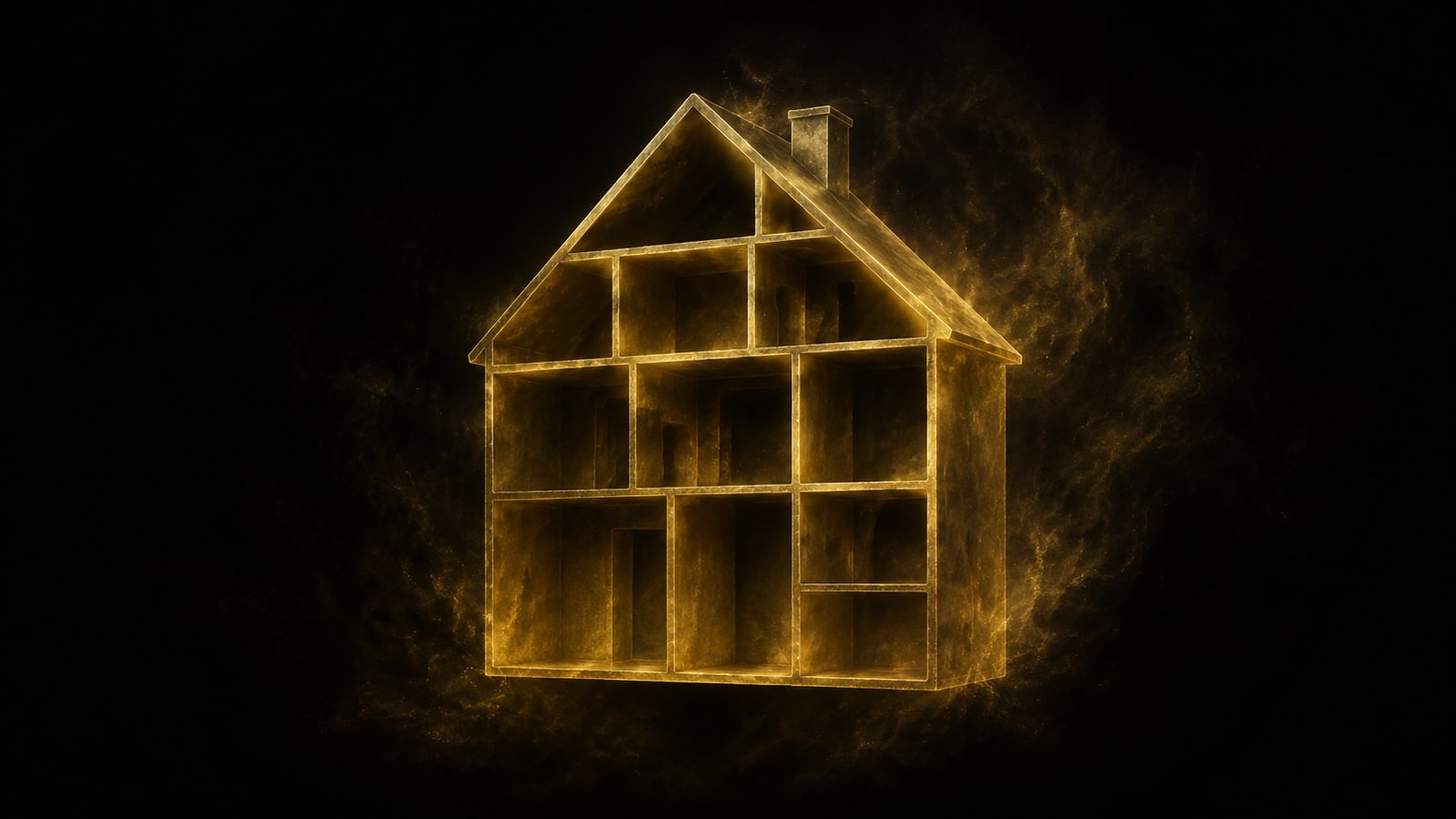
House Dream Meaning: Rooms, Doors, and the Shape of the Self
What house dreams mean: the house as a picture of the self, what Jung actually dreamed, room by room conventions, unfamiliar houses, and the childhood home.
Read: House Dream Meaning
Dreaming About Your Childhood Home
Dreaming about your childhood home again? Here is why the dream returns, what the changed rooms might mean, and how to read it without guessing at fate.
Read: Dreaming About Your Childhood Home
Spiritual Meaning of a Tree Falling on Your House
A tree falling on your house is terrifying, but you survived. Here is the honest spiritual meaning, plus what to check first for storm damage and insurance.
Read: Spiritual Meaning of a Tree Falling on Your House
Snake in the House Dream Meaning: When the Tension Comes Home
What a snake in the house means in a dream, read room by room from bedroom to doorway, plus biblical, Islamic, and Hindu readings. A grounded, no-omens guide.
Read: Snake in the House Dream Meaning
Flood in the House Dream Meaning: Overwhelm at Home
What a flood inside your house means in a dream, read room by room, rising or receding, with biblical and Islamic angles held as belief. A no-omens guide.
Read: Flood in the House Dream Meaning