

House Dream Meaning: Rooms, Doors, and the Shape of the Self
What house dreams mean: the house as a picture of the self, what Jung actually dreamed, room by room conventions, unfamiliar houses, and the childhood home.
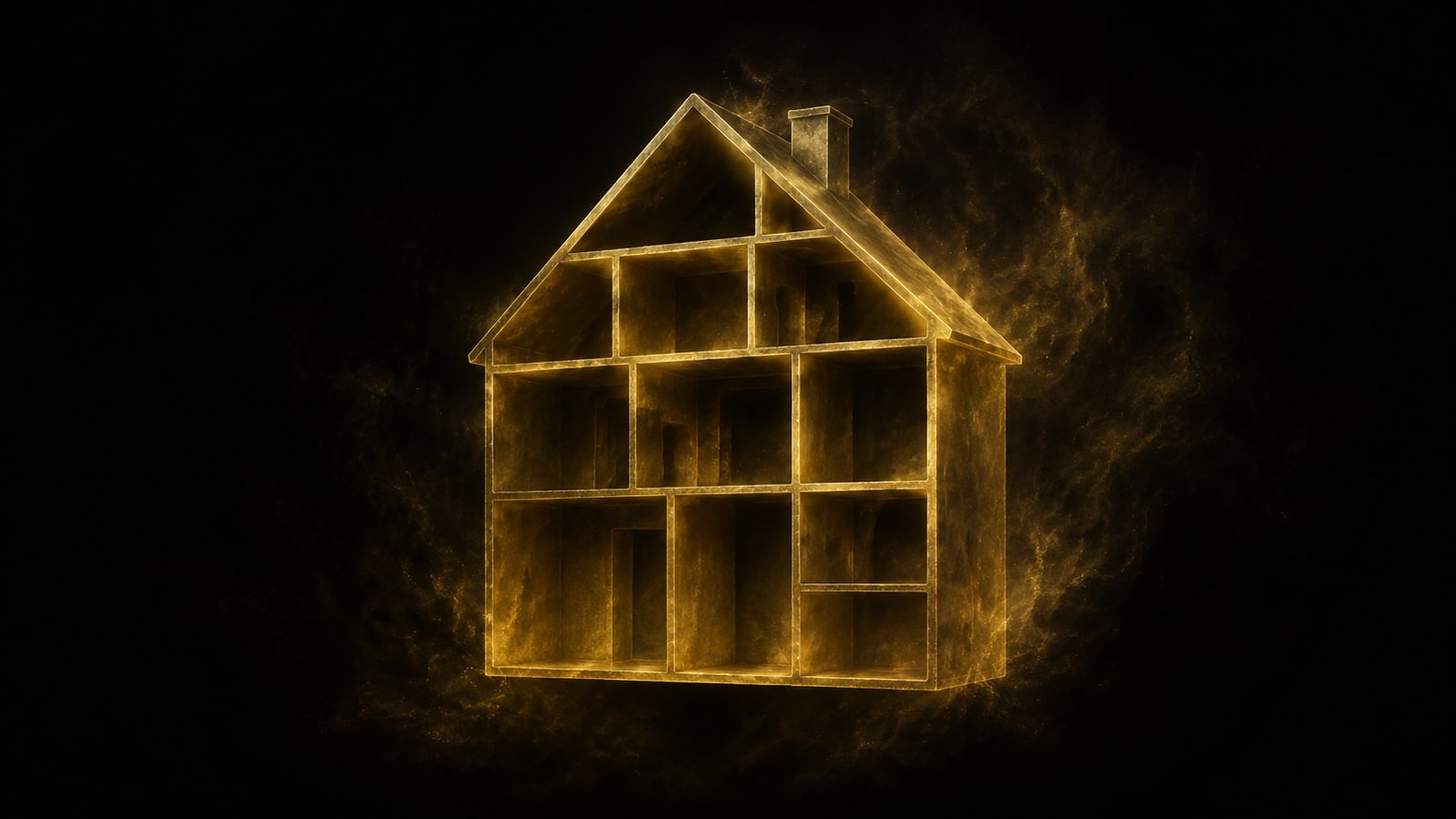 Featured
A house in a dream usually reflects your own life rather than your future: where you live, who is in it, how safe you feel, and whatever is currently shifting. The best known frame treats the house as a picture of the self, its rooms standing for parts of a person, an idea with a real lineage in depth psychology rather than one invented by dream websites. It is still an interpretive tradition and not a measured finding, so this guide keeps the two apart: what research can say, what the tradition holds, and what none of it can tell you.
Key Takeaways
Houses are ordinary dream settings
In the classic Hall and Van de Castle dream-content norms, indoor settings made up 44 percent of men's dream settings and 55 percent of women's, so a house is one of the most common places a dream simply happens.
The house as self is a tradition, not a finding
It runs from Jung through later depth psychology and is genuinely useful for reflection, but it has not been tested the way sleep science tests dreaming itself.
Jung's house was about layers, not rooms
His 1909 dream descended through a rococo salon, a medieval floor, a Roman cellar, and a prehistoric cave, and he read it as a diagram of the psyche's depth, not as a room-by-room code.
Finding a new room is genuinely common
In a survey of 1,181 Canadian students, 32.3 percent said they had dreamed of discovering a new room at home.
The childhood home is memory doing its usual work
Dreams draw constantly on waking life yet almost never replay a real event exactly, which is why a remembered house comes back subtly wrong.
Nothing here predicts anything
No house dream, in any condition, is evidence about what will happen to your home, your family, or your health.
01Why houses turn up in dreams so often
Houses fill our dreams for a plain reason: dreams are assembled out of ordinary life, and most of us spend most of our lives indoors. Fosse, Fosse, Hobson and Stickgold reported on this in the Journal of Cognitive Neuroscience in 2003. Across 299 sleep reports gathered from 29 people over fourteen days, 65 percent reflected some aspect of recent waking experience, while full replay of an actual waking episode appeared in only one to two percent. Dreaming borrows from your life constantly and copies it almost never, which is why the place is unmistakably your house and the hallway is the wrong length.
The setting data points the same way. In the dream-content norms compiled by Calvin Hall and Robert Van de Castle, from 500 dreams reported by 100 men and 491 by 100 women, indoor settings accounted for 44 percent of the men's settings and 55 percent of the women's, and clearly unfamiliar settings for 19 and 10 percent. Those norms come from mid-twentieth-century American college students, a snapshot rather than a law, but the point holds: a dreamed house is not rare, and neither is a strange one. Our explainer on why we dream covers the sleep cycle behind them.
02The house as a picture of the self
The appeal of the house-as-self frame is obvious. A house has an outside visitors see and an inside only you occupy, rooms kept tidy for company and rooms you would not show anyone, a locked upstairs and a dark bottom, all of which maps onto how people already experience themselves.
The French philosopher Gaston Bachelard developed the same image in The Poetics of Space, published in 1958 and translated into English by Maria Jolas in 1964. He argued that the house is imagined as a vertical being, its verticality carried by the polarity of cellar and attic: in the attic thought is clear, while the cellar he called the dark entity of the house, the part that partakes of subterranean forces. Bachelard was writing philosophy about how imagination inhabits space, not reporting an experiment, and that is the honest label for the whole tradition.

03What Jung actually dreamed, and what he took from it
This is worth getting right, because the house-as-self idea is usually traced to Carl Jung and usually attributed to him inaccurately. He described the dream in Memories, Dreams, Reflections, in the chapter on Sigmund Freud. It came during the 1909 trip to the United States, when the two men were analyzing each other's dreams daily.
In the dream he was in a house he did not know but understood to be his own. The upper story held a salon furnished in rococo style, with old paintings. Downstairs, the ground floor seemed to date from the fifteenth or sixteenth century, with medieval furnishings and red brick floors. A heavy door opened onto a stairway down to a vaulted cellar whose brickwork told him the walls were Roman, and in its floor a stone slab with a ring. He pulled it, found narrow steps going down, and entered a low cave cut into rock, its floor thick with dust, scattered bones and broken pottery, and two half-disintegrated human skulls.
What Freud fixed on were the skulls. He pressed Jung to attach a wish to them, and Jung understood he was being steered toward a hidden death wish. Jung named his wife and his sister-in-law, and wrote decades later that he had lied to keep the peace. His own reading was structural: the house represented "a kind of image of the psyche," the inhabited salon standing for consciousness and the ground floor for "the first level of the unconscious." Deeper down he found what he called "the world of the primitive man within myself." He concluded that the dream "constituted a kind of structural diagram of the human psyche," and called it his "first inkling of a collective a priori beneath the personal psyche."
Jung's house was vertical and historical, a descent through layers of mind reaching back beyond his own biography. He did not propose that a kitchen means nourishment or a bathroom means release; the tidy modern formula assigning each room a fixed part of you is a later popularisation built on his image, not his writing.
04Rooms, and the vocabulary people use for them
The room vocabulary is still worth knowing, because it is the language most interpretation happens in. Treat it as convention rather than code. A kitchen is where feeding and gathering happen, so it is commonly read around nourishment, family, and providing. A bedroom is the most private room in most homes, so it is read around intimacy, rest, and what you keep to yourself. A bathroom is where the body is dealt with in private, and dreams set there often collect embarrassment or the need to let something go. A basement, following Bachelard's cellar, tends to be read as what has been stored out of sight, and an attic as memory and inheritance. None of that becomes true because a list says so. If your kitchen was the room where the arguments happened, a dream kitchen is carrying arguments. Our dream dictionary entry for houses sets out the same conventions as a quick reference.
05The unfamiliar house and the room you did not know was there
Two of the most striking house dreams are the house that is somehow yours but that you have never seen awake, and the discovery of extra rooms in a house you thought you knew. The second is common enough to have been measured. In the Typical Dreams Questionnaire study by Tore Nielsen, Antonio Zadra and colleagues, published in Dreaming in 2003, 1,181 first-year students across three Canadian cities were asked which of 55 dream themes they had ever experienced. Discovering a new room at home came back at 32.3 percent, twenty-first of the 55, with almost no difference between men and women.
It is also emotionally distinctive in a way most dreams are not. People describe wonder rather than fear: a door in a familiar corridor that was never there, a whole wing behind the wardrobe, a staircase to a floor the house does not have. The feeling is usually excitement mixed with a faint sense of having been careless, as though the space was always yours and you failed to notice. Within the house-as-self frame, a discovered room reads as capacity you had not accounted for, worth sitting with as a question about what in your life has more room in it than you assumed. That is a reflection, not a diagnosis.
The unfamiliar house works differently. It carries none of your history, so the dream runs on atmosphere alone: a calm unfamiliar house and a threatening one are different dreams sharing a floor plan.
Where the discovered space is below the house rather than beside it, the reading shifts, because a basement carries associations no other room does. Basement dreams covers the descent, the storage, and the basement you did not know the house had.
06The childhood home
The childhood home is the other house that dominates these searches, and for good reason. It is usually the most thoroughly encoded building of a person's life: years of daily use, learned at the age when memory is laying its foundations, layered with every relationship that happened inside it.
That richness is also why the house comes back distorted. Under the finding from Fosse and colleagues, dreams pull constantly from autobiographical material while almost never replaying an episode intact, which is what people describe: the house is right, the furniture is right, and the back door opens onto somewhere it never opened onto. Related themes show up in the same student data, where being a child again was reported by 36.7 percent.
People notice these dreams most in periods of change and in grief. A move, a separation, a parent's illness, or the death of someone who lived in that house will often bring it back, and so will the anniversary of a loss. The plain reading is that your mind is working with the material the situation has made vivid, and the house is where it is stored. The interpretive reading, held within the tradition rather than proven, is that returning there reflects unfinished business with the period it belongs to. Both point at the same response: look at what is changing now rather than at the wallpaper, and our fuller guide to dreaming about your childhood home goes through the versions of that dream and what each one tends to carry. If the dream keeps arriving in the same shape, our guide to why recurring dreams repeat is the better starting place.
07Other house dreams people ask about
A house with many rooms is the most searched variant after the discovered room, and it pairs with a feeling of scale, either abundance or exhaustion at how much there is to look after; a very large house carries the same double edge, and the size itself is often the emotion. A house in poor repair is read as something in life needing attention, a prompt rather than a verdict on your health or your finances. A white or unusually bright house is read in color-based dictionaries as clarity or a fresh start, which is pure convention. Moving house, including the version where you move and immediately regret it, tends to arrive when a real decision is live.
Hover or tap a row to highlight it.
| Scene | What it commonly points to | How firm is this |
|---|---|---|
| Discovering a new room | Unused capacity, something with more space in it than you assumed | Reported by 32.3 percent of students in the Nielsen Typical Dreams study; the meaning itself is interpretive |
| A house you have never seen | Whatever the atmosphere was, since no personal history is attached | Unfamiliar settings were 10 to 19 percent of settings in the Hall and Van de Castle norms; the reading is interpretive |
| Your childhood home | The period that house belongs to, often surfacing during change or grief | Common self-report, not a studied finding |
| A house with many rooms | Scale, whether that felt like abundance or like too much to manage | Interpretive tradition only |
| The basement or cellar | What has been stored away or kept out of sight | Interpretive tradition, from Jung and Bachelard; never measured |
| The attic | Memory and inheritance, things kept rather than used | Interpretive tradition only |
| A house in poor repair | Something in waking life asking for attention | Interpretive tradition; not evidence about health, money, or property |
| Moving house, or regretting a move | A live decision you are still weighing | Common self-report, not a studied finding |
08Spiritual, biblical, and Islamic readings
Houses run through scripture as images, and much of the house-dream content online lives here. What follows is what these traditions hold and what their texts say, which is a different thing from what a dream means.
In Christian tradition the house is a recurring picture of shelter, foundation, and belonging. Psalm 127:1 says that unless the Lord builds the house, its builders labour in vain. Matthew 7:24 to 27 sets the house built on rock against the house built on sand. John 14:2, in the New International Version, reads "My Father's house has many rooms," a verse constantly quoted alongside dreams of many rooms even though it is about a promise of a place, not dream interpretation. Second Corinthians 5:1 sets an earthly tent against an eternal house in heaven. Ministry blogs and video channels build detailed dream codes on top of these images, some of them frightening, and the join is worth naming: the passages are real, and the code is added afterward by the interpreter. Scripture nowhere assigns a dream meaning to a house, though a Christian reader may reflect on those themes as belief, as our overview of biblical dream symbols sets out across other images.
In Islamic tradition, houses appear in the Quran as shelter and household rather than as dream symbols. Quran 16:80 describes God making homes a place of rest, and 29:41 uses the spider's shelter as an image of the flimsiest of shelters. The Quran treats certain dreams as significant within specific narratives, most famously in Surah Yusuf, without offering a symbol dictionary. The dream lore usually quoted as Islamic belongs to the tradition associated with Ibn Sirin, and that attribution deserves a caveat: the dream dictionary sold under his name was compiled in the fifteenth century, long after his lifetime, so it is best read as a tradition attached to his reputation rather than his own words. Within it, a house is read in relation to family, status, privacy, and condition, and our guide to what Islam says about dreams covers how that tradition sorts dreams, held as belief.
Other traditions address the dreaming state rather than the furniture, as the Mandukya Upanishad does in treating dreaming as a state of consciousness. None of this establishes that a dreamed house forecasts an event.
09When a house dream leaves you shaken
Some house dreams are genuinely unpleasant: an intruder, a room you cannot get out of, a home that is wrong in a way you cannot name. Where the intrusion has a specific shape, our guides to a flood in the house and a snake in the house take those two versions on directly. Treat the fear as information about your waking life rather than a warning about your building, and note what in your current situation carries that feeling. If frightening house dreams keep arriving, disturb your sleep, or make you dread going to bed, that is worth raising with a clinician, and our guide to what nightmares mean covers that ground. Pages that tell you a dark or broken house is evidence of attack, sickness, or a curse are stating a belief as though it were a fact, and nothing supports that claim.
10Common questions about house dreams
What does it mean to dream about a house you have never seen?
Most often it means your dreaming mind built a setting rather than retrieved one, which is ordinary; unfamiliar settings were 10 to 19 percent of settings in the Hall and Van de Castle norms. With no personal history attached, the useful detail is the atmosphere: whether the unknown house felt safe or threatening.
What is the spiritual meaning of a house in a dream?
Modern spiritual writers commonly read a house as the self, and its condition as a prompt about protection, shelter, or transition, held as belief and offered as a reflection tool. That reading has no way of telling you what will happen, and no tradition of it establishes that a damaged or dark house means something bad is coming.
What is the biblical meaning of a house in a dream?
The Bible uses houses as images of foundation, shelter, and belonging, in passages such as Psalm 127:1, Matthew 7:24 to 27, John 14:2, and Second Corinthians 5:1, but it does not assign a dream meaning to a house. Christian readings carry those themes across as belief. It becomes a problem when an interpreter presents an added code as though scripture supplied it.
What does it mean to dream about moving house and regretting it?
Usually it means a real decision is unsettled. Dreams pull heavily on recent waking concerns, and a move, a job change, or a breakup supplies the material for a dream of leaving somewhere and wishing you had not. The regret is best read as a question you are still turning over, not a verdict on a choice already made.
What does a house with many rooms mean in a dream?
Within the house-as-self tradition, many rooms are read as scale: how much of you there is, or how much there is to look after. The feeling decides it, since the same house reads as abundance to one dreamer and as a burden to another. The phrase is also associated with John 14:2 for Christian readers, a scriptural image rather than an interpretation of your dream.
Why do I keep dreaming about my childhood home?
Because it is one of the most heavily encoded buildings in your memory, and because dreams draw on autobiographical material constantly. These dreams cluster around change and grief, when that material is already close to the surface. If the dream repeats over a long stretch, look at what is ongoing in your waking life rather than at the house.
Test what you know about house dreams
In Jung's famous house dream, what did the levels of the house represent to him?
How common is the dream of discovering a new room at home?
Does a dream of a damaged or dark house mean something bad is coming?
Pick an answer to begin.
However you arrived here, a house dream offers a question about your waking life rather than an answer about your future. DreamTold treats dreams as a window into your own mind, so if another image from the same dream stayed with you, look it up in the dream dictionary, and our guide to the most common dreams and what they mean gathers the images people ask about most. This guide is educational and meant for reflection, not medical advice. If frightening dreams, lost sleep, or distress around a loss are affecting your daily life, speak with a qualified clinician.
Dream terms
Tap a term to see what it means.
Typical dream. A theme reported by a large share of dreamers, measured with checklists such as the Typical Dreams Questionnaire, which lists 55 themes including discovering a new room at home.
Dream setting. The place a dream happens, coded in content analysis as indoor or outdoor and as familiar or unfamiliar to the dreamer.
Episodic replay. The exact re-running of a real waking event in a dream, found in only one to two percent of reports in the 2003 study by Fosse and colleagues.
Collective unconscious. Jung's proposal of a shared layer of mind beneath personal memory, an idea he traced back to his own dream of a house with a cellar and a cave.
Continuity. The observation that dream content generally reflects waking concerns and surroundings rather than arriving from outside them.
11Sources
Every claim on this page that comes from somewhere else, with the somewhere else. Scripture and hadith are linked so you can read them in context rather than trusting a paraphrase.
- BibleGateway: John 14:2
- BibleGateway: Matthew 7:24
- BibleGateway: Psalm 127:1
- Ibn Sirin dictionary (PDF): Ibn Sirin
- Quran.com: Quran 16:80
Related
articles.

Fruit in Dreams: Ripe, Rotten, and What Each Is Read As
Fruit in dream meaning depends on ripe, rotten or out of season, and on who handed it to you. Jewish, Christian, Islamic and Indian readings, all attributed.
Read: Fruit in Dreams
Lion Dream Meaning: Power, Courage, and What You Are Facing
A lion in a dream points to power. The useful question is whose: a force bearing down on you, or your own strength. Scenes, scripture, and honest limits.
Read: Lion Dream Meaning
Rat Dream Meaning: Unease, Distrust, and What Moves at the Edges
Rat dream meaning explained: why rats read as anxiety and distrust, what the house, bite, dead rat and color variants point to, and what traditions hold.
Read: Rat Dream Meaning