

Chased by an Animal Dream Meaning: Instinctive Pressure, Colored by the Animal
What being chased by an animal in a dream means: instinct and threat-simulation explained, plus how a dog, bear, lion, bull, wolf, or snake changes the read.
 Featured
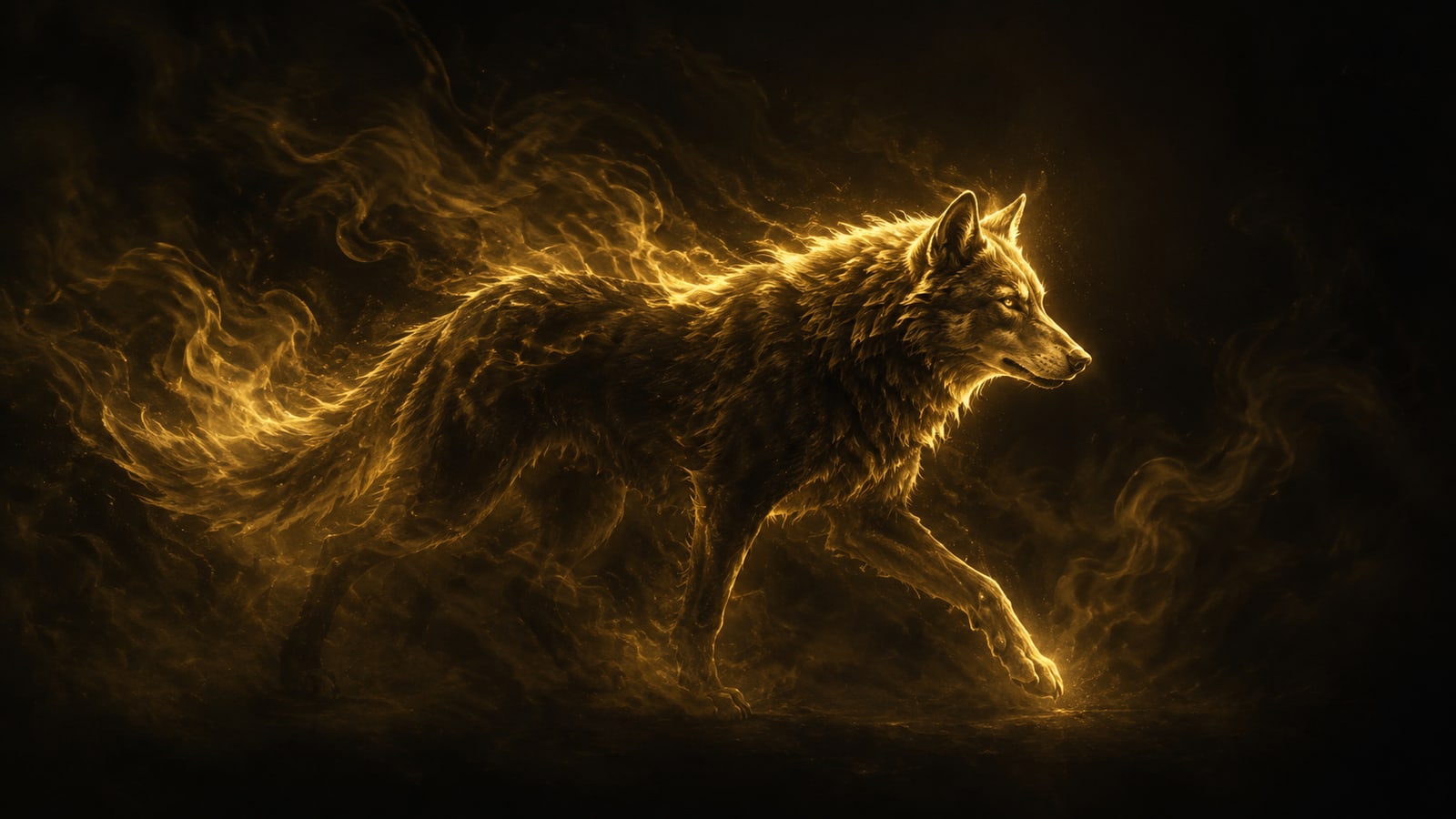
Being chased by an animal in a dream usually gives fear or instinct a recognizable body. The species matters more than the chase itself, so start with what was after you, whether it was wild or familiar, and whether you escaped or were caught. The dream can be emotionally meaningful without predicting an animal attack, revealing a hidden trait, or signaling anything supernatural.
Key Takeaways
Instinct with a face
An animal pursuer often stands in for a strong urge, appetite, or feeling you treat as wild.
The species is the clue
A dog, a bear, and a snake tend to carry very different associations, so read the animal, not just the chase.
Ancient wiring
Threat-simulation theory suggests the dreaming brain rehearses escape, and an animal is the oldest threat it knows.
Not a prediction
A predator in a dream does not forecast an attack and does not prove anyone, including you, is dangerous.
Belief is belief
Scripture and dream manuals give animals symbolic weight; none of it turns a chase dream into a verdict.
Repeats track stress
A recurring animal chase tends to rise and fall with waking pressure and disrupted sleep, not with omens.
01The most common meaning
The scene is old and simple. Something with teeth or claws is behind you, gaining, and every choice narrows to one: run. People report being chased by dogs, bears, lions, bulls, wolves, snakes, and sometimes a whole pack, and the fear on waking feels far too real for a story the brain made up. That intensity is exactly why the dream begs for a meaning.
The most grounded reading treats the animal as pressure with a shape. Chase dreams in general tend to mirror something you are avoiding or something that feels like it is gaining on you, and the animal version adds a specific flavor: the pursuer is not a person with motives but a creature running on instinct. That often points the dream inward, toward a feeling or urge of your own that you have been treating as wild, such as anger you keep swallowing, an appetite you are ashamed of, or a fear you refuse to look at. The thing behind you does not negotiate, which is how an avoided feeling tends to behave.
It is worth saying plainly what the dream is not. An animal pursuer is not evidence that a real animal encounter is coming, and dreaming of a predator does not prove that you or anyone else is predatory. Those are the two most common worries, and neither holds up. The animal chase sits inside the wider pattern covered in our full guide to being chased in a dream, where the strongest signal is almost always the avoidance itself, not the identity of the pursuer. What the animal version adds is the species, and that is where the real reading starts.
02The psychology of an animal pursuer
One leading idea in dream science is threat-simulation theory, the proposal that the dreaming brain rehearses spotting and escaping danger in a safe setting. Most dream scenes stretch that idea a little; this one does not stretch it at all. For most of human history the thing that chased you was an animal. If the sleeping brain really does run escape drills, a predator closing in is the original drill, the ancestral scene the machinery was arguably built around. That may help explain why animal chases feel so vivid and so universal, and why the fear is physical enough to wake you with a pounding heart. The theory remains a theory, not settled fact, but the animal chase is its most literal case.
The reflective layer sits on top of that wiring. A long-running idea in depth psychology, associated especially with Carl Jung, treats animals in dreams as images of instinct, the parts of us that run on appetite and impulse rather than deliberation. Held loosely, that gives the animal chase a useful question: what in you have you decided is too wild to face? A temper, a desire, a grief, an ambition. When a feeling is pushed away rather than dealt with, dreams have a habit of giving it legs and letting it hunt you. None of this is provable from a single dream, and it should be held as a lens, not a diagnosis, but it is the reading that tends to be worth sitting with.
There is also a plainer layer that needs no theory at all. Stressful stretches of waking life produce more chase dreams and more nightmares generally, and repeated frightening dreams tend to track stress, fear cues, and disrupted sleep rather than anything mystical. Some animal chases even borrow from real life: a person who was once bitten, or who is genuinely wary of the neighbor's dog, may simply be replaying a real fear cue. And if your legs turned to lead mid-chase, that detail has its own physical explanation in REM muscle paralysis, covered in our guide to why you can't run in a dream.
03How the animal changes the meaning
This is the part most write-ups skip, and it is the part readers actually ask about. Nobody dreams of being chased by "an animal" in the abstract; they dream of the dog, the bear, the lion. Cultural associations differ by species, so the same chase reads differently depending on what is behind you. Use the grid as a set of prompts, not verdicts, and let your own history with the animal outrank any table.
Sometimes the animal outweighs the chase entirely and deserves its own reading. A bull is the clearest case, because it is not hunting you so much as coming through, and bull dreams treats that as pressure and mass rather than pursuit.
Hover or tap a row to highlight it.
| Animal | What it often reflects | The emotional read |
|---|---|---|
| Dog | Loyalty or conflict close to home; sometimes a real fear cue from waking life | A threat from something that should be safe or familiar |
| Bear | Power and boundaries; a large problem you have been giving space | Something big you hoped would stay away is now moving |
| Big cat (lion or tiger) | Authority, dominance, or courage you feel stalked by | Being hunted by something stronger and unhurried |
| Bull | Raw force and momentum; a confrontation building head-on | Pressure that will not swerve, only charge |
| Wolf | A group threat or a fierce independence; loyalty and menace mixed | Feeling singled out, or circled, by something organized |
| Snake | Threat, enmity, or unsettling change in older readings | A quiet danger, close to the ground and hard to see coming |
| Swarm or pack | Many small pressures acting as one; feeling outnumbered | Overwhelm; no single problem is huge, but together they hunt |
A few of these rows deserve a sentence more. The dog is the strangest pursuer because it is the animal most of us trust, so a dog chase often carries a note of betrayal or of conflict with something close, and it is also the likeliest to be a replay of a real incident. The full symbol has a friendly side too, from companionship to protection, which our guide to dog dreams covers in depth. The bear and the big cats tend to dramatize scale: the problem is not sneaky, it is simply bigger than you, and it has noticed you. The bull adds inevitability, a collision you sense is coming whether you turn or not.
The snake is different enough to be its own subject. A snake that pursues you blends the chase pattern with one of the oldest and most layered dream symbols there is, from threat and enmity to transformation, and it deserves a fuller treatment than one table row. If a snake was your pursuer, our dedicated guide to a snake chasing you in a dream takes over from here. And the swarm or pack is the modern favorite: when the pursuer is many instead of one, the likeliest echo is a season where no single obligation is unbearable but the pile of them is.
04Spiritual readings of animal chase dreams
Faith traditions have always given animals symbolic weight, and honest labeling matters here: everything in this section is belief and tradition, offered as context, never as fact about your dream.
In the Bible, animals appear as vivid images rather than dream codes. 1 Peter 5:8 compares the devil to a roaring lion looking for someone to devour, which is why lion dreams carry a spiritual-warfare association for many Christian readers. Daniel 6 places Daniel unharmed in a den of lions, an image of protection inside danger rather than defeat by it. Genesis 9:2 describes the fear between humans and animals after the flood. These passages shape how believers read animal symbolism, but none of them teaches that an animal chase dream is a prophecy or a verdict.
That labeling matters because a great deal of popular teaching online frames animal chase dreams as demonic attacks that require urgent spiritual intervention, sometimes hours of it. If that framing has frightened you, it is worth saying gently: that is one strand of belief, not a fact about you or your night. Even within the traditions being cited, the lion of 1 Peter is a metaphor for vigilance, and the lions of Daniel are the scene of a rescue. A person of faith can take a disturbing dream to prayer without accepting that the dream itself was an assault, and nothing in dream research supports reading a frightened brain as an invaded one.
Islamic tradition offers its own layered view. The Qur'an treats some dreams as significant, as in Yusuf 12:4, where the prophet Yusuf dreams of the sun, moon, and stars. A widely cited hadith, Sahih Muslim 2262, distinguishes good dreams from bad ones and counsels seeking refuge in Allah after a disturbing dream rather than dwelling on it or retelling it. Later interpretation manuals in the style attributed to Ibn Sirin often read animals by species, a lion as powerful authority, a dog as an enemy or a guard, a snake as enmity. Those manuals are later tradition, not the Qur'an, and Muslim scholars themselves treat them with caution.
Other traditions widen the picture rather than settle it. Ancient Egypt gave the jackal-headed Anubis the role of guardian of the dead, a predator's form doing protective work. Greek tradition linked Artemis with wild animals and the hunt. In Hindu iconography Durga rides a lion into battle against demons, the wild animal as an ally of courage rather than an enemy. Modern spiritual writing often folds all of this into an animal-guide reading, where the pursuer is an instinct asking for your attention rather than a force wishing you harm. Folk readings in many cultures go the other way and call particular animals omens. Across every one of these frames the same honest line holds: a dream does not establish an impending event, and no tradition's symbolism turns your chase into a forecast.
05Key scenarios and variants
The same animal chase bends into recognizable versions, and each shifts the emphasis. Read yours for the feeling first.
- The animal catches and bites you. A bite tends to mark the moment the threat stops being abstract, and it often mirrors a fear that a looming problem has finally broken skin, so to speak. It is a peak of intensity inside the dream, not a sign of harm to come.
- A tame or familiar animal turns on you. Your own dog, a pet, a farm animal you know. The mixed signal here, safety turned threatening, often echoes conflicted feelings about something or someone close, the same tension that runs through dreams of being chased by someone you know.
- Chased through your own house. The pursuit entering your most private space can sharpen the sense that the pressure has followed you somewhere it does not belong, into home, family, or rest.
- Protecting a child from the animal. The fear usually belongs to the caregiver, not the child. This version tends to reflect protective anxiety, the ordinary terror of not being able to shield someone, and it is not a forecast about them.
- You stop, face, or calm the animal. Turning around and the animal slowing, sitting, or softening is the most hopeful variant. It can mirror the experience of finally facing a feeling and finding it more workable than the running made it seem.
- The chase repeats night after night. Recurring animal chases tend to track ongoing stress and disrupted sleep. The repetition is a signal about load, not an escalating warning, though frequent nightmares that wreck your sleep are worth taking seriously in their own right.
06Common questions about being chased by animals
What does it mean when a bear chases you in a dream?
A bear pursuer tends to dramatize scale and boundaries: something large that you have been giving a wide berth is now moving toward you. People often reach for a bear when the waking pressure is big, slow, and impossible to ignore once it stirs, such as a health worry, a financial weight, or a conflict that has been hibernating. It is not a prediction of an attack, and it does not carry one fixed meaning; your own associations with bears, including any real encounters, outrank the symbolism.
Does the species of the animal matter?
Yes, more than almost any other detail. Cultural associations differ by species, so a loyal-but-turned dog, an unhurried lion, and a low quiet snake color the same chase in very different ways. Start with the grid above, then let your personal history with that animal have the final say, because a species you love or fear in waking life carries your meaning, not the dictionary's.
Is being chased by an animal a warning or a bad omen?
Not reliably, no. Folk traditions in many cultures do read certain animals as omens, and that belief deserves respect as belief, but dreams do not establish impending events, and a predator in a dream does not forecast a real encounter. The more defensible reading is inward: the dream may be flagging a feeling or pressure you are avoiding, which makes it a prompt for reflection rather than a prediction.
Is an animal chasing me a demonic attack?
Some popular religious teaching says yes, and if you have absorbed that frame the dream can feel doubly frightening. Labeled honestly, that is a belief, not a finding. The scripture usually cited uses animals as imagery, the roaring lion of 1 Peter 5:8 as a call to vigilance, the lions of Daniel 6 as the scene of protection, and nothing in sleep research supports treating a frightening dream as an invasion. If the dream unsettled you, prayer, reflection, or simply talking it through are all reasonable responses; fear of the dream itself is not required.
What if the animal catches and bites me?
Being caught usually marks intensity, not defeat. A bite often mirrors the sense that a problem has stopped circling and made contact, and in stressful seasons dreams commonly escalate this way. It says nothing about a real animal, and it does not mean the dream's message is worse; it usually means the feeling behind it is currently loud.
Why do I keep having the same animal chase dream?
Repeated nightmares tend to track stress, fear cues, and disrupted sleep, so a recurring chase is usually a running meter of load rather than an escalating warning. If the dreams are frequent, distressing, or bleeding into your days, our guide to what nightmares mean covers the patterns and the point at which disrupted sleep is worth raising with a professional.
Reading your animal chase dream
An animal chasing you in a dream most defensibly reflects:
Threat-simulation theory says the dreaming brain:
The lion in 1 Peter 5:8 is best described as:
Pick an answer to begin.
Whatever was behind you, the next step is the same: name the animal, name the feeling, and ask what in waking life has been gaining on you while you looked away. You can read the full symbol entry for being chased at DreamTold, or open the dream dictionary for any other image that stuck with you. This is a reflection tool, not medical advice; if recurring nightmares or fear around sleep are disrupting your rest or your days, please reach out to a doctor or therapist.
Dream terms
Tap a term to see what it means.
Threat-simulation theory. The idea that the dreaming brain rehearses spotting and escaping danger in a safe setting; an animal chase is its most literal scene.
Instinct. In depth psychology, the appetite-and-impulse side of the mind; dream animals are often read as instinct given a body, a lens rather than a fact.
Nightmare. A frightening dream vivid enough to wake you; repeated nightmares tend to track stress and disrupted sleep rather than omens.
REM sleep. The sleep stage where most vivid dreaming happens, with high brain activity and the muscle stillness that can become frozen legs in a chase.
Ibn Sirin manuals. Later Islamic dream-interpretation books attributed to the scholar Ibn Sirin that read animals by species; tradition, not the Qur'an.
07Sources
Every claim on this page that comes from somewhere else, with the somewhere else. Scripture and hadith are linked so you can read them in context rather than trusting a paraphrase.
- BibleGateway: 1 Peter 5:8
- Ibn Sirin dictionary (PDF): attributed to Ibn Sirin
- Sunnah.com: Sahih Muslim 2262
Related
articles.
Can't Scream in a Dream: The Voiceless Chase and the Sleep Paralysis Link
Why you can't scream in a dream: REM atonia silences the dream voice like it freezes dream legs, plus the sleep paralysis link and what the silence reflects.
Read: Can't Scream in a Dream
Caught While Being Chased Dream Meaning: What Capture Reframes
What it means when the pursuer finally catches you in a chase dream: why capture often marks arrival, not defeat, and how the feeling at capture reads.
Read: Caught While Being Chased Dream Meaning
Chased by a Killer Dream Meaning: A Life-Sized Shape for Intense Fear
A killer chasing you in a dream gives a fear a human face. What the chase, the catch, and the masked stranger mean, and why it does not predict violence.
Read: Chased by a Killer Dream Meaning