

Dog Dream Meaning: Loyalty, Protection and Trust
What dogs in dreams mean, read by the dog's behavior: friendly, aggressive, lost, or your own. Includes the biblical, Islamic, and Hindu readings, no omens.
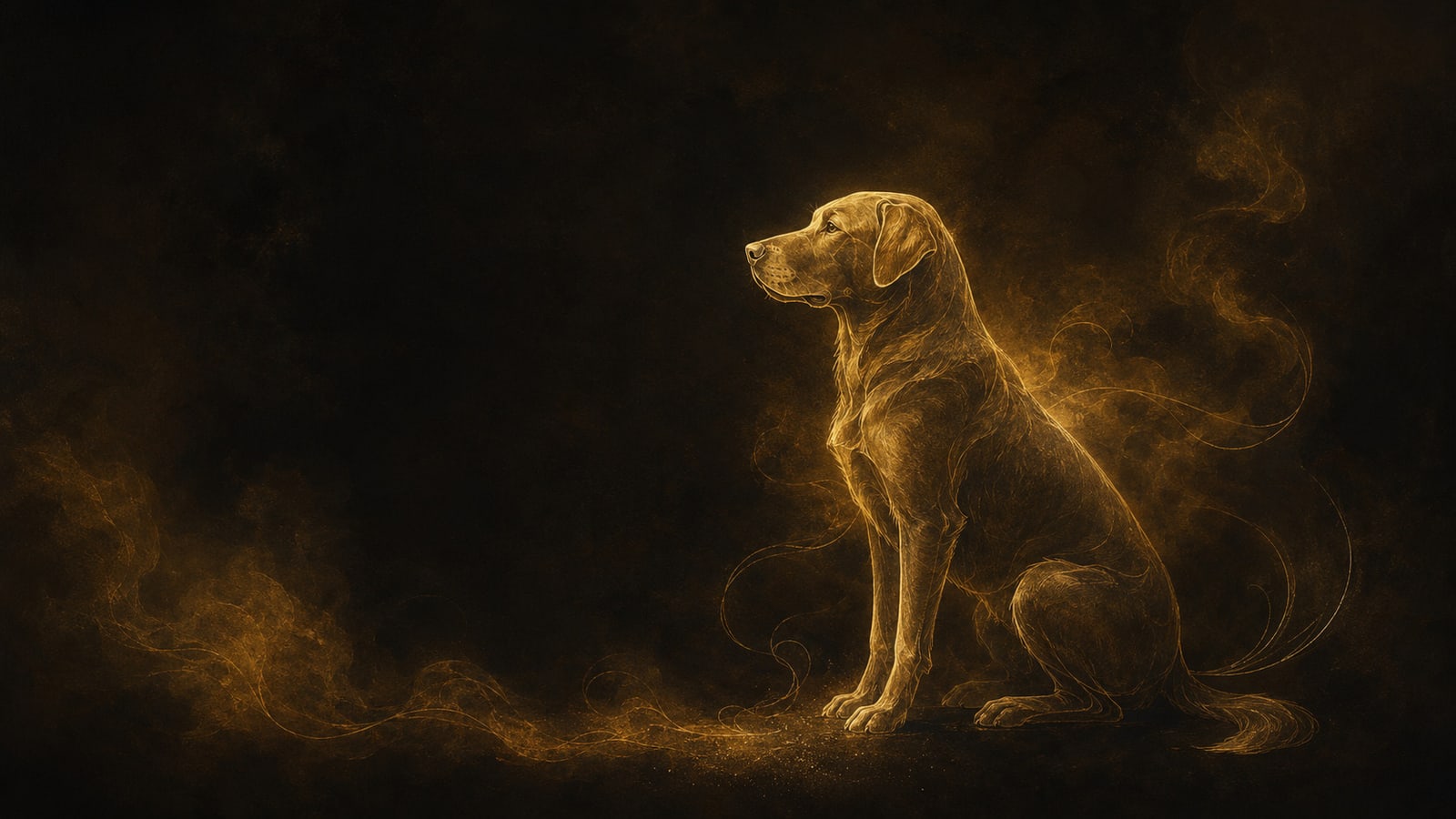 Featured
A dog in a dream most often reflects loyalty, friendship, protection, or instinct, the parts of your life built on trust. But the reading shifts sharply with the dog's behavior. A friendly dog, an aggressive dog, a lost dog, and your own dog each ask a different question, and the feeling you woke with matters more than the breed or the color. A threatening dog does not prove that a person in your life is dangerous, and no dog dream predicts an event.
Key Takeaways
Trust made visible
Dogs tend to stand in for loyalty, friendship, and protection, the relationships you rely on.
Behavior is the message
A friendly dog and an aggressive dog point in opposite directions; read the demeanor first.
Your own dog is different
A familiar dog usually carries the actual bond, while an unknown dog leans symbolic.
Not an accusation
A hostile or biting dog does not identify a disloyal or dangerous person in waking life.
Tradition, not fact
Biblical, Islamic, and Hindu readings are belief and reflection, never prediction.
Reflection, not diagnosis
Use a dog dream to check in on trust, boundaries, and instinct, not as a verdict.
01The most common meaning
Dogs hold a specific place in human life that almost no other animal shares. They are the companion species, bred for thousands of years to guard, to work beside us, and to stay. So when a dog walks into a dream, the most common reading is that something in the territory of loyalty, companionship, or protection is on your mind: a friendship, a family bond, a person you rely on, or your own instinct to guard what matters.
The dog's demeanor usually does the talking. A relaxed, friendly dog tends to reflect support you feel or want, a bond that is working, or a part of yourself that feels steady and trusted. An aggressive or menacing dog flips the frame, and often points to a conflict with someone close, a boundary being pushed, or a feeling that something once safe has turned unpredictable. An injured or neglected dog frequently lands as worry about a relationship or a loyal part of yourself that has been overlooked.
None of this identifies a real person. A dream cannot tell you who is faithful and who is not. What it can do is show you where the feeling of trust, or the fear of losing it, is currently strongest, and that is a useful place to start reflecting.
02The psychology of dog dreams
Dream science offers a few grounded lenses here, and it helps to hold them as theory rather than settled fact. During REM sleep the brain is highly active and emotionally charged, and dreams draw heavily on the people, animals, and situations that fill waking life. For most dreamers a dog is not an exotic symbol at all; it is a daily presence, or a memory of one. Dreaming about dogs is, at the simplest level, the mind replaying one of its most familiar and emotionally loaded figures. The mechanics behind this are covered in our guide to why we dream.
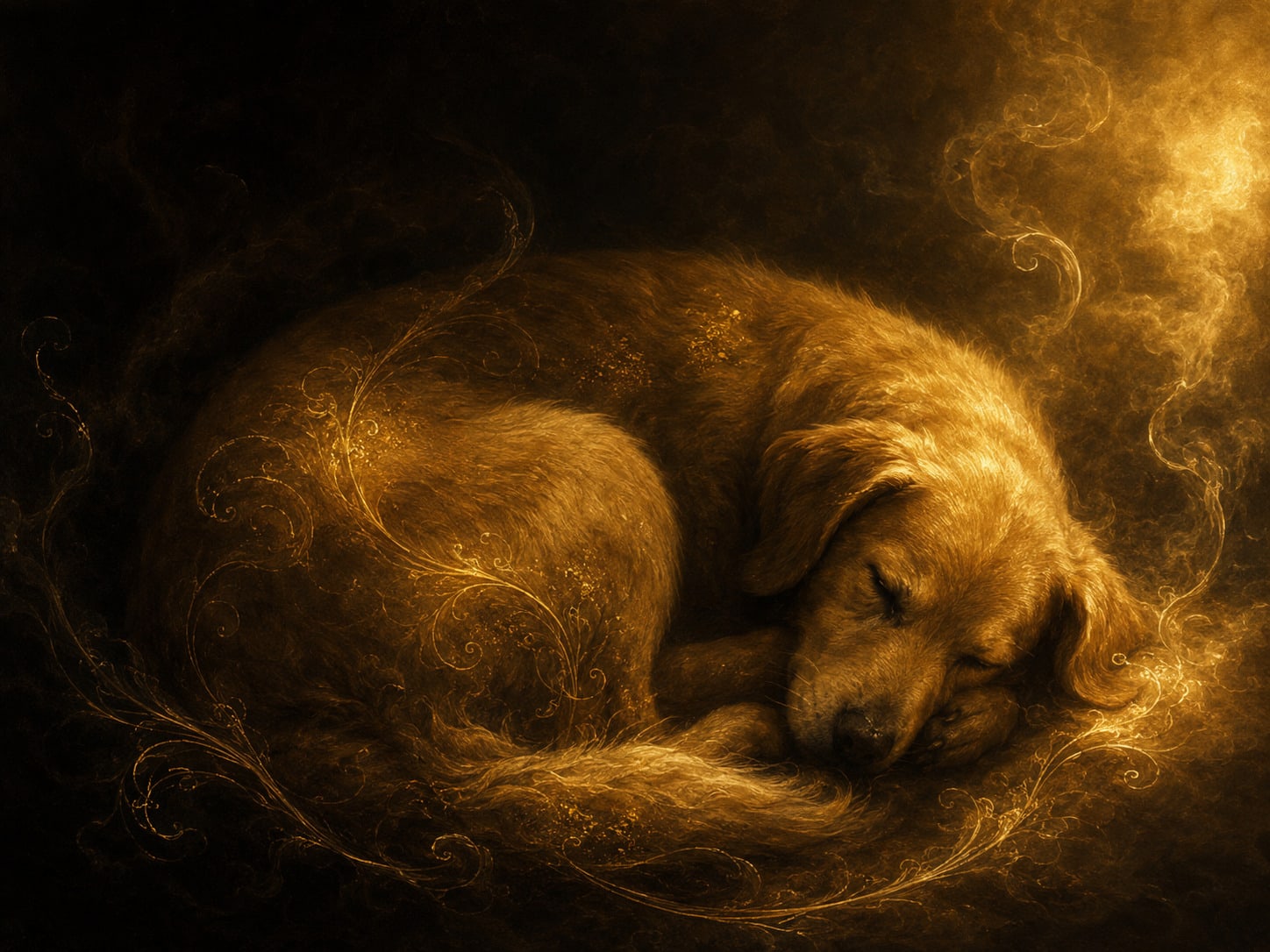
Threat-simulation theory, one leading idea in dream research, suggests the dreaming brain rehearses recognizing and responding to danger in a safe setting. That frame fits the aggressive-dog dream well: a growling or attacking dog is the mind running a drill on threat, especially threat from something close and familiar, which is exactly what makes it unsettling. A snarling stranger is frightening; a snarling dog is frightening in a more personal way, because dogs are supposed to be on our side.
The older psychological traditions add their own angles. Carl Jung treated animals in dreams as images of instinct, and read the dog, the most domesticated of animals, as instinct that has been tamed and brought into relationship with us. In that frame a friendly dog can reflect instinct working with you, and a hostile one can reflect a natural drive, anger, appetite, or self-protection, that has turned against you or been pushed too far down. Freud, characteristically, looked beneath the image for buried feeling. Modern researchers lean more on emotion processing: sleep appears to help the brain digest the feelings of the day, and feelings about loyalty, companionship, and betrayal are among the heaviest we carry. A dog is simply a natural shape for them to take.
03How the scene changes the meaning
The same dog can mean opposite things depending on what it was doing and how you felt. Read the whole scene, not the animal alone. The grid below is a starting point for reflection, not a verdict.

Hover or tap a row to highlight it.
| Dog scene | What it often reflects | The emotional read |
|---|---|---|
| A friendly, affectionate dog | Support, loyalty, a bond that is working | Safe, accompanied, at ease |
| An aggressive or attacking dog | Conflict close to home, a boundary under pressure | Threatened by something familiar |
| A barking dog | A warning feeling, or someone demanding attention | Alerted, on edge |
| A dog biting you | Hurt or betrayal from a trusted quarter, a boundary crossed | Wounded where you felt safe |
| Your own dog | The actual bond with that animal, or what it protects in you | Tender, familiar, sometimes grieving |
| An unknown or stray dog | An untested relationship, or a loyal part of you without a home | Curious, wary, unattached |
| A lost dog | Separation from comfort, trust, or companionship | Anxious, searching |
| An injured or dying dog | Worry for a bond or a faithful part of yourself under strain | Protective, sad, responsible |
| A pack or multiple dogs | Group loyalty, social pressure, or feeling outnumbered | Belonging, or surrounded |
| A puppy | A new bond, new responsibility, or something young in you to care for | Warm, slightly burdened |
Two distinctions do a lot of work here. The first is your own dog versus an unknown dog. A dream about your actual dog, living or gone, usually carries the real relationship: the comfort it gives, the responsibility it asks, or plain grief and memory if the dog has died. Dreaming of a pet who has passed is common and often lands as the mind revisiting love rather than sending a message. An unknown dog leans more symbolic, and its behavior toward you often mirrors how safe or exposed you feel in some current relationship.
The second is who the aggression belongs to. Being chased or cornered by a hostile dog usually works like most chase dreams, where the urge to get away matters more than the pursuer; our guide to the being chased dream meaning unpacks that pattern in full. Color, by contrast, carries less weight than searches suggest. A black dog has a long folkloric shadow, but in your dream its color is best read as a personal association, not a fixed code.
04Spiritual and biblical meaning of dogs in dreams
Spiritual readings of dog dreams are widely searched, and the honest way to present them is as belief and tradition, named and attributed, never as fact or forecast. The dog is an unusual case because the major traditions do not agree, and even a single tradition can hold more than one view.
In the biblical tradition, dogs mostly appear in a harsh light, but context matters. When Goliath sneers at David in 1 Samuel 17:43, "am I a dog, that you come at me with sticks," the word is an insult, a mark of low status in that culture. Matthew 7:6 uses dogs in a saying about not giving what is holy to those who will trample it, and Philippians 3:2 uses "dogs" polemically about opponents. These passages tell us how the word functioned in its time; they do not make every dream dog a bad sign, and scripture nowhere assigns a meaning to dreaming of one. Proverbs 12:10 cuts the other way, praising the righteous person who cares for the needs of their animals. A careful biblical reading names the specific passage and stays in the register of belief; our biblical dream symbols guide covers the wider symbol set the same way.
In Islamic tradition the dog carries a distinct and layered valence, and it deserves careful handling. In everyday Islamic practice dogs raise well known questions of ritual purity, yet the Quran itself gives the dog one of its gentlest roles: in Surah al-Kahf, the dog of the Companions of the Cave stretches its paws at the threshold and keeps watch over the sleepers (Quran 18:18), and is counted with them when their number is discussed (18:22), a loyal guardian remembered within a story of faith. In the later interpretive tradition associated with Ibn Sirin, a dog in a dream is commonly read as a hostile person of low character or as a guard, while a hunting dog is sometimes read positively, as effort that brings provision. It matters to keep the layers straight: the Ibn Sirin readings are influential later interpretation, not a Quranic rule, and within the tradition itself dream interpretation is reflection, never grounds to judge a real person. Our guide to what Islam says about dreams sets out how that tradition frames dreams as a whole.
Hindu tradition holds the dog in genuine tension. Dogs are linked with Bhairava, a fierce form of Shiva who is depicted with a dog as his mount, and the Mahabharata closes with Yudhishthira refusing to enter heaven without the faithful dog that walked the final road with him, a dog revealed to be Dharma itself. Alongside that, older Vedic imagery places dogs with Yama, the lord of death, as watchers on the path of the departed, and everyday folk belief in some regions treats a dog's howl as inauspicious. Both threads are real, which is exactly why a Hindu reading of a dog dream depends on the strand of tradition being drawn on. Beyond these, ancient Egypt gave the canine form to Anubis, guardian of the dead, Greek myth set Cerberus at the gate of the underworld, and the Chinese zodiac makes the Dog a sign of loyalty and honesty. Many modern spiritual writers call a dream dog a protector or guide. Across all of it the dog keeps returning to the same post: the threshold, where loyalty and guardianship meet. Treat every one of these readings as a lens for reflection within a belief system, not as a prediction about your life.
05Key scenarios and variants
Dog dreams arrive in a handful of recognizable versions, and each bends the core theme of loyalty and protection in its own direction. Read your scene for its feeling first, then use these as prompts. Several are common enough to deserve their own full reading, which we are adding over time; the dogs entry in the dream dictionary gathers the essentials in one place.
- A friendly dog approaching, playing, or walking beside you tends to reflect support you have or want, and often simply marks a season where trust feels steady.
- An aggressive dog, growling, lunging, or attacking, usually points to conflict or boundary pressure from somewhere familiar, and the fear says more than the teeth.
- A dog bite concentrates the aggressive dream into contact: hurt that got through, often in the territory of a trusted relationship or a boundary you feel was crossed.
- Your own dog appearing usually carries the real bond, and if the dog has died, the dream is most often love and grief revisiting, not a message.
- A lost dog, yours or unknown, tends to express separation from comfort or companionship, or worry about a bond drifting out of reach.
- Multiple dogs or a pack can read as belonging when the pack is with you, and as social pressure or feeling outnumbered when it is not.
- A black dog or a white dog is best read through your own associations and the feeling of the scene; color is not a fixed code, in dreams or in any careful tradition.
- A puppy often points to a new bond or a new responsibility, something young that needs your care, which can feel warm and demanding at once.
If a hostile dog keeps returning as a distressing nightmare, the repetition matters more than the image, less as a message and more as a sign of something unresolved. Our nightmares guide covers when disrupted sleep is worth raising with a professional.
06Common questions about dog dreams
What do dogs symbolize in dreams?
Most commonly loyalty, friendship, protection, and instinct. Dogs are the companion animal, so the dreaming mind reaches for them when trust and connection are in play. The specific meaning depends on the dog's behavior and your feeling, not on the dog itself.
Is dreaming of dogs good or bad?
Neither, on its own. A friendly dog usually reflects support and steadiness, while an aggressive one reflects conflict or boundary pressure, and both are readings of your current feelings rather than verdicts on your life. No dog dream is a good or bad omen.
Do dog dreams mean good luck?
Not in any way a dream can promise. Some traditions, such as the Chinese zodiac's loyal Dog, associate dogs with fidelity and honesty, and many people wake from a friendly dog dream feeling encouraged. That feeling is worth keeping; the luck claim is folklore, not forecast.
What is the spiritual meaning of a dog in a dream?
It depends entirely on the tradition. Biblical passages mostly use "dog" as a term of contempt, the Quran remembers the loyal dog of the Companions of the Cave, the Ibn Sirin tradition often reads dream dogs as hostile figures or guards, and Hindu tradition sets faithful dogs beside both Shiva's fierce form and the road to the afterlife. Each is a belief system's lens, and none of them predicts events.
What does an aggressive dog in a dream mean?
Usually conflict, threat, or boundary pressure from something close and familiar, which is what makes it more unsettling than a generic threat. It does not identify a dangerous person. Ask where in waking life something once safe now feels unpredictable.
What does it mean to dream of my own dog?
A familiar dog usually carries the actual relationship: comfort, responsibility, or memory. If your dog has died, dreaming of them is common and generally reflects grief and love doing their slow work rather than a message from beyond. Let it be tender; it does not need decoding.
What does a dog dream mean in Islam?
In the later interpretive tradition associated with Ibn Sirin, a dream dog is commonly read as a low or hostile person or as a guard, with a hunting dog sometimes read favorably. The Quran itself gives no such rule, and its best known dog, in Surah al-Kahf, is a loyal companion. These readings are held as tradition and reflection, never as fact or as grounds to accuse anyone.
When should I worry about recurring dog nightmares?
An occasional bad dog dream is normal, even for people who love dogs. If the same nightmare returns often, wrecks your sleep, or leaves distress that lingers into the day, that pattern is worth raising with a clinician. The dream is not a diagnosis, but persistent nightmares are a reasonable thing to talk through.
Reading your dog dream
The most reliable guide to what a dog dream means is:
In Surah al-Kahf, the dog of the Companions of the Cave is remembered as:
An aggressive dog in a dream proves that someone close to you is disloyal.
Pick an answer to begin.
Whatever your dog was doing, the next step is the same: read the scene against your own life rather than as an omen. Start with the feeling you woke with, browse the dream dictionary for the other symbols that shared the scene, and let DreamTold help you follow the detail that stuck with you.
Dream terms
Tap a term to see what it means.
Threat-simulation theory. The idea that the dreaming brain rehearses recognizing and escaping danger in a safe setting, one leading explanation for vivid aggressive-animal dreams.
Instinct (Jungian). In Jung's frame, the natural drives a person carries; the dog, as the tamed animal, often stands for instinct in relationship with the conscious self.
Emotion processing. The well supported view that sleep helps the brain digest the feelings of waking life, which is why emotionally loaded figures like dogs surface in dreams.
Ibn Sirin. The name attached to an influential later tradition of Islamic dream interpretation, cited as belief and tradition rather than as the Quran.
Companions of the Cave. The sleepers of Surah al-Kahf, whose loyal dog kept watch at the cave's threshold, the Quran's best known dog.
07Sources
Every claim on this page that comes from somewhere else, with the somewhere else. Scripture and hadith are linked so you can read them in context rather than trusting a paraphrase.
- BibleGateway: 1 Samuel 17:43
- Ibn Sirin dictionary (PDF): Ibn Sirin tradition
- Quran.com: Quran 18:18
Related
articles.
Black and White Striped Snake Dream Meaning: Duality Explained
Black and white striped snake dream meaning: a black and white choice, a camouflaged warning, and what several traditions each say it means.
Read: Black and White Striped Snake Dream Meaning
Red and Black Striped Snake Dream: Is It a Warning?
Woke up shaken by a red and black striped snake dream? Learn what the coral snake connection is, why fear matters more than color, and what traditions say.
Read: Red and Black Striped Snake Dream
Black Cat Dream Meaning: Luck, Warning, and What the Superstition Misses
A black cat in a dream usually reflects instinct, privacy, and boundaries. What the cat was doing carries the meaning, and the luck belief is regional.
Read: Black Cat Dream Meaning