

Tsunami Dream Meaning: The Wave You See Coming
What a tsunami dream means, why the wave you see coming keeps returning, and how escape, survival, and family change the reading. Belief labeled, no omens.
 Featured
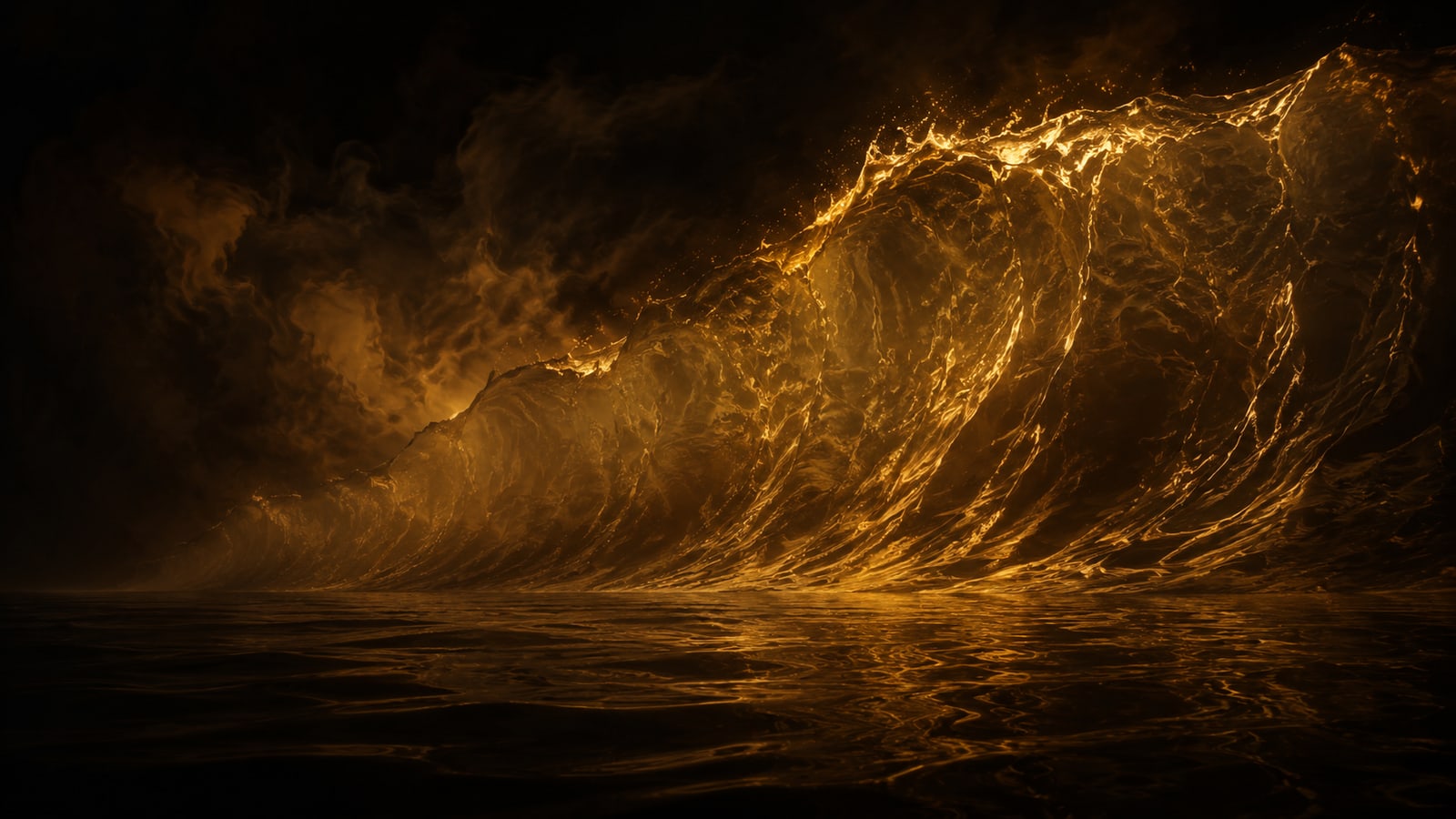
A tsunami dream usually turns overwhelm or a sudden, sweeping change into a wave too large to control. Its signature is that you see it coming: a wall of water on the horizon, a dread with a shape and a direction, something enormous bearing down that you feel powerless to stop. It does not predict a real tsunami or any disaster. What matters most is how far away the wave was, what you did as it approached, and whether you came through it.
Key Takeaways
Dread with a horizon
The tsunami's signature is anticipation. You see the wave before it arrives, the way you see a deadline, a decision, or a change bearing down in waking life.
Not a forecast
A tsunami dream does not predict a real tsunami, a disaster, or any coming event.
Distance is the dial
Whether the wave is far off, at your heels, or already breaking often tracks how close the pressure feels right now.
Survival is the hopeful read
Riding out the wave, or being swept up and surfacing, tends to mirror coping that holds even when the worst arrives.
Repetition tracks pressure
A tsunami that returns night after night usually points to an ongoing strain that has not resolved, not an escalating warning.
Belief, not fact
Spiritual and religious readings of the great wave are tradition and reflection, never prediction.
01The most common meaning
Water in a dream tends to stand in for your emotional life, and a tsunami is that life gathered into a single overwhelming force. The most common reading is a wave of overwhelm, rapid change, or fear that something is too large to control: a situation, a shift, a stretch of pressure that feels like it could sweep everything in front of it. Our full guide to water dreams and what they mean covers the wider symbol; the tsunami is its most dramatic and most anticipated scene.

What sets the tsunami apart from the other water dreams is timing. In a flood dream the water is already rising around you, and in a drowning dream you are already under. The tsunami is the water you see coming. There is a horizon, a wall forming on it, and a stretch of terrible seconds or minutes in which you know what is about to happen and feel unable to stop it. That anticipation is the dream's emotional core, and it is why tsunami dreams so often surface when something large is approaching in waking life: a move, a diagnosis, a breakup, a job change, a conflict that has been building. The dream is less about the impact than about the dread of the impact.
As with every water dream, the feeling you woke with is the best starting point. Pure panic points somewhere different from grim resignation, and both point somewhere different from the strange awe some dreamers report as the wave rises. Ask what in your life currently gives you that same charge, something big, visible, and approaching, and you are usually close to what the wave is standing in for. The dream does not prove the thing will overwhelm you; it shows you where the fear of being overwhelmed currently lives.
02The psychology of a tsunami dream
Dream researchers often describe a continuity between waking life and dreaming: the moods and preoccupations you carry through the day tend to follow you into sleep rather than breaking from it. If your days are spent bracing for something, the sleeping mind has an obvious image available, and a wave you can see coming fits braced anticipation almost perfectly. One leading idea in dream science, threat-simulation theory, adds that dreaming may let the brain rehearse danger in a safe setting, which would help explain why the scene feels so vivid and physical. Both are frameworks rather than settled fact, and the honest reading stays modest: a tsunami dream usually means a large feeling followed you to bed, not that a real event is near.
The recurring version deserves its own honest treatment, because for many people the tsunami is not a one-time dream. Entire online communities exist where people compare recurring tsunami dreams that have followed them for months or years, and if that is you, you are in familiar company. The straightforward reading is that recurring anxiety imagery tends to track ongoing pressure. The dream is not escalating toward a prophecy; it is repeating because the strain it gives shape to has not resolved. A wave that keeps returning is worth treating as a standing question, roughly, what large thing do I still feel bearing down on me, rather than as a countdown. When the repetition itself becomes distressing, wrecks your sleep, or leaves a lingering dread through the day, that pattern is worth attention in its own right; our guide to nightmares and what they mean covers recurring distressing dreams and when it makes sense to bring them to a professional.
It is also worth saying plainly what the dream cannot do. A tsunami dream cannot forecast a natural disaster, and it cannot verify that the thing you fear will actually flatten you. Dreams dramatize feelings; they do not measure outcomes. Many people who dream of the wave are managing their waking pressure far better than the dream's imagery suggests. Treat the tsunami as a picture of how big the thing feels, not proof of how big it is.
03How the scene changes the meaning
The same wave can carry very different stories depending on where it was, what you did, and how the dream ended. Read the scene as a whole rather than the wave alone. The grid below is a starting point for reflection, not a verdict.
Hover or tap a row to highlight it.
| Tsunami scene | What it often reflects | The emotional read |
|---|---|---|
| Seeing the wave far off | A pressure you can see approaching but have not yet met | Braced, watchful, feeling time run out |
| Running as the wave comes | The urge to escape something you feel you cannot stop | Panicked, pursued, outmatched |
| Surviving the wave | Coping that holds even when the worst arrives | Shaken but intact, quietly capable |
| Swept up but surfacing | Being overtaken, then finding your footing again | Overwhelmed, then relieved |
| Protecting family from the wave | Fear pointed at the people you most want to keep safe | Protective, responsible, stretched thin |
| Watching it hit from high ground | Distance from a crisis that touches others, or feeling prepared | Spared but unsettled, sometimes guilty |
| Repeated tsunami dreams | An ongoing pressure that has not resolved | Worn down, braced for the next wave |
A few details are worth weighing on their own. The distance of the wave often reads like a dial for how imminent the pressure feels, from a smudge on the horizon to a wall already curling overhead. Where the wave strikes matters too: a tsunami that hits your home pulls the overwhelm into your private life, a scene that overlaps with the reading in our guide to a flood inside the house, while a wave that swallows a whole city can spread the feeling wider, as if the change coming would rearrange everything, not just your corner of it. And the setting shades it as well; a tsunami rising out of a vast open sea borrows some of the scale and unknowability covered in our ocean dream guide. In every case the question is the same: what does the water reach, and what does that suggest the pressure would touch?
04Spiritual readings of a tsunami
Spiritual and religious readings of the great wave are widely searched, and they are best held as belief and tradition rather than fact. None of them predicts a disaster, and the traditions themselves generally use water as symbol rather than forecast.
In the biblical tradition, deep and violent water is a recurring image for distress and for passage through it. Psalm 69 opens with the cry "the waters have come up to my neck," a picture of being overwhelmed by trouble. Mark 4 tells of a storm on the sea being calmed, an image of fear met with peace. Isaiah 43 carries the promise of passing through the waters without being swept away. Read as symbol, these passages hold both halves of a tsunami dream: the terror of the wave and the hope of coming through it. They offer water imagery for reflection, not a tsunami forecast.
In the Islamic tradition, the Qur'an recounts the flood of Nuh in Surah Hud, a story of overwhelming water tied to warning and deliverance within its own narrative. The later dream-interpretation material attributed to Ibn Sirin, which many modern lists draw on, is interpretive tradition rather than Qur'anic doctrine, and it is best labeled that way. A hadith in Sahih Muslim also counsels a calm, unafraid response to distressing dreams, which is a gentler frame for a tsunami nightmare than any omen reading.
Other traditions carry their own great-water imagery. Japanese folklore links the giant catfish Namazu to earthquakes and the sea's upheaval. Greek myth embodies the ocean's overwhelming power in Poseidon. Hindu tradition centers the ocean's force in the churning of the sea, the Samudra Manthana. Modern spiritual writing often calls the tsunami a wave of emotional release, a buildup finally breaking. All of these are belief systems and cultural stories, offered here as lenses, and none of them turns a dream into a prediction.
05Key scenarios and variants
The tsunami shows up in a handful of recognizable versions, and each bends the central theme of visible, oncoming overwhelm in its own direction. Read your scene for its feeling first, then use these as prompts.
- A wave seen far away, still on the horizon, often mirrors a pressure you can see approaching but have not yet had to face, the long dread before the event.
- Running from the wave tends to reflect self-protection and the urge to escape something that feels unstoppable, and the dream often withholds the ending, which is part of why it unsettles.
- Surviving the tsunami, whether you ride it out, reach shelter, or simply find yourself still standing after it passes, is the hopeful variant, frequently read as coping and resilience holding up under the worst the mind can stage.
- The wave hitting your house pulls the overwhelm into your private world, home, family, the life inside your walls, rather than the world at large.
- Protecting or rescuing family points the fear at what you most want to keep safe; a version where loved ones are carried to safety can also mirror the support you have or hope for.
- Reaching high ground before the wave arrives can mirror preparation, a sense that you have done what you can and found a place to stand.
- Repeated tsunami dreams, night after night or across years, tend to mirror an ongoing strain and can shade into sleep distress when the destruction repeats; the water entry in the dream dictionary collects the wider symbolism behind all of these.
06Common questions about tsunami dreams
Does a tsunami dream predict a real tsunami or disaster?
No. A tsunami dream can feel like a warning because the imagery is so enormous, but dreams do not forecast natural disasters or any other real event. The wave almost always stands in for a waking feeling of overwhelm or an approaching change, and its size tracks the size of the feeling, not the odds of a catastrophe.
What does it mean to survive a tsunami in a dream?
Surviving the wave is generally the most encouraging version of the dream. Riding it out, reaching safety, or finding yourself intact after the water passes tends to mirror coping and resilience, a sense that even if the overwhelming thing arrives, some part of you expects to still be standing. It can also reflect relief already arriving as a hard stretch begins to pass.
What does it mean to dream of a tsunami with my family?
When family is in the scene, the dream usually points the fear at the people you most want to protect. Scrambling to reach or shield them tends to express protective anxiety and a sense of responsibility rather than anything predictive about them. If they are carried to safety, that detail can mirror support, yours for them or theirs for you.
Why do I keep having tsunami dreams?
Recurring tsunami dreams are common enough that whole online communities compare them. The plainest reading is that the pressure the wave stands in for has not resolved, so the mind keeps reaching for the same image. The repetition is a signal of an ongoing strain, not an escalating warning. If the dreams are frequent, distressing, or costing you sleep, treat that pattern seriously and consider talking it through with a professional.
What does it mean if the wave never actually reaches me?
A wave that looms but never lands keeps the whole dream inside the anticipation, which is often the point. It can mirror a dread that lives mostly in the waiting: a thing you keep bracing for that has not arrived, and may never arrive at the size the dream gives it. The unbroken wave is worth reading as the shape of the worry itself.
Is a tsunami dream a spiritual warning?
Scripture and tradition use deep and stormy water as symbolic imagery for distress, deliverance, and passage, and modern spiritual writing often reads the wave as emotional release. All of these are belief, offered for reflection, and none of them makes a dream a forecast. No reliable evidence shows that a tsunami dream foretells anything, so hold any spiritual reading as a personal lens and be wary of sources that claim otherwise.
Reading your tsunami dream
What most distinguishes a tsunami dream from a drowning dream?
Recurring tsunami dreams most often track:
Spiritual and religious readings of the great wave are best held as:
Pick an answer to begin.
Whatever the wave was carrying, the next step is the same: read it in your own context rather than as an omen. Name the feeling you woke with, notice how far off the water was and whether you came through it, and ask what large, visible thing in your waking life carries that same charge. Look up the water entry in the dream dictionary at DreamTold, or browse the wider dream dictionary for the symbols around it. This is a guide for reflection, not medical advice; if tsunami nightmares keep returning or leave you distressed, a qualified professional can help.
Dream terms
Tap a term to see what it means.
Anticipatory anxiety. Worry focused on something that has not happened yet, the waking feeling closest to watching a wave build on the horizon.
Threat-simulation theory. The idea that the dreaming brain rehearses recognizing and escaping danger in a safe setting, one proposed reason overwhelming dreams feel so vivid.
Continuity of dreaming. The idea that dreams tend to carry on the moods and concerns of waking life, so a braced, pressured stretch can surface as an oncoming wave.
Recurring dream. A dream that returns with the same imagery or theme over weeks or years, often tracking a pressure or feeling that has not resolved.
REM sleep. The sleep stage where the brain is most active and vivid dreaming is most likely, marked by rapid eye movement and relaxed muscles.
07Sources
Every claim on this page that comes from somewhere else, with the somewhere else. Scripture and hadith are linked so you can read them in context rather than trusting a paraphrase.
- BibleGateway: Isaiah 43
- BibleGateway: Mark 4
- BibleGateway: Psalm 69
- Ibn Sirin dictionary (PDF): attributed to Ibn Sirin
Related
articles.

Lake Dream Meaning: Still Water, and What Is Under It
A lake is water that is not going anywhere. That stillness is what separates it from the ocean and the flood, and it is where the meaning of the dream sits.
Read: Lake Dream Meaning
Clear Water Dream Meaning: Calm, Clarity, and Reading Your Own Emotions
What clear water in a dream means: emotional clarity, calm, and seeing your situation truly, plus how swimming, drinking, and clouding water change the read.
Read: Clear Water Dream Meaning
Flood Dream Meaning: More Than You Can Manage
What a flood dream means, read by rising or receding water, clear or muddy, and whether you escape, plus biblical and spiritual readings. A no-omens guide.
Read: Flood Dream Meaning