

Killing a Snake in a Dream: Facing a Fear or Cutting Something Off?
What killing a snake in a dream means, read by your relief or unease and the snake's behavior, plus the biblical and Islamic readings. A grounded, no-omens guide.
 Featured
Killing a snake in a dream usually gives the dream a turning-point shape: you stopped avoiding something and acted, whether that was confronting a threat, ending a pattern, or forcing a boundary. It is not evidence that you defeated a real enemy or that harm is coming to anyone. The best clue is what you felt when the snake died. Relief tends to point to a fear faced down, while guilt or unease can suggest you cut off something you still needed to understand.
Key Takeaways
A turning point
Killing a snake often marks the moment you act instead of avoid, in the dream and sometimes in life.
Not a victory code
The dream does not prove you defeated a real enemy or that a rival will fall.
The feeling decides
Relief leans toward a fear faced down; guilt or unease leans toward an ending forced too soon.
Behavior matters
A snake that attacked first reads very differently from a passive snake you chose to kill.
Tradition, not fact
Biblical and Islamic readings are belief and reflection, never prediction.
Reflection, not diagnosis
Treat the dream as a prompt to examine what you are ending, not as a verdict on anyone.
01The most common meaning
A snake in a dream often stands in for something that feels threatening, untrustworthy, or hard to pin down. Killing it changes the story from noticing that thing to acting on it. That is why the most common reading of this dream is agency: a wish to confront, end, or take back control of something that has felt draining or out of your hands. The dream stages a decisive act, and your job on waking is to ask what in your life is asking for that kind of decision.
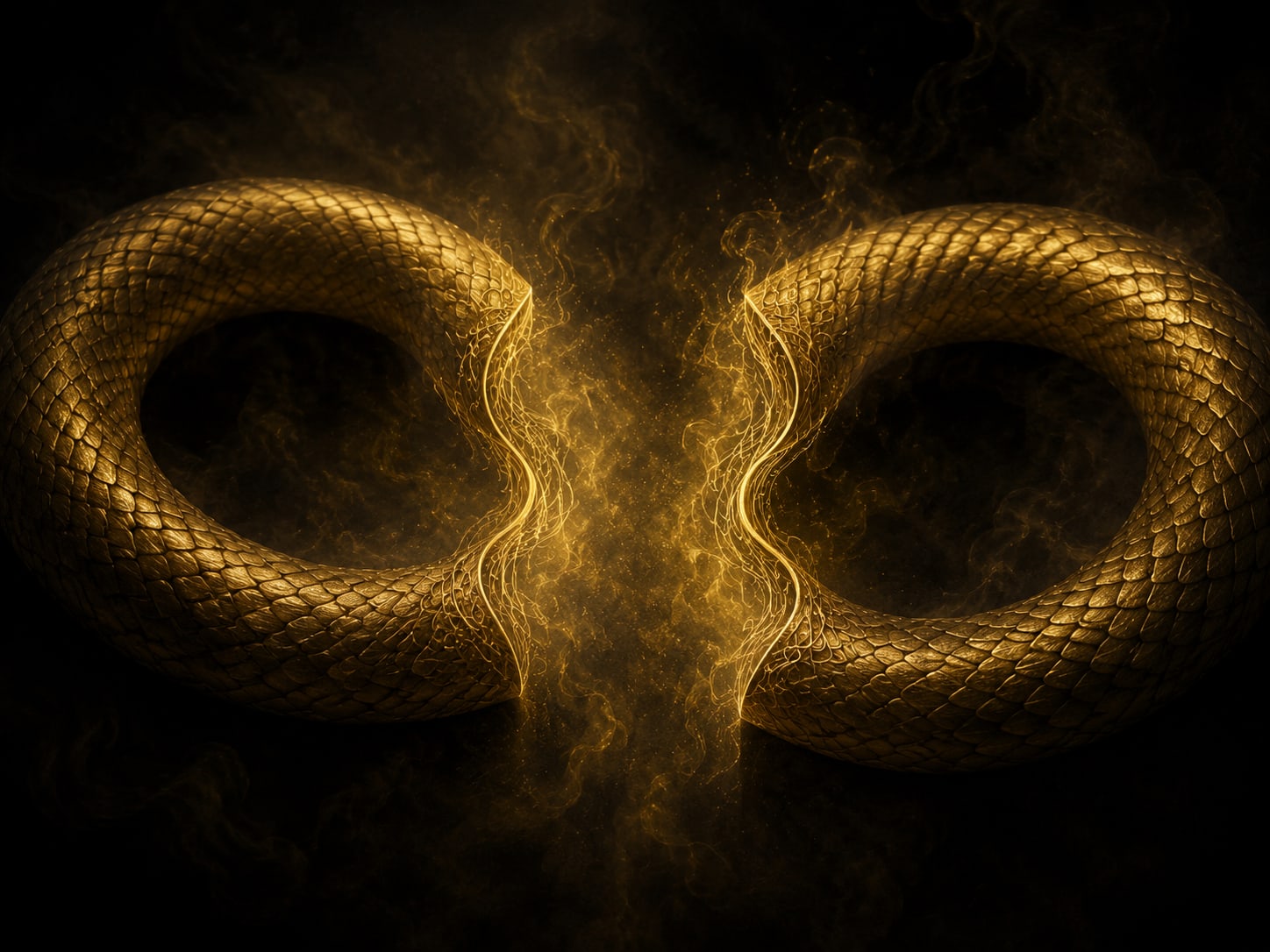
The dream does not predict anything. Killing a snake is not proof that you will defeat an enemy, that a specific person is against you, or that any harm is coming to you or anyone else. What it reliably shows is that some part of your mind is rehearsing an ending, a confrontation, or a boundary. Whether that ending is wise is a waking-life question the dream cannot answer for you.
The single most useful detail is the emotion at the moment the snake died and just after. Waking with relief, or even a strange calm, tends to fit a fear you were ready to face or a pattern you were ready to close. Waking with guilt, horror, or a nagging unease can fit the other half of the picture: cutting off something abruptly that you had not finished understanding, whether that is a relationship, an instinct, or a part of yourself. Both halves belong to the same symbol, which is why our full guide to dreams about snakes frames killing one as facing down a fear or cutting something off, decided by the feeling it leaves behind.
It also helps to notice what the snake was doing before you killed it. A snake that struck first puts you in a defensive story, where the killing reads as self-protection. A passive snake you chose to kill puts you in a story about force and choice, where the question becomes what you were so determined to end. If the snake bit you before you killed it, the dream is blending two scenes, and the bite half has its own logic, which our guide to the snake bite dream meaning walks through in detail. A bite is the moment something reaches you; the kill is the moment you answer it.
02The psychology of killing a snake in a dream
One leading idea in dream science is threat-simulation theory, which suggests the dreaming brain rehearses recognizing and responding to danger in a safe setting. Under that view, a dream where you kill a snake is a practice drill that runs all the way to the end: the threat appears, you respond, and the response works. That framing helps explain why these dreams can feel vivid and physical, and why they often follow stretches of waking life where you feel cornered or pushed. The violence in the image is the rehearsal, not a message about real violence.
Older psychological traditions add lenses worth knowing, as interpretation rather than settled science. Sigmund Freud read frightening dream images as disguised expressions of buried conflict, so a snake you must destroy could stand for an impulse or worry the waking mind keeps pushing down. Carl Jung is especially relevant to the uneasy version of this dream. His idea of the shadow, the disowned parts of the self, suggests that a snake you kill without clear cause may represent something of your own that you are rejecting rather than an outside enemy. In that frame, guilt after the kill is not random; it is the feeling of having silenced a part of yourself that still had something to say.
There is also a simpler, well supported reading. Sleep appears to help the brain process emotion, and unresolved feelings surface easily in dreams. Anger, fear, disgust, and the wish to be done with something are all high-charge feelings, and a snake killed by your own hand is an image that carries every one of them at once. When waking life holds a conflict you have been rehearsing endings for, whether a job, a relationship, or a habit, the sleeping mind can compress that rehearsal into one sharp act. The dream shows you the strength of the wish. It cannot tell you whether acting on it is right, and it cannot diagnose another person as a threat.
03How the scene changes the meaning
The same kill can mean very different things depending on whether the snake attacked, where it happened, and what the death felt like. Read the scene as a whole rather than the act alone. The grid below is a starting point for reflection, not a verdict.
Hover or tap a row to highlight it.
| Kill scene | What it often reflects | The emotional read |
|---|---|---|
| Killing a snake that attacked first | Confronting a threat that finally forced your hand | Defensive, then steadier |
| Killing a passive or harmless snake | Forcing an ending, or rejecting a part of yourself | Uneasy, sometimes guilty |
| Cutting off the snake's head | Wanting a decisive, final solution to a lingering problem | Done negotiating |
| Killing a snake in your house | Restoring a private boundary that felt crossed | Protective of your own space |
| Killing a snake in water | Trying to get control over a hard-to-name feeling | Overwhelmed but reaching for grip |
| Killing a cobra or a huge snake | Confronting a power that intimidates you | Outmatched but standing anyway |
| Someone else kills the snake for you | Seeking or receiving protection | Relieved, sometimes dependent |
| The snake returns after dying | A concern that feels unfinished despite your effort | Frustrated, not yet done |
Location sharpens the reading. A snake killed inside your home tends to pull the dream toward privacy, family, and the sense that something got past your walls, a setting our guide to a snake in the house dream covers on its own. A snake killed in water blends the confrontation with your emotional state, since water in dreams so often tracks feeling; the full picture is in our reading of a snake in water dream. Color is best treated as a personal or cultural association rather than a fixed code. A black snake you kill can carry the sense of striking at an unknown or a fear kept in shadow, a green one can lean toward change, envy, or something growing, and neither color makes the dream a good or bad sign by itself.
04Spiritual and biblical meaning of killing a snake
Spiritual readings of this dream are heavily searched, and much of what circulates online is confident in a way the sources are not. Popular videos and dream codes often declare that killing a snake means God-given victory over your enemies. That is a modern preaching formula, not a scriptural rule. No passage of scripture gives a dream dictionary entry for killing a snake, so the honest approach is to look at what the texts actually contain and hold them as belief and tradition rather than forecast.
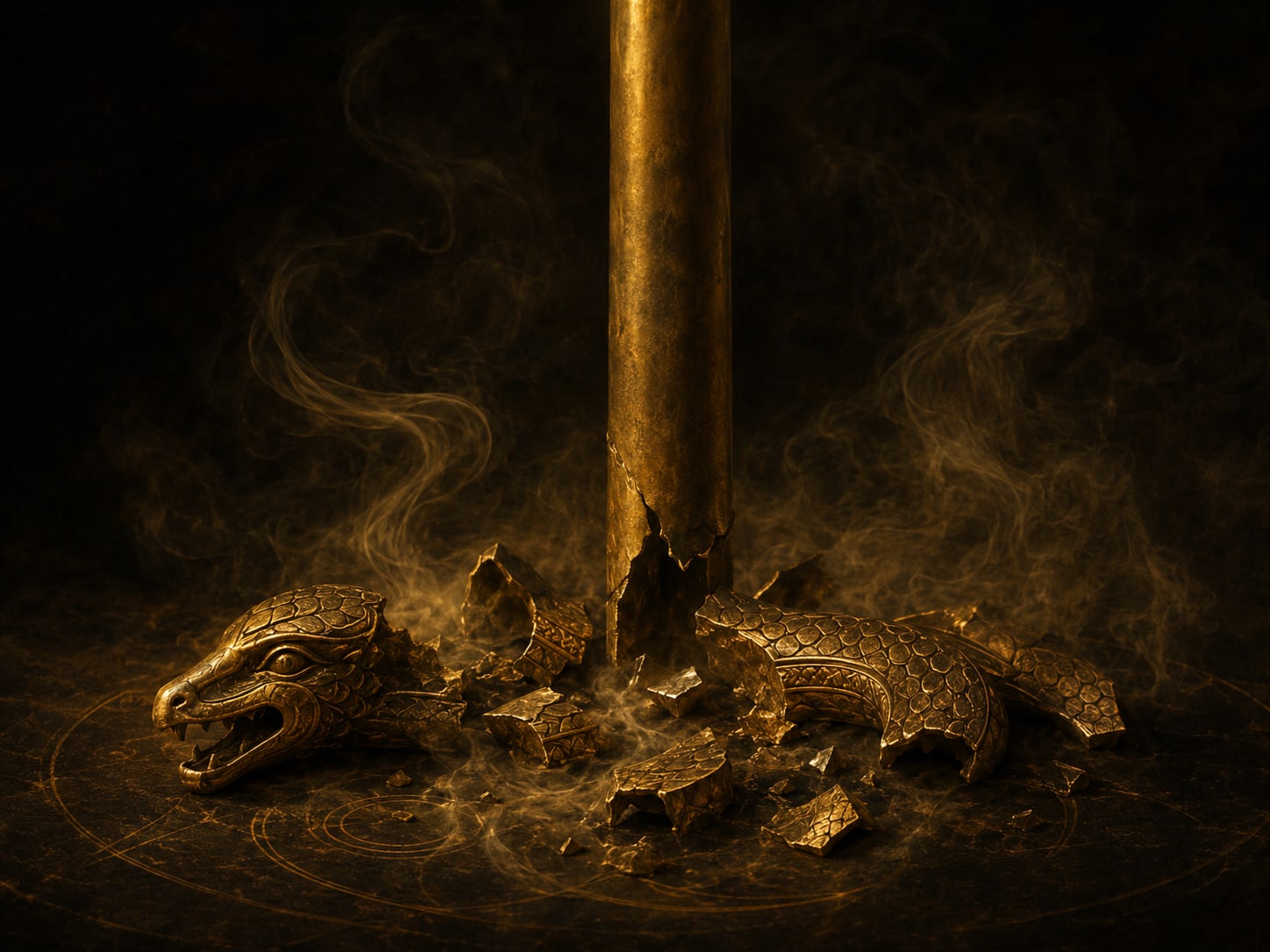
The biblical serpent is more layered than the victory framing suggests. Genesis 3:1-15 places the serpent in Eden and links it with deception and estrangement, which is where the instinct to read a snake as an adversary begins. Yet Numbers 21:4-9 has Moses raise a bronze serpent so that those bitten could look at it and be healed, so serpent imagery is not only negative. Exodus 7:10-12 describes Aaron's staff becoming a serpent that swallows the Egyptian magicians' staffs, a scene of authority over rival signs. The passage closest in shape to this dream is 2 Kings 18:4, where King Hezekiah destroys that same bronze serpent, by then called Nehushtan, because people had begun offering incense to it. It is a concrete image of ending something that had once served a good purpose and had since become a corrupt attachment. Psalm 91:13, with its picture of treading on the lion and the cobra, is traditionally read as protection over danger. Taken together these passages give a believer images of overcoming danger or ending a misused attachment, and none of them says a dream of killing a snake predicts victory. Our biblical dream symbols A to Z covers how to handle scriptural imagery in dreams without turning it into a code.
In Islamic tradition, the reading most people encounter comes from later dream manuals attributed to Ibn Sirin, where a snake commonly represents an enemy or enmity and killing it is read as overcoming that enemy. That is later interpretive literature, held as belief, not a rule from the Quran. The Quran itself describes Moses' staff becoming a serpent in Al-A'raf 7:107 and Ta-Ha 20:17-21, and swallowing the magicians' false display in Al-A'raf 7:117, scenes about divine authority rather than dream interpretation. For a frightening dream, hadith in Sahih Muslim (2261-2262) describe a practical response: seek refuge with God, spit lightly to the left three times, change the side you sleep on, and do not spread the upsetting dream. How the tradition weighs dreams more broadly is covered in our guide to what Islam says about dreams.
Other traditions carry the same confrontation in story form. Ancient Egyptian religion set the serpent Apophis against the sun god Ra as an image of recurring disorder opposed in ritual. Greek myth gives us Heracles killing the many-headed Hydra, a danger that multiplies when struck. In Hindu tradition, Krishna subdues the serpent Kaliya in the Yamuna river, while nagas elsewhere appear as water-associated guardians rather than enemies, a reminder that the serpent is not universally the villain. Modern spiritual communities often call killing a snake "cutting an energetic cord" or ending an old identity; that is present-day belief, not a finding from sleep research. And if you have run into the folk reading that this dream is a warning about an enemy, the grounded counterview is that threat imagery is shaped by your own emotional concerns and memory processing, and it does not identify a real person. Our guide to dream omens and warnings unpacks why warning-style readings feel so convincing and where they break down.
05Key scenarios and variants
The kill shows up in a handful of recognizable versions, and each one bends the central question, facing a fear or cutting something off, in its own direction. Read your scene for its feeling first, then use these as prompts.
- You killed a snake that attacked or bit you first. This is the defensive version, and it most often mirrors a boundary you are ready to set against something that has already reached you. Relief afterward tends to confirm that reading.
- You killed a passive or harmless snake. This is the version most likely to leave unease, and it can mirror a fear of overreacting, or of shutting down an instinct or a part of yourself you still needed. Horror after killing a harmless snake is worth sitting with, not explaining away.
- You cut off the snake's head. Decapitation is the dream reaching for the most decisive solution available. It often appears when you are done negotiating with a problem and want it settled in one stroke.
- You killed it in your bedroom or home. The home setting pulls the dream toward private life, and the kill reads as restoring a boundary in the space that is supposed to be safest.
- You killed a cobra or a giant snake. Scale tends to track how intimidating the waking issue feels. Killing something that outmatches you can mirror standing up to a power you had been shrinking from.
- Someone else killed the snake for you. The dream shifts from your agency to protection, and it can reflect either gratitude for support or a quiet question about whether you are letting someone else fight your battles.
- You killed one snake and more appeared, or it came back to life. Multiplying or returning snakes usually mark a concern that one decisive act has not resolved. The problem, or your feeling about it, is not finished, and the dream is honest about that.
06Common questions about killing a snake in dreams
Is killing a snake in a dream a good sign?
It can feel empowering, and for many dreamers it lands as a relief, but no dream image guarantees a good outcome. The dream reflects a wish to confront or end something; whether that ending is good depends on the waking situation it points to. Let the feeling after the kill, relief or unease, guide which way you read it.
Does killing a snake in a dream mean I defeated an enemy?
Later dream manuals, especially those attributed to Ibn Sirin, do use that language, and it is worth knowing as tradition. It is not a factual diagnosis of another person. A dream cannot confirm that someone is your enemy, and it should never be used to accuse anyone. What it can show is where you feel opposed or threatened right now.
What does it mean if I killed a snake that bit me first?
That sequence, harm and then an answer to it, often mirrors a boundary you are ready to set against something that has already cost you. Dreamers frequently wake from this version with relief, which fits the reading of harm faced and then overcome rather than harm foretold.
What if I felt guilty after killing the snake?
Guilt is information. It often appears when the snake was passive or harmless, and it can mirror a fear of overreacting, of ending something too abruptly, or of silencing an instinct you still needed. That version of the dream asks a quieter question: what are you cutting off, and did you finish understanding it first?
What does the Bible say about killing a snake in a dream?
No passage assigns the dream a meaning. Genesis 3 links the serpent with deception, Numbers 21:4-9 pairs serpents with healing through the bronze serpent, and 2 Kings 18:4 shows Hezekiah destroying that serpent once it became an object of worship. These are images a believer may connect to overcoming danger or ending a corrupt attachment, held as faith and reflection, never as a forecast.
What does killing a snake mean in Islam?
In the later interpretive tradition associated with Ibn Sirin, a snake is commonly an enemy and killing it is read as overcoming that enemy. That is belief from later manuals, not a Quranic rule. For a frightening dream, hadith in Sahih Muslim advise seeking refuge with God, spitting lightly to the left three times, changing sides, and not narrating the upsetting dream.
Why do I keep dreaming about killing snakes?
Repetition tends to follow stress, fear cues, trauma reminders, or a concern that stays unresolved, and a dream you keep having is usually a feeling you keep having. If the dream returns often, disrupts your sleep, or leaves lasting distress, that pattern is worth raising with a clinician. The dream is not a diagnosis, but persistent distressing nightmares deserve real support.
Reading your snake-killing dream
The most useful clue to what killing a snake in your dream means is:
In 2 Kings 18:4, King Hezekiah destroyed the bronze serpent because:
In the dream manuals attributed to Ibn Sirin, killing a snake is commonly read as:
Pick an answer to begin.
Whatever version you woke from, the next step is the same: read the kill in your own context rather than as an omen, and start with the feeling it left behind. The dream shows you what you are ready to end or confront; it cannot tell you whether to act, and it is a prompt for reflection, not a medical or spiritual verdict. Browse the snakes entry in the dream dictionary at DreamTold, or the wider dream dictionary, and follow the detail that stuck with you.
Dream terms
Tap a term to see what it means.
Threat-simulation theory. The idea that the dreaming brain rehearses recognizing and responding to danger in a safe setting, one leading explanation for why a dream can run a threat all the way to a kill.
Agency. The sense of being able to act on your circumstances rather than only endure them; killing a snake is one of the strongest agency images a dream can stage.
Shadow. Carl Jung's term for the disowned parts of the self; in his frame, a snake killed without cause may be something of your own you are rejecting.
Nehushtan. The bronze serpent of Numbers 21, later destroyed by King Hezekiah in 2 Kings 18:4 once it had become an object of worship.
Ibn Sirin. The name attached to an influential later tradition of Islamic dream interpretation, in which killing a snake is read as overcoming an enemy, cited as belief rather than the Quran.
07Sources
Every claim on this page that comes from somewhere else, with the somewhere else. Scripture and hadith are linked so you can read them in context rather than trusting a paraphrase.
- BibleGateway: 2 Kings 18:4
- BibleGateway: Exodus 7:10-12
- BibleGateway: Genesis 3:1-15
- BibleGateway: Numbers 21:4-9
- BibleGateway: Psalm 91:13
- Encyclopaedia Britannica: Jung
- Ibn Sirin dictionary (PDF): attributed to Ibn Sirin
- Project Gutenberg: Freud
- Sunnah.com: Sahih Muslim (2261
Related
articles.
Black and White Striped Snake Dream Meaning: Duality Explained
Black and white striped snake dream meaning: a black and white choice, a camouflaged warning, and what several traditions each say it means.
Read: Black and White Striped Snake Dream Meaning
Red and Black Striped Snake Dream: Is It a Warning?
Woke up shaken by a red and black striped snake dream? Learn what the coral snake connection is, why fear matters more than color, and what traditions say.
Read: Red and Black Striped Snake Dream
Many Snakes Dream Meaning: Feeling Surrounded or Outnumbered
What dreaming of many snakes means, from a pit of snakes to a floor covered in them, plus biblical, Islamic, and Hindu readings. A grounded, no-omens guide.
Read: Many Snakes Dream Meaning