

Lizard Dream Meaning: Renewal, Watchfulness, and Regrowth
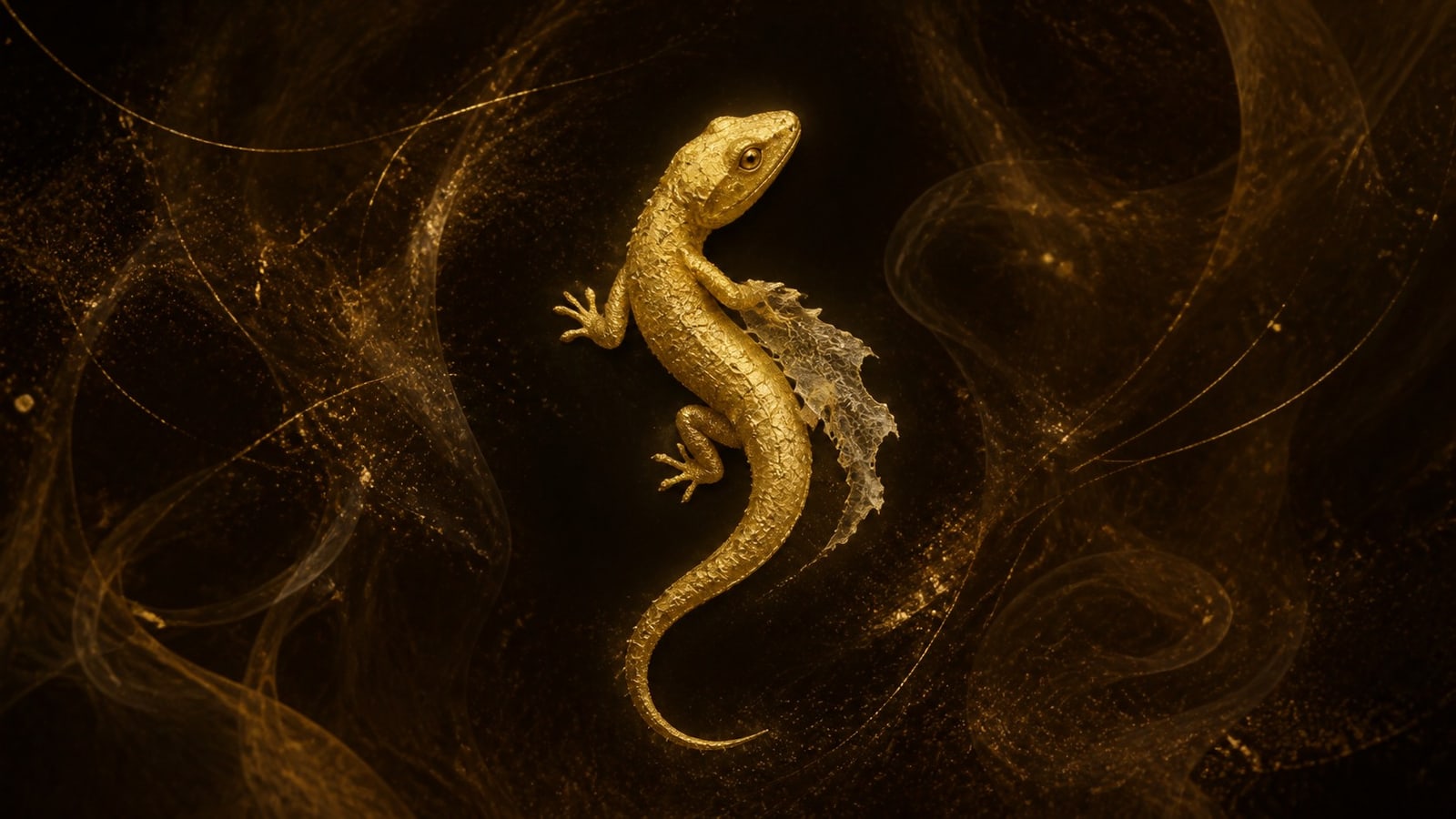
A lizard in a dream is usually watchful rather than threatening. What the lizard was doing decides the reading, and its dropped tail carries the meaning.
 Featured
A lizard in a dream is usually watchful rather than threatening, which is why so many people wake unable to decide how they should feel about it. Lizards hold still, notice everything, and leave the moment you get close, so the dreaming mind reaches for them when something in waking life is being observed, waited out, or carefully avoided. If yours did nothing in particular, that ambiguity is the reading rather than a gap in it. What settles the meaning is what the lizard did and how near it came.
Key Takeaways
The short answer
Lizards read as watchfulness, patience, and quiet adaptation more often than as danger. A lizard that did nothing alarming probably was not an alarm.
Why it felt unreadable
Lizards are neither friendly nor hostile by default, so the dream gives you no obvious emotional cue. That is characteristic, not a missing piece.
The tail is the key detail
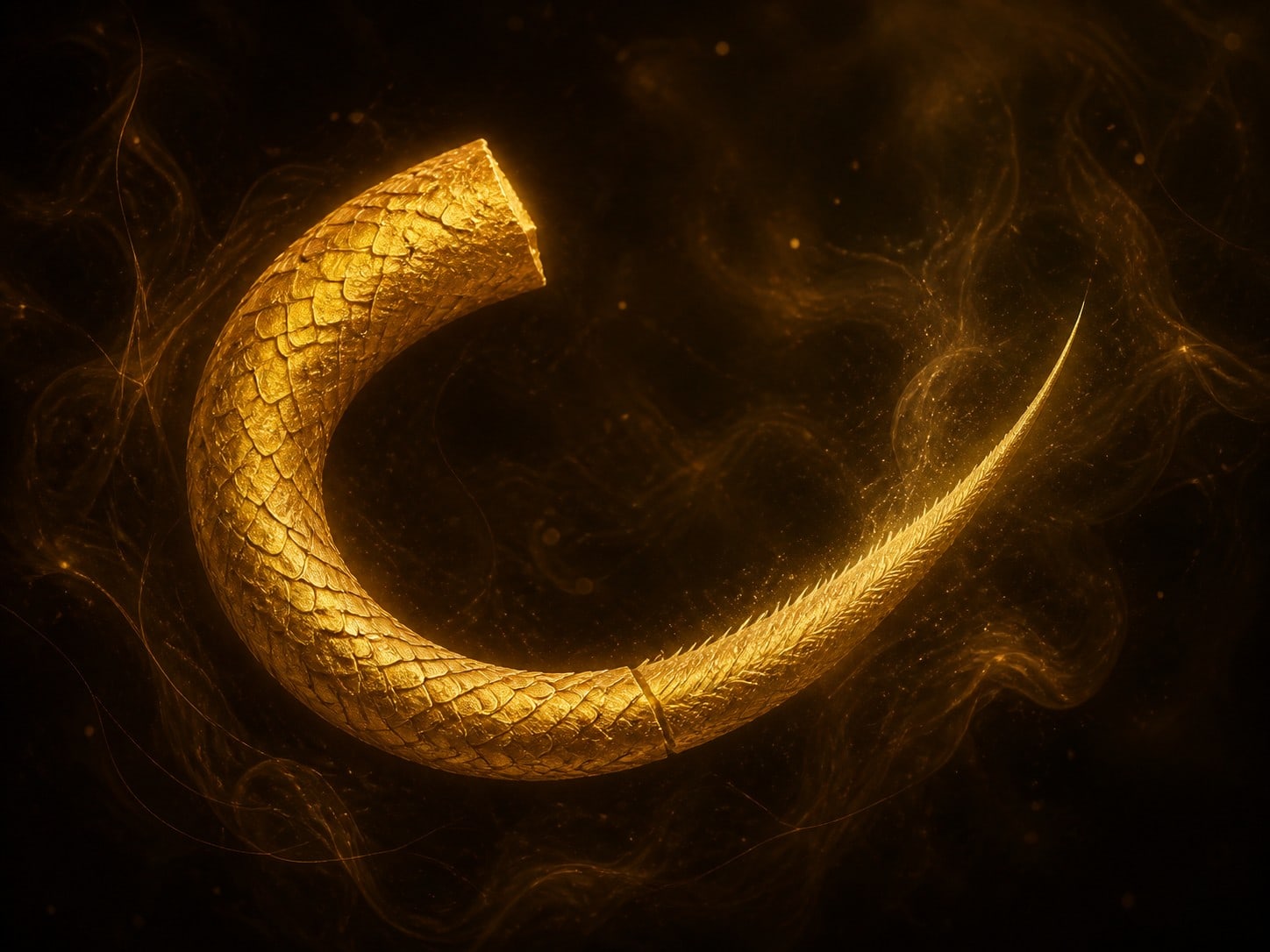
Lizards shed their tail to escape and grow it back. If that happened in your dream, it is about survival with a cost, and recovery afterward.
Distance is the dial
Across a wall, in your room, and on your skin are three different dreams, running from noticing to intrusion.
A common mix-up
The Indian tradition about lizards falling on you is about waking life, not dreams. It is a different practice with a different question.
01Was it threatening or harmless?
Usually harmless, and the reason you could not tell is worth knowing.
Most animals in dreams arrive with an emotional label attached. A snake is coiled, a dog is friendly or barking, a wasp is already a problem. Lizards do not do this. They sit on a wall and look at you. They are not aggressive, they are rarely affectionate, and they leave when you get too close. There is nothing in the encounter that tells you how to feel, which is why people wake from a lizard dream genuinely unsure whether anything happened.
That neutrality is the symbol doing its job rather than failing to. What a lizard brings is attention without intent: something being watched, something waiting, something surviving quietly at the edge of a room. If the dream unsettled you slightly without frightening you, that is the usual response and it is proportionate.
The exception is when the lizard did something. A bite, a chase, a swarm, or a lizard on your body shifts the reading firmly, and those are covered below.
02What a lizard usually stands for
Three qualities carry nearly all of it, and each comes from what lizards actually do.
Stillness and watching. A lizard's default is to hold position and observe. Dreams reach for that when something in your life is being monitored, when you are waiting something out, or when you are the one watching a situation rather than acting in it.
Adaptation. Lizards live in gaps: walls, rocks, heat, drought. They persist where conditions are poor without making much of it. That maps onto getting by in a situation that is not good but is survivable, which is a very common waking state and one people rarely name.
Regrowth, and this is the specific one. Many lizards shed their tail when caught, escaping while the predator holds a piece of them, then grow it back over weeks or months. The new tail is usually not identical to the old one. As an image for surviving something at real cost and slowly recovering afterward, it is hard to beat, and it is a true fact about the animal rather than a symbolic invention. If your dream featured a dropped or regrowing tail, that is almost certainly where its weight sits.
03What changes the reading
Distance and action do the work here. The same animal at arm's length and on your neck are not the same dream.
Hover or tap a row to highlight it.
| The dream | What it often reflects | The emotional read |
|---|---|---|
| Still, at a distance | Something being observed or waited out | Curiosity, mild unease |
| Watching you directly | Awareness you cannot dismiss; being noticed | Exposure |
| In your house or bedroom | The matter feels personal and close to home | Intrusion |
| On your body | Bodily vulnerability, or plain revulsion | Disgust, alarm |
| Biting you | A boundary or conflict that has become immediate | Shock |
| Chasing you | Avoidance of something; see the chase pattern | Pressure |
| Hiding, or glimpsed briefly | An overlooked issue, or a private feeling | Suspicion, unfinished attention |
| Escaping your grasp | Something slipping out of your control | Frustration |
| Dropping its tail | Escape at a real cost | Relief mixed with loss |
| A regrowing tail | Recovery underway, though not to the original shape | Hope, patience |
| Killing one | Ending a fear, or suppressing an instinct | Resolve, occasional guilt |
| A dead lizard | Closure, or resilience that has run out | Flatness |
| Many lizards | Overload, multiplying small responsibilities | Overwhelm |
| A baby lizard | A small issue just becoming visible | Protectiveness |
| A giant lizard | A fear that has outgrown its actual size | Dread |
Color variants come up a great deal in searches, and they are conventions rather than findings: green read as growth, black as uncertainty, white as clarity or rarity, red as urgency. Your own associations beat all of them. If you live somewhere house lizards are ordinary and constant, the dream may simply be using furniture from your day.
If the lizard was pursuing you, being chased by an animal is the closer page.
04What the traditions hold
These are beliefs and named practices, presented as such, and one of them is regularly mistaken for a dream reading.
The Indian lizard-falling tradition, and why it is not this. In South Indian folk divination known as gauli shastra or gowli shastra, a lizard falling onto a particular part of your body is held to forecast a particular outcome, with detailed charts by body part and sometimes by day. It is a real and widely known practice. It is about waking encounters, not dreams. A house lizard dropping onto your shoulder while you stand in a doorway is the event that tradition addresses. A lizard in your sleep is a different question, and material that mixes the two is answering the wrong one. If you came looking for the falling-lizard charts, that is a separate subject and this page is not it.
Aboriginal Australian traditions. Lizard ancestral beings, including Blue-Tongue Lizard figures, appear in particular Dreaming narratives belonging to specific communities and Country. AIATSIS is the place to start rather than a dream dictionary, because these are owned stories and not a symbol set. These are not general-purpose omens and they are not ours to apply to an individual's dream. They are named here because they exist and are frequently flattened into generic "lizard symbolism", which misrepresents them.
Classical sources. Roman natural history discusses lizards in medical and observational terms, and Aesop uses one in a moral fable. Neither supplies a dream code. It is worth saying plainly that there is no verified ancient Egyptian, Greek or Hindu dream-interpretation entry for lizards, despite how confidently that gets asserted online.
Christian readings. Scripture mentions lizards among creatures listed as unclean for eating in Leviticus 11:29-30, which is a dietary classification rather than a dream symbol. There is no biblical passage interpreting a lizard in a dream, so any "biblical meaning of a lizard dream" is later folk teaching rather than text.
Contemporary spiritual readings. Modern practice commonly reads the lizard as regeneration, survival, adaptability, and instinct, sometimes as a prompt to trust your own perception. These sit comfortably with what the animal actually does, which is probably why they have stuck. They are beliefs rather than findings.
05If it keeps returning
Recurring lizard dreams usually track something being watched rather than something approaching. That distinction is useful: threat dreams tend to escalate, watching dreams tend to persist.
Look at where you are observing a situation rather than acting in it, where you are waiting for something to resolve itself, or where you are quietly enduring conditions you have stopped mentioning. Recurring dreams covers the mechanism, and nightmares fits better if these are frightening rather than merely strange.
If the dreams break your sleep repeatedly or the unease follows you into your days, that is worth raising with a doctor or therapist, on the straightforward grounds that sleep which is not restoring you deserves attention.
06Common questions about lizard dreams
Is a lizard good or bad in dreams?
Usually neither, which is why the dream felt hard to read. Lizards carry watchfulness and adaptation rather than threat or reward. The reading turns on what it did: a lizard on a wall and a lizard biting you point in different directions, and the second is far less common than searches suggest.
What is the spiritual meaning of lizards?
Modern spiritual practice reads them as regeneration, survival, adaptability, and instinct, largely because of what the animal genuinely does, including regrowing a lost tail. Named traditions differ and several commonly cited ones, particularly supposed ancient Egyptian or Hindu dream meanings, are not attested in any verified text.
Is seeing a lizard good luck?
There is no evidence that dream imagery predicts fortune. What dream-content research can and cannot show is set out in Domhoff's The Scientific Study of Dreams. The luck question usually comes from the Indian gauli shastra tradition, which concerns a lizard physically falling on you while awake and assigns outcomes by body part. That is a different practice answering a different question.
What is the biblical meaning of seeing a lizard in a dream?
Scripture does not interpret it. Lizards appear in Leviticus among creatures classed as unclean to eat, which is a dietary rule rather than dream symbolism. Any biblical lizard-dream meaning circulating online is later folk teaching rather than something the text supplies.
What does it mean when a lizard drops its tail in a dream?
This is the most specific image the symbol offers. Lizards shed their tail to escape a predator and regrow it over following weeks, usually imperfectly. In a dream it commonly reflects escaping something at a genuine cost, and the slow, partial recovery afterward.
What do two or three lizards in a dream mean?
Multiples generally read as accumulation rather than as a number with meaning: several small concerns or responsibilities arriving together. Specific counts are searched a great deal but there is no basis for assigning a distinct meaning to two rather than three.
Reading your lizard dream
You could not tell whether the lizard was threatening or harmless. What does that suggest?
A lizard drops its tail in your dream. What does that image usually carry?
The Indian gauli shastra tradition concerns what, exactly?
Pick an answer to begin.
If this one has been nagging at you without quite alarming you, that is the ordinary response and it is worth a small amount of attention rather than a large one. Write down what the lizard did, how close it got, and whether anything happened to its tail. Then ask where in your life you are watching and waiting rather than acting. DreamTold has a fuller dream dictionary if other images from the same night are still with you, and why we dream covers what the sleeping brain is up to while it assembles them. This page is for reflection rather than diagnosis and it cannot tell you anything about your luck or your health; if the dreams keep breaking your sleep, please speak to a doctor or a qualified therapist.
Dream terms
Tap a term to see what it means.
Autotomy. The shedding of a body part to escape a predator. In lizards the tail detaches and regrows over weeks, usually differing from the original.
Gauli shastra. A South Indian folk divination tradition assigning outcomes according to where a lizard falls on the body. Concerns waking encounters, not dreams.
Continuity hypothesis. The idea that dreams carry on waking concerns. Supported in outline, though the researchers who tested it found the relationship uneven.
Dreaming. In Aboriginal Australian traditions, the body of ancestral narrative tied to specific communities and Country. Named here as context, not as a general symbol system.
Threat simulation. A proposal that dreams rehearse dangers. A theory about the function of dreaming rather than a claim that dream threats predict real ones.
07Sources
Every claim on this page that comes from somewhere else, with the somewhere else. Scripture and hadith are linked so you can read them in context rather than trusting a paraphrase.
- aiatsis.gov.au: AIATSIS
- BibleGateway: Leviticus 11:29-30
- dreams.ucsc.edu: Domhoff's The Scientific Study of Dreams
Related
articles.
Owl Dream Meaning: The One That Looks Back at You
An owl dream is usually about attention: being watched, or noticing something you have not said out loud. The scenarios, the traditions, and the death belief.
Read: Owl Dream Meaning
Octopus Dream Meaning: The Grip, and What Has Hold of You
An octopus in a dream usually reflects being held by something with more than one grip on you. What the eight arms stand for, and why most pages get this backwards.
Read: Octopus Dream Meaning
Jellyfish Dream Meaning: Harm Without Intent
A jellyfish in a dream usually stands for something that can hurt you without meaning to, and that you cannot read coming. What the sting points to, and what nobody agrees on.
Read: Jellyfish Dream Meaning