

Cat Dream Meaning: Independence, Intuition, and What the Cat Did
What cats in dreams mean, read by the cat's behavior: friendly, stray, attacking, or your own. Includes Egyptian, Islamic, and folk readings, no omens.
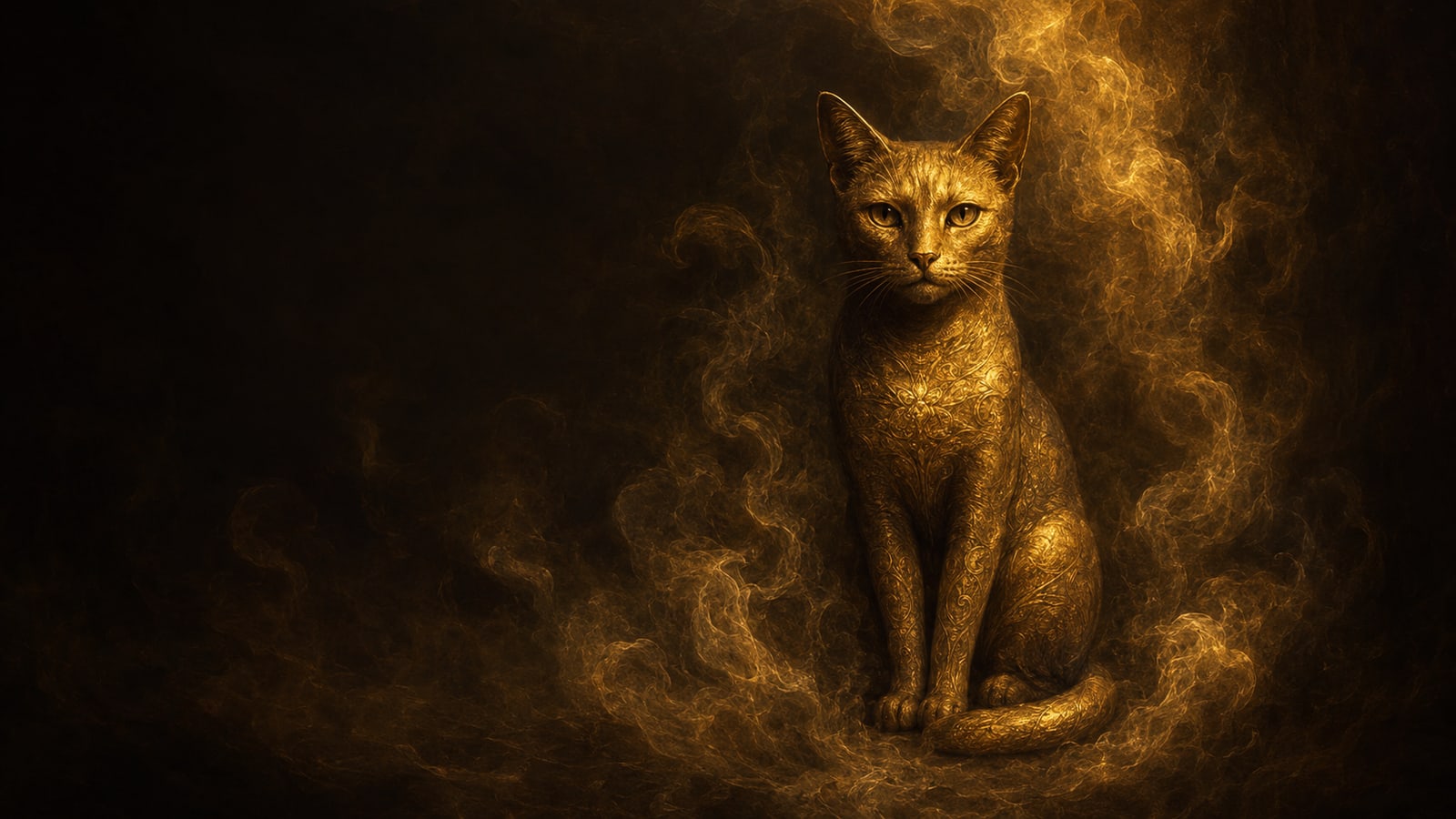 Featured
A cat in a dream is most often associated with independence, instinct, curiosity, comfort, or something in your life that feels hard to read. The reading turns on what the cat did and how you felt: a friendly cat invites reflection on connection and self-trust, while an attacking or frightened cat tends to mirror tension, a boundary, or fear. Color and folklore can shape the image, especially for a black cat, but no cat dream predicts luck, betrayal, or danger.
Key Takeaways
Independence made visible
Cats tend to stand in for self-reliance, instinct, and the parts of you that keep their own counsel.
Behavior is the message
A purring cat and a hissing cat point in opposite directions; read what the cat did before anything else.
Your own cat is different
A familiar cat usually carries the real bond and its history, while an unknown cat leans symbolic.
The black cat is folklore
The bad-luck reading is a folk belief that has flipped between good and bad by place and period; it is not a forecast.
Tradition, not fact
Egyptian, Islamic, Norse, and modern spiritual readings are named beliefs for reflection, never predictions.
Reflection, not diagnosis
Use a cat dream to check in on independence, intuition, and boundaries, not as a verdict on your life.
01The most common meaning
Cats occupy a strange middle ground in human life. They live in our homes and sleep on our beds, yet they were never fully tamed the way dogs were, and they famously come to us on their own terms. That in-between quality is exactly what the dreaming mind seems to reach for. When a cat appears in a dream, the most common reading is that something in the territory of independence, instinct, or self-possession is asking for attention: your own need for space, a relationship that runs on its own schedule, or a quiet part of you that watches before it commits.
The cat's behavior usually does the talking. A relaxed, affectionate cat tends to reflect comfort, self-trust, or a bond that works without being demanded. A cat that hisses, scratches, or attacks flips the frame, and often points to a boundary under pressure, a conflict you have been circling, or a fear that something familiar has turned unpredictable. A hiding or unreachable cat frequently lands as something in your life, or in yourself, that you cannot quite get hold of. Where a dream dog usually asks about loyalty and trust, a dream cat more often asks about autonomy and what you keep to yourself; the two make a useful contrast, and our guide to the dog dream meaning reads that companion symbol the same scene-first way.
None of this identifies a real person or event. A dream cannot prove that someone is deceiving you, that misfortune is coming, or that a warning has been sent. What it can do is show you where independence, intuition, or wariness currently carries the most feeling, and that is a genuinely useful place to start reflecting.
02The psychology of cat dreams
Dream science offers a few grounded lenses here, and it helps to hold them as theory rather than settled fact. During REM sleep the brain is highly active and emotionally charged, and dreams draw heavily on the people, animals, and places that fill waking life. For millions of dreamers a cat is not an exotic symbol at all; it is the animal on the windowsill, or the memory of one. At the simplest level, dreaming about cats is the mind replaying one of its most familiar and emotionally loaded figures. The mechanics behind this are covered in our guide to why we dream.
Threat-simulation theory, one leading idea in dream research, suggests the dreaming brain rehearses recognizing and responding to danger in a safe setting. That frame fits the aggressive-cat dream well: a hissing, scratching, or biting cat is the mind running a drill on a small, fast, close-range threat, and the fact that the threat comes from a household animal is what makes it unsettling. If the dream became a pursuit, with the cat or another animal coming after you, it usually behaves like other chase dreams, where the urge to escape matters more than the pursuer; our guide to the chased by an animal dream meaning unpacks that pattern in full.
The older psychological traditions add their own angles, and they are best held as interpretive frames rather than findings. Carl Jung treated animals in dreams as images of instinct, and the cat makes a particular kind of sense in that reading: the half-tamed animal, instinct that lives with you but never fully answers to you. In that frame a calm cat can reflect instinct and intuition working quietly on your side, while a hostile or elusive cat can reflect a natural drive, a need for distance, an appetite, a wariness, that has been ignored or pushed too far down. Freud, characteristically, looked beneath the image for buried feeling. Modern researchers lean more on emotion processing: sleep appears to help the brain digest the feelings of the day, and feelings about independence, closeness, and things we cannot control are among the ones we carry to bed most often. A cat is simply a natural shape for them to take.
03How the cat's behavior changes the meaning
The same cat can mean opposite things depending on what it was doing and how you felt. Read the whole scene, not the animal alone. The grid below is a starting point for reflection, not a verdict.
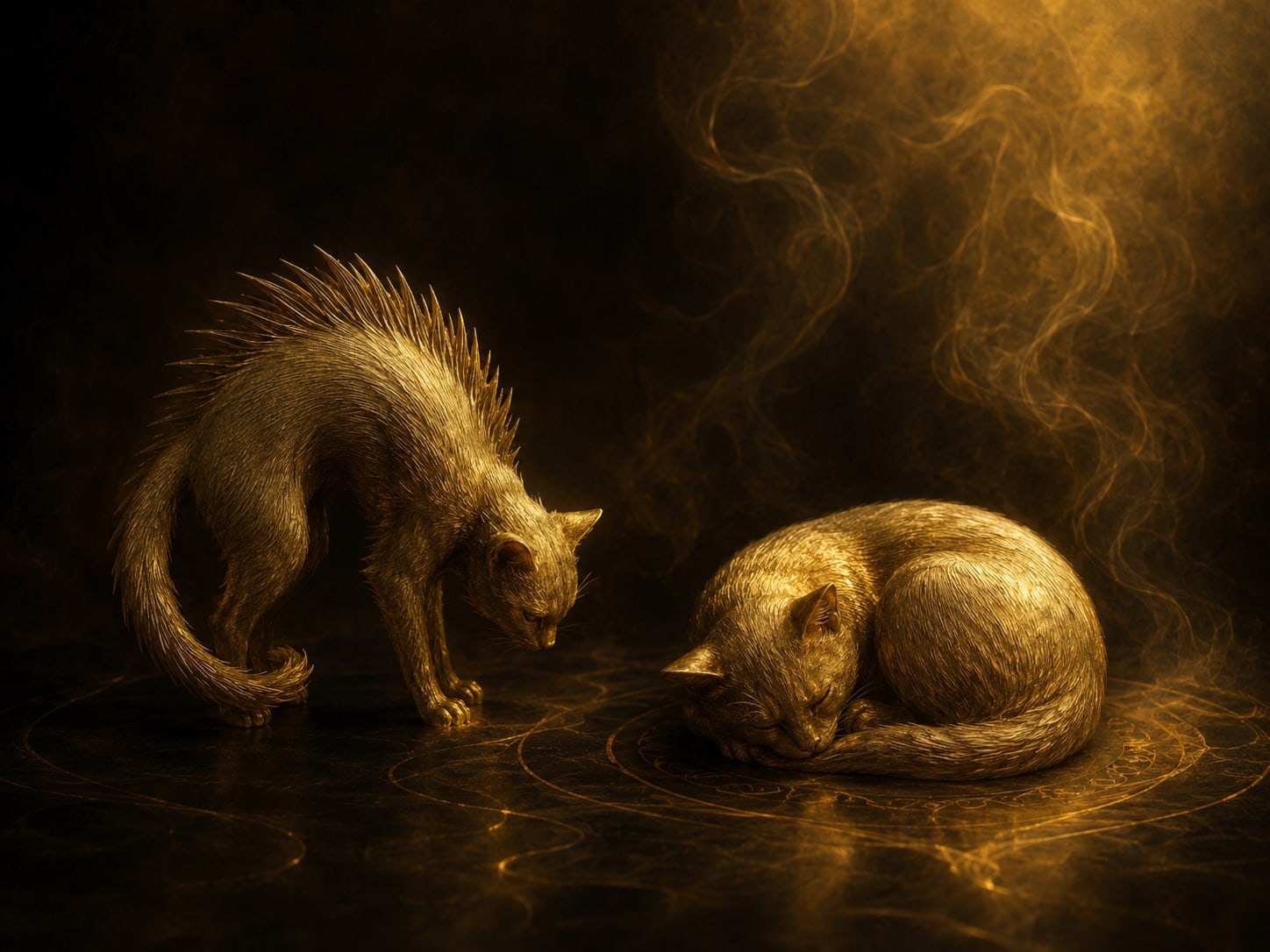
Hover or tap a row to highlight it.
| Cat scene | What it often reflects | The emotional read |
|---|---|---|
| A friendly, affectionate cat | Comfort, self-trust, a bond that works on its own terms | Calm, accompanied, at ease |
| An aggressive or attacking cat | A boundary under pressure, conflict, fear close to home | Threatened by something familiar |
| A stray cat | An untested connection, or an independent part of you without a home | Curious, wary, unattached |
| Your own cat | The actual bond with that animal, or what it means to you | Tender, familiar, sometimes grieving |
| Kittens | Vulnerability, a new responsibility, something young to care for | Warm, protective, slightly burdened |
| A black cat | Mystery, intuition, or folk luck imagery, filtered through your associations | Uneasy or intrigued, not warned |
| A dead or dying cat | Grief, change, or a lost sense of independence, not literal death | Sad, unsettled, reflective |
| Many cats at once | Competing needs, overstimulation, or feeling outnumbered | Crowded, pulled in directions |
| A cat in your house | A private-life concern, or a familiar comfort inside your own walls | Watched, or quietly settled |
| A cat giving birth | New growth, caretaking, or demands that are multiplying | Hopeful, responsible, stretched |
Two distinctions do a lot of work here. The first is your own cat versus a stray. A dream about your actual cat, living or gone, usually carries the real relationship: the comfort it gives, the routines it anchors, or plain grief and memory if the cat has died. A stray leans more symbolic, and how it approaches you, boldly, warily, or not at all, often mirrors how safe or exposed some current connection feels. The second is the dead or dying cat, which deserves gentle handling because it is one of the most distressing versions of this dream. It does not forecast a death. It far more often connects with grief that is already present, a chapter closing, or a sense that some independent, self-possessed part of your life has been diminished. If the cat in the dream was your own pet who has passed, that is its own tender territory, and our guide to the dead pet dream meaning walks through it with the care it deserves.
Color carries less weight than searches suggest. A black cat arrives wrapped in centuries of folklore, and a white cat in ideas of innocence and calm, but in your dream the color is best read as a personal association layered over the cat's behavior, not a fixed code. The folklore itself is covered honestly in the next section.
04Spiritual and cultural meaning of cats
Spiritual readings of cat dreams are widely searched, and the honest way to present them is as belief and tradition, named and attributed, never as fact or forecast. Few animals have collected as many contradictory cultural meanings as the cat, which is itself a useful caution against any single dictionary answer.
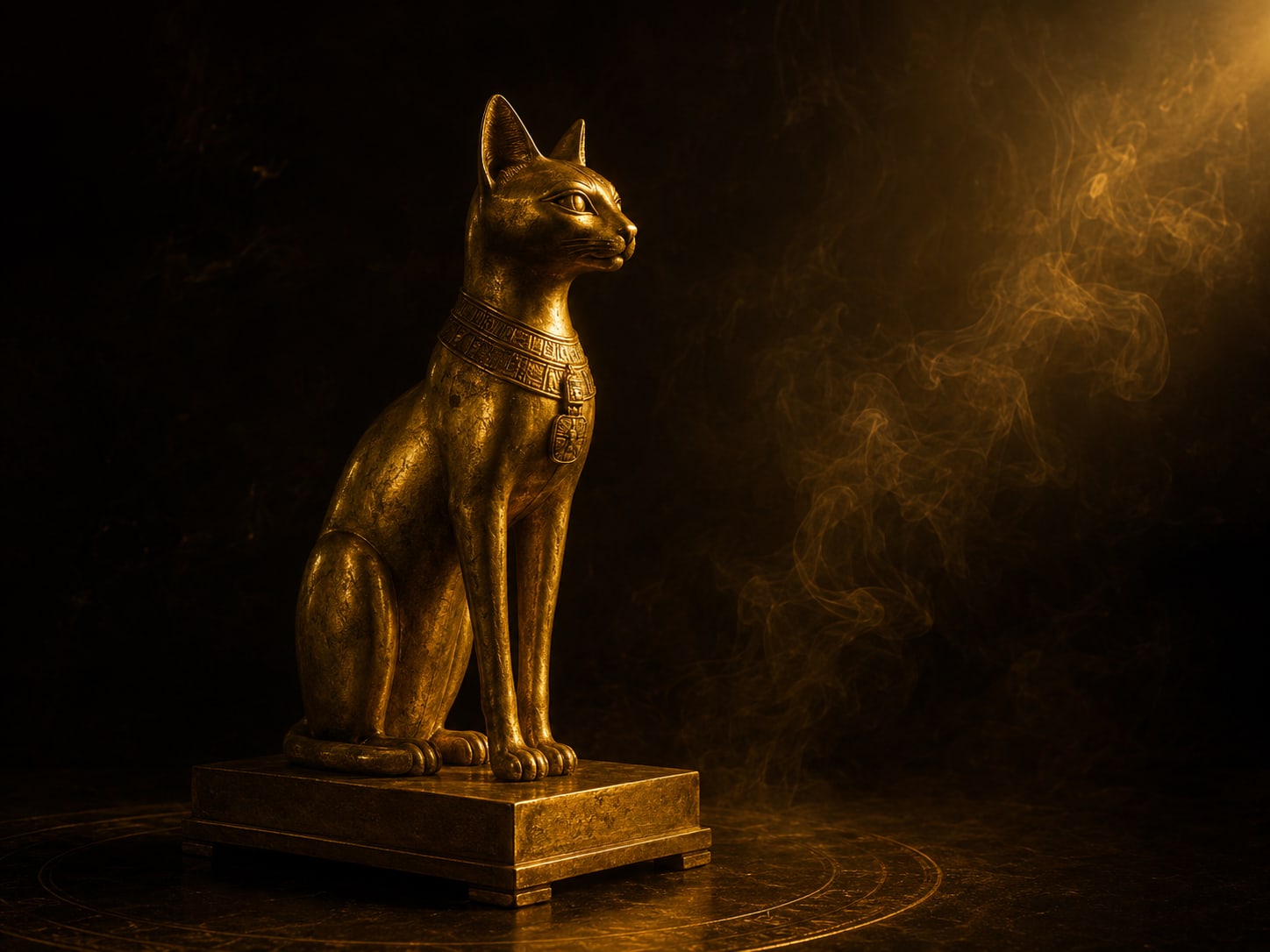
Ancient Egypt gave the cat its most exalted role. Bastet, a goddess depicted with a cat's head, was associated with protection, home, fertility, and music, and cat imagery in Egyptian religion was broadly protective. Within that frame, a cat is a guardian figure, an image of watchfulness over the household. That is a named tradition's lens, not a rule about what your dream means, but it is worth noticing how directly it contradicts the fear that a dream cat must be a bad sign.
The black-cat belief deserves an honest reckoning, because it drives much of the anxiety around this dream. In European folk tradition the black cat has carried both bad-luck and good-luck meanings depending on place and period: a threatening omen in some regions and eras, a blessing on a household or a ship in others. A belief that flips its own verdict by geography is a cultural artifact, not evidence. If your dream featured a black cat, the folklore explains why the image feels charged; it does not make the dream a warning, and no careful tradition treats it as one.
Islamic tradition regards the cat itself with notable warmth. The Quran establishes no cat-dream symbol, but cats hold a respected place in Islamic social memory, and a well known hadith in Sahih al-Bukhari reports a woman punished for confining a cat without feeding it, a tradition often cited for the duty of kindness to animals. Later dream manuals attributed to Ibn Sirin sometimes read a dream cat as a thief, a quarrelsome person, or a household concern, depending on its behavior. It matters to keep the layers straight: those manual readings are later interpretive tradition, not Quranic doctrine, and within the tradition itself dream interpretation is reflection, never grounds to judge a real person.
The Bible, for its part, simply does not mention domestic cats as a dream symbol, and gives no cat-dream code at all. A careful Christian reading says so plainly, rather than borrowing a verse about another animal, and then draws only on broad biblical themes such as wisdom, discernment, and care for creatures as general reflection. Elsewhere, later Norse tradition links cats with the goddess Freyja, whose chariot is drawn by cats, tying the animal to love and magic in the cultural imagination, and Japan's Maneki-neko, the beckoning cat, is a popular good-fortune figure rather than an ancient dream law. Modern spiritual writing tends to give cats intuition, psychic sensitivity, independence, feminine energy, and protection; these are contemporary beliefs, not a single historical authority. The pattern across all of it, from protective goddess to suspicious omen to lucky charm, says more about the cultures than about your night's sleep, and our guide to dream interpretation across cultures explores why the same image reads so differently around the world. Treat every reading here as a lens for reflection inside a belief system, not as a prediction.
05Key scenarios and variants
Cat dreams arrive in a handful of recognizable versions, and each bends the core themes of independence and instinct in its own direction. Read your scene for its feeling first, then use these as prompts. Several are common enough to deserve their own full reading, which we are adding over time; the cats entry in the dream dictionary gathers the essentials in one place.
One version does not belong here at all. If the animal was a kitten rather than a grown cat, the reading nearly inverts, because a cat stands for independence and a kitten cannot survive without someone. Kitten dreams covers dependency, care, and the question about wanting a child that so often sits behind that search.
- A friendly cat approaching, purring, or settling beside you tends to reflect comfort you have or want, and often simply marks a season where your own company and instincts feel trustworthy.
- A cat attacking, scratching, or biting usually points to a boundary under pressure or a conflict close to home, and the feeling of being caught off guard says more than the claws.
- A black cat is best read as the folklore section above suggests: a charged image, shaped by inconsistent luck beliefs, that lands on whatever your own associations are, not a forecast.
- A white cat often carries ideas of innocence, calm, or an idealized bond in popular symbolism, and the same behavior-first reading applies.
- Kittens tend to suggest vulnerability, new responsibility, affection, or playfulness, something young that needs care, which can feel warm and demanding at once.
- Many cats at once can read as competing needs, overstimulation, or feeling outnumbered, especially in a season when everyone seems to want a piece of you.
- A cat in your house often points to a private-life concern or a familiar comfort operating inside your own walls, depending entirely on how its presence felt.
- A dead or lost cat tends to connect with grief, change, or worry about something valued drifting out of reach, including your own independence.
- A cat giving birth often lands as new growth or multiplying demands, caretaking that is expanding whether or not you feel ready.
- A cat appearing alongside another charged animal changes the scene's chemistry entirely; if a snake shared the frame, our reading of the dream of a cat and snake together takes on that specific pairing.
06Common questions about cat dreams
What does a cat symbolize in a dream?
Most commonly independence, instinct, curiosity, comfort, or something that feels hard to read. Cats are the half-tamed companion, so the dreaming mind reaches for them when autonomy, intuition, or wariness is in play. The specific meaning depends on the cat's behavior and your feeling, not on the cat itself.
What does a black cat mean in a dream?
In folk belief a black cat can signal mystery or luck, but the folklore has flipped between good and bad by place and period, which is a strong hint that it is culture, not evidence. A black cat dream is not a sign that bad luck is coming. Read the cat's behavior and your own associations first.
What does it mean if a cat attacks or bites me in a dream?
Usually a boundary under pressure, a fear, or a conflict that feels close to home. It is unsettling precisely because the threat comes from something small and familiar. It does not reveal a real enemy or prove betrayal; ask where in waking life something once easy now feels defensive.
What do kittens mean in a dream?
In symbolic readings, kittens often suggest vulnerability, new responsibility, affection, or playfulness. They can point to something young in your life, a project, a relationship, a part of yourself, that needs care and is not yet steady on its feet.
What does a dead cat mean in a dream?
It can connect with grief, change, or a lost sense of independence, and it is not a forecast of literal death. If the cat was your own pet who has died, the dream is most often love and memory doing their slow work rather than a message. Let it be tender; it does not need decoding.
Does the Bible say anything about cats in dreams?
No. Scripture does not name domestic cats as a dream symbol and assigns no meaning to dreaming of one. An honest Christian reading says exactly that, and then draws only on broad themes such as wisdom and care for creatures as general reflection, not as an interpretation of the cat.
What does a cat dream mean in Islam?
The Quran establishes no cat-dream symbol, and Islamic tradition regards the cat itself warmly; a well known hadith condemns cruelty to a confined cat. Later manuals attributed to Ibn Sirin sometimes read a dream cat as a thief or a quarrelsome figure depending on behavior. Those are later interpretive traditions, held as belief and reflection, never as fact.
Why do I keep dreaming about cats?
Recurring symbols usually track recurring feelings. If cats keep returning, the theme they carry for you, independence, intuition, a particular bond, a particular fear, is likely still active in waking life. The repetition is the signal worth reflecting on; if the dreams are distressing nightmares that disrupt your sleep, that pattern is a reasonable thing to raise with a clinician.
Reading your cat dream
The most reliable guide to what a cat dream means is:
The black-cat bad-luck belief is best described as:
In ancient Egyptian religion, cat imagery was primarily associated with:
Pick an answer to begin.
Whatever your cat was doing, the next step is the same: read the scene against your own life rather than as an omen. Start with the feeling you woke with, browse the dream dictionary for the other symbols that shared the scene, and let DreamTold help you follow the detail that stuck with you. Dream reflection is a way of listening to yourself, not a diagnosis, a prediction, or a substitute for professional advice.
Dream terms
Tap a term to see what it means.
Threat-simulation theory. The idea that the dreaming brain rehearses recognizing and escaping danger in a safe setting, one leading explanation for vivid aggressive-animal dreams.
Emotion processing. The well supported view that sleep helps the brain digest the feelings of waking life, which is why emotionally loaded figures like cats surface in dreams.
Bastet. The ancient Egyptian goddess depicted with a cat's head, associated with protection, home, fertility, and music; the root of the cat's protective symbolism.
Ibn Sirin. The name attached to an influential later tradition of Islamic dream interpretation, cited as belief and tradition rather than as the Quran.
Maneki-neko. Japan's beckoning-cat figure, a popular good-fortune symbol in modern culture rather than an ancient dream law.
07Sources
Every claim on this page that comes from somewhere else, with the somewhere else. Scripture and hadith are linked so you can read them in context rather than trusting a paraphrase.
Related
articles.
Black Cat Dream Meaning: Luck, Warning, and What the Superstition Misses
A black cat in a dream usually reflects instinct, privacy, and boundaries. What the cat was doing carries the meaning, and the luck belief is regional.
Read: Black Cat Dream Meaning
Dream of Cat and Snake Together: Is This Dream A Warning or A Sign of Transformation?
What a cat and snake together in a dream reflect: two instincts meeting, read by who attacks, protects, or coexists. Biblical and Islamic readings included.
Read: Dream of Cat and Snake Together
Black and White Striped Snake Dream Meaning: Duality Explained
Black and white striped snake dream meaning: a black and white choice, a camouflaged warning, and what several traditions each say it means.
Read: Black and White Striped Snake Dream Meaning