

Elephant Dream Meaning: Memory, Strength, and the Large Presence
What elephants in dreams mean: strength, memory, and something too big to ignore. Calm, charging, baby, and herd scenarios, with Hindu and Islamic readings.
 Featured
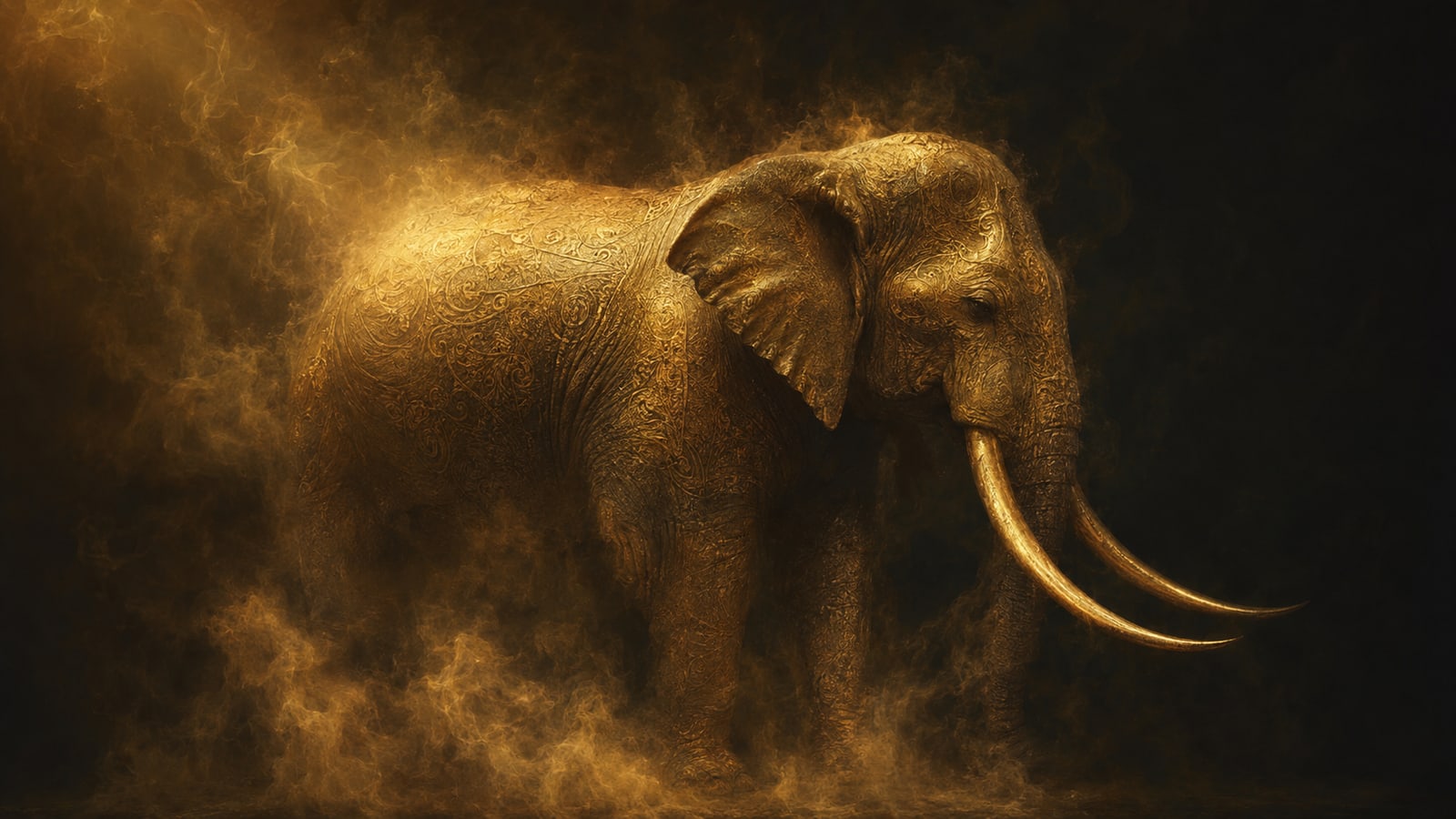
An elephant in a dream most often stands for something large in your life: a responsibility, a memory, a family bond, or a presence too big to ignore. The reading turns on how the elephant behaved and how you felt beside it. A calm elephant tends to reflect steadiness or a weight you are carrying well, while a charging elephant usually mirrors pressure or a force that feels overwhelming. Spiritual meanings depend entirely on the tradition doing the reading, and no elephant dream predicts luck, danger, or anything else.
Key Takeaways
Something large
Elephants tend to stand for the biggest thing in your life right now, an obligation, a memory, or a presence you cannot walk around.
Behavior is the message
A calm elephant and a charging elephant point in opposite directions; read the demeanor and your feeling first.
The idiom is real
"The elephant in the room" names an obvious thing no one mentions, and dreams often make that unspoken thing literal.
Tradition, not fact
Ganesha, white-elephant stories, and Quran 105 are specific traditions, held as belief, never as prediction.
The saying is not a rule
"Elephants never forget" is a proverb, and it does not make every elephant dream a message about memory.
Reflection, not forecast
Use an elephant dream to ask what feels enormous in your life, not to read your future.
01The most common meaning
An elephant is the largest animal most of us will ever stand near, and dreams use that scale. When an elephant appears, the most common reading is that something outsized is on your mind: a responsibility that dominates your days, a person whose presence fills every room they enter, a memory that refuses to shrink with time, or a decision so big you have been walking around it instead of through it.
English already has the perfect phrase for that last one. "The elephant in the room" names the obvious thing everyone can see and no one will mention, and the dreaming mind seems to know the idiom. An elephant standing calmly in your kitchen, your office, or your childhood home is one of the most literal images a dream can serve: here is the enormous thing, parked in your private space, waiting to be acknowledged. If you woke from a dream like that, the most useful question is not what the elephant means in general but what, specifically, you have been not saying.
The real animal feeds the symbol too. Elephants are the largest land animals, they live in close matriarchal family groups led by an experienced female, and they have a deserved reputation for long social memory. Those facts are part of why the elephant carries family, matriarchs, patience, and remembrance so naturally in dreams. A dream elephant can be the family itself, the person who holds the family together, or the long memory a family keeps.
None of this makes the dream a verdict. An elephant dream does not prove you are overwhelmed, does not identify the powerful person in your life, and does not promise that a burden will lift or land. It shows you where the feeling of bigness currently sits, which is a genuinely useful place to start reflecting.
02The psychology of elephant dreams
Dream science offers a few grounded lenses here, held as theory rather than settled fact. During REM sleep the brain is highly active and emotionally charged, and dreams draw on the images that carry the most feeling. Unlike a dog, which is a daily companion for many dreamers and shows up in dreams for exactly that reason, an elephant is for most people a cultural presence rather than a household one. We meet elephants in stories, idioms, documentaries, and childhood visits, which means the mind usually reaches for one deliberately, when it needs a shape big enough for the feeling it is processing. Our guides to why we dream and to the dog dream meaning cover both halves of that contrast in more depth.
Threat-simulation theory, one leading idea in dream research, suggests the dreaming brain rehearses recognizing and responding to danger in a safe setting. That frame fits the charging elephant well: an unstoppable mass coming toward you is about as pure a rehearsal of overwhelm as a dream can stage. The threat in these dreams is rarely a literal animal. It is more often a deadline, a conflict, a diagnosis, or an obligation that feels like it cannot be dodged, given a body and a direction.
The older psychological traditions add their own angles. Carl Jung read animals in dreams as images of instinct, and an elephant makes a striking one: enormous natural power that is nonetheless patient, social, and capable of gentleness. In that frame a calm elephant can reflect strength that is integrated and working for you, while a distressed or violent one can reflect power in your life, yours or someone else's, that has slipped its handler. Modern emotion-processing research adds the memory thread. Sleep appears to help the brain digest and file the feelings of waking life, and when an old memory is doing heavy work in the present, the mind may well reach for the animal our culture has crowned the great rememberer. The saying "elephants never forget" is a proverb rather than a dream rule, but it shapes what the symbol carries, and a dream elephant can absolutely be an old story your mind is still turning over.
03How the elephant's behavior changes the meaning
The same animal can mean opposite things depending on what it was doing and how you felt watching it. Read the whole scene, not the elephant alone. The grid below is a starting point for reflection, not a code.
Hover or tap a row to highlight it.
| Elephant scene | What it often reflects | The emotional read |
|---|---|---|
| A calm, peaceful elephant | Steadiness, protection, a large responsibility carried well | Grounded, accompanied, quietly strong |
| A charging or attacking elephant | Overwhelm, pressure, a force that feels unstoppable | Threatened by something too big to fight |
| A baby elephant | A new responsibility, tenderness, developing strength | Warm, protective, slightly daunted |
| A herd of elephants | Family, community, belonging, or collective pressure | Held by the group, or outnumbered by it |
| An elephant in your house | A large issue in your private life, the unspoken thing made literal | Crowded, confronted, unable to look away |
| Riding an elephant | Seeking control or partnership with a major force in your life | Elevated, capable, or precariously balanced |
| A chained or suffering elephant | Strength constrained, compassion for something powerful brought low | Sorrowful, protective, moved to help |
Two of these rows deserve a closer look. A charging elephant usually works like other pursuit dreams, where the urge to escape matters more than the identity of the pursuer; our guide to the chased by an animal dream meaning unpacks that whole pattern, and the elephant version simply turns the volume up, because nothing outruns the feeling of a freight train with a heartbeat. And the chained or suffering elephant tends to land differently from every other row. Dreamers often wake from it sad rather than afraid, and the gentler reading is usually the truer one: something strong, in you or in someone you love, feels restrained, diminished, or in need of care. That dream asks for compassion, not decoding.
04Spiritual and cultural meaning of elephants
Spiritual readings of elephant dreams are widely searched, and the honest way to present them is as belief and tradition, named and attributed, never as fact or forecast. The elephant is one of the most culturally rich animals on earth, and the traditions do not speak with one voice.
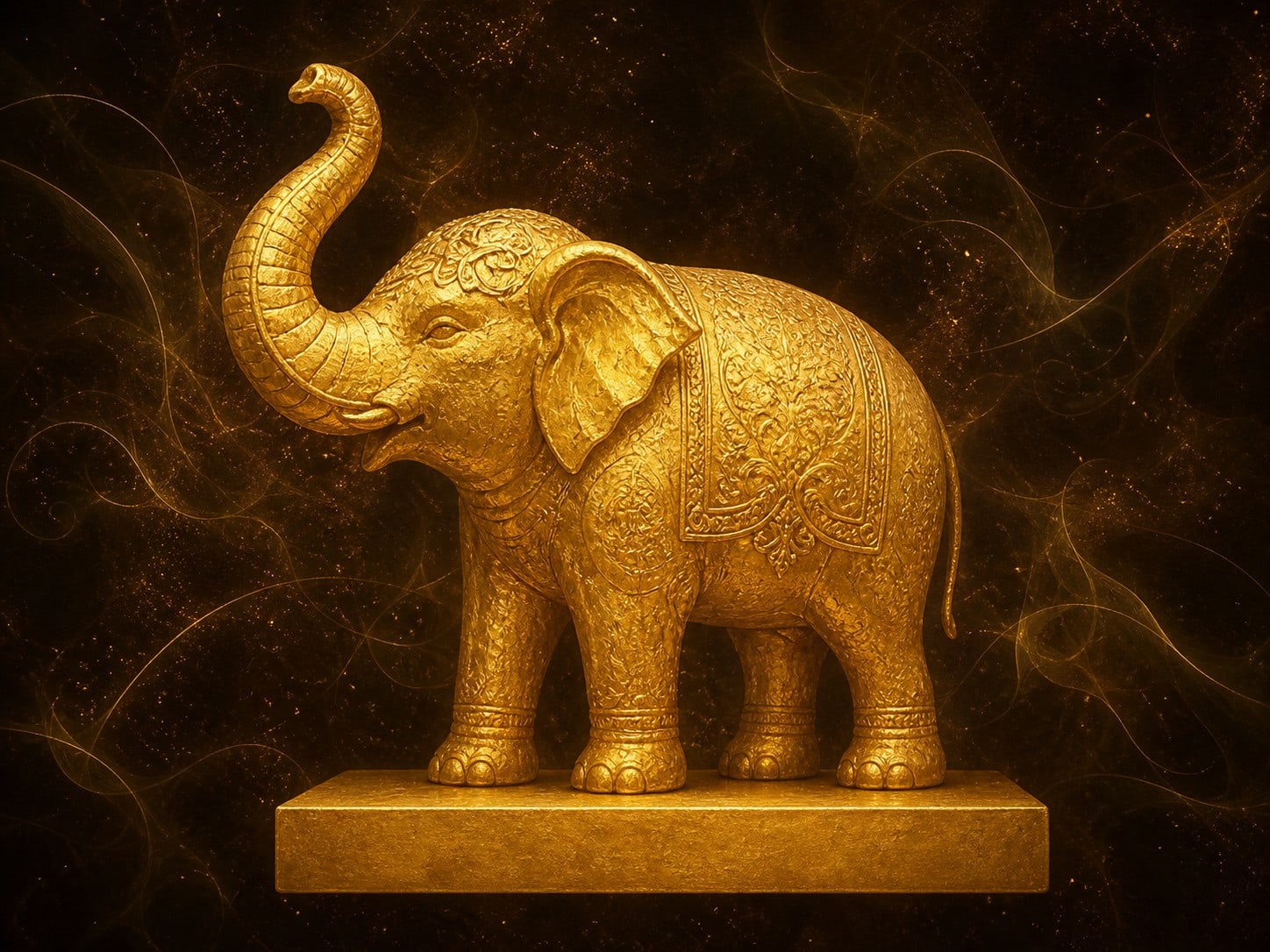
In Hindu tradition, the elephant is inseparable from Ganesha, the beloved elephant-headed deity honored at the start of undertakings and revered as a remover of obstacles. Within that tradition, elephant imagery can carry auspiciousness, wisdom, and new beginnings, and Airavata, the white elephant who serves as the mount of Indra, adds a royal and celestial thread. It matters to hold this respectfully and precisely: Ganesha is a specific deity within a living faith, and Hindu tradition itself does not teach that every elephant dream is a message from him. A dreamer who practices that faith will read the image within it; a dreamer who does not should treat the Ganesha association as cultural context rather than a channel opening.
Buddhist tradition holds one of history's most famous elephant dreams. Traditional accounts say Queen Maya dreamed of a white elephant before the Buddha's conception, a dream read within that narrative as announcing an auspicious birth. From there the white elephant runs through Thai and Southeast Asian royal traditions as a symbol of merit and prestige, while modern English turned the same phrase inside out: a "white elephant" in everyday speech is a grand possession too costly to keep and too significant to discard. A white elephant dream can honestly carry either register, rare blessing or outsized burden, depending on which association lives in you.
In Islamic tradition, the Quran's chapter 105, Surah al-Fil, tells of the People of the Elephant and God's protection of the Kaaba against an army that brought an elephant to Mecca. It is a historical and religious narrative, not a dream dictionary, and it assigns no meaning to dreaming of the animal. Later dream manuals associated with Ibn Sirin sometimes read an elephant as a powerful ruler, a formidable person, or a very large affair, and those readings are influential later tradition rather than Quranic doctrine. The Bible, for its part, offers no elephant dream passage at all; scripture mentions ivory in trade contexts, but no biblical code for elephant dreams exists, and a careful Christian reading says so plainly.
Elephants also appear across many distinct African oral and artistic traditions, and the respectful move is to resist collapsing a continent into a single symbol; where a specific community's tradition is known and sourced, name it, and otherwise say less. Modern spiritual writing, meanwhile, commonly gives the elephant grounded strength, ancestral memory, patience, and protective presence. Those are contemporary symbolic beliefs, meaningful to the people who hold them and binding on no one's dream. For how belief systems around the world frame dreaming itself, our guide to dream interpretation across cultures draws the wider map.
05Key scenarios and variants
Elephant dreams arrive in a handful of recognizable versions beyond the core scenes above, and each bends the theme of bigness in its own direction. Read yours for its feeling first, then use these as prompts. The elephants entry in the dream dictionary gathers the essentials in one place, and our overview of the most common dreams and what they mean shows where the elephant sits among the classics.
- A white elephant tends to split between its traditions: rarity and blessing in the Buddhist and Southeast Asian royal register, an expensive burden in the modern idiom. Your own association decides which one your dream borrowed.
- An elephant in water often reads as large emotion in motion, strength moving through deep feeling rather than being swamped by it.
- Feeding or rescuing an elephant usually reflects care for a large need, a big responsibility you are choosing to tend rather than escape.
- A dead elephant frequently lands as the loss of protection or strength, or the ending of a major chapter, and it deserves the same gentleness as any death image in a dream.
- An elephant chasing you concentrates the charging dream into pursuit, and like most chase dreams it says more about what you are avoiding than about what is coming.
- A recurring elephant dream suggests the large thing it stands for has not been dealt with, and repetition is the mind's way of keeping the file open. If the dream repeats as a distressing nightmare, our nightmares guide covers when disrupted sleep is worth raising with a professional.
Several of these scenes are common enough to deserve their own full readings, which we are adding to the library over time.
06Common questions about elephant dreams
What does an elephant symbolize in a dream?
Most commonly, something large in your life: strength, memory, family bonds, patience, a major responsibility, or an issue too big to ignore. The elephant's behavior and your feeling in the dream carry the specific meaning, and no version of the dream predicts an event.
What does a charging elephant mean in a dream?
It usually mirrors overwhelm, pressure, or a conflict that feels unstoppable. Threat-simulation theory would call it a rehearsal of facing something enormous. It reflects how big a waking pressure feels, and it does not forecast danger.
What does a baby elephant mean in a dream?
A baby elephant tends to suggest a new responsibility, tenderness, or strength that is still developing, in you or in something you are raising, building, or caring for. Dreamers usually wake from it warm rather than worried, and that feeling is a fair guide.
What does a herd of elephants mean?
Herds usually carry family, community, and belonging, drawn from the real animal's close matriarchal family groups. Whether the herd felt like shelter or like pressure is the meaningful part; the same image can hold both.
What does a white elephant dream mean?
It depends on which tradition your mind borrowed. In Buddhist narrative and Southeast Asian royal tradition the white elephant is auspicious, tied to merit and blessing, while the modern English idiom makes it a costly burden. Read it by your own association and the feeling of the scene.
Is an elephant dream a message from Ganesha?
Ganesha is a specific deity within Hindu tradition, honored as a remover of obstacles, and that tradition does not teach that every elephant dream is a message from him. A practicing Hindu may meaningfully read the dream within their faith; outside it, the association is cultural context, not a signal.
What does an elephant dream mean in Islam?
The Quran's Surah al-Fil recounts the People of the Elephant and the protection of the Kaaba, a historical narrative rather than a dream rule. Later manuals associated with Ibn Sirin sometimes read a dream elephant as a powerful ruler or a very large affair. Those are later tradition, held as belief, and they judge no one's night.
Is an elephant dream good luck or a warning?
Neither, in any way a dream can promise. Some traditions attach auspiciousness to elephants and folk belief sometimes calls the dream a sign of coming fortune or upheaval, but a grounded reading treats it as a powerful image shaped by your emotions, memories, and responsibilities. It is a mirror, not a forecast.
Reading your elephant dream
The most reliable guide to what an elephant dream means is:
Surah al-Fil, chapter 105 of the Quran, is about:
A charging elephant in a dream predicts real danger ahead.
Pick an answer to begin.
Whatever your elephant was doing, the next step is the same: read the scene against your own life rather than as an omen, and treat it as reflection, not medical or spiritual advice. Start with the feeling you woke with, name the large thing the elephant might be standing in for, browse the dream dictionary for the other symbols that shared the scene, and let DreamTold help you follow the detail that stuck with you.
Dream terms
Tap a term to see what it means.
Threat-simulation theory. The idea that the dreaming brain rehearses recognizing and responding to danger in a safe setting, one leading explanation for charging-animal dreams.
Ganesha. The elephant-headed deity of Hindu tradition, honored at beginnings and revered as a remover of obstacles; a specific faith's figure, not a universal dream code.
Airavata. The white elephant of Hindu tradition who serves as the mount of the deity Indra, part of the elephant's royal and celestial associations.
White elephant. In Buddhist and Southeast Asian royal traditions, an auspicious symbol of merit; in modern English idiom, a grand possession too costly to keep.
Matriarch. The experienced female who leads an elephant family group, part of why herds in dreams so often carry family and belonging.
07Sources
Every claim on this page that comes from somewhere else, with the somewhere else. Scripture and hadith are linked so you can read them in context rather than trusting a paraphrase.
Related
articles.
Black and White Striped Snake Dream Meaning: Duality Explained
Black and white striped snake dream meaning: a black and white choice, a camouflaged warning, and what several traditions each say it means.
Read: Black and White Striped Snake Dream Meaning
Red and Black Striped Snake Dream: Is It a Warning?
Woke up shaken by a red and black striped snake dream? Learn what the coral snake connection is, why fear matters more than color, and what traditions say.
Read: Red and Black Striped Snake Dream
Black Cat Dream Meaning: Luck, Warning, and What the Superstition Misses
A black cat in a dream usually reflects instinct, privacy, and boundaries. What the cat was doing carries the meaning, and the luck belief is regional.
Read: Black Cat Dream Meaning