

Spiritual Meaning of Jewelry Falling Off: What the Traditions Say
What it means when jewelry falls off or breaks: the Broken Jewelry Theory explained, the honest mechanical causes, dream readings, and what traditions hold.
 Featured
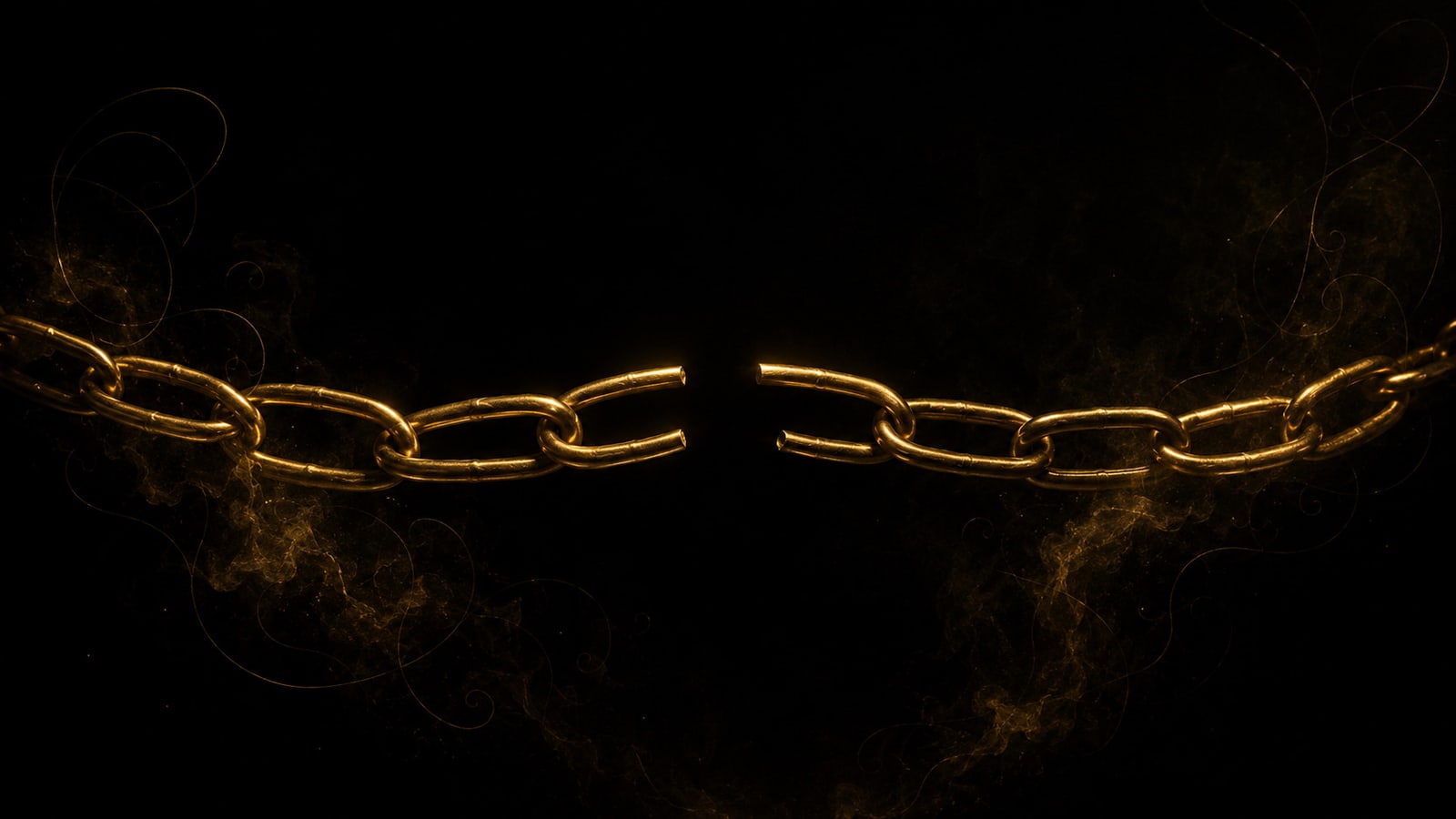
When a necklace snaps or a ring slips off, the cause is almost always mechanical: clasps wear out, chains fatigue where they were soldered, and fingers change size with heat, cold, and the time of day. The spiritual reading that has spread widely online, that a broken piece absorbed negative energy or took a hit on your behalf, is a belief people hold rather than something anyone has demonstrated, and nothing establishes that a snapped chain reports on your luck or your relationships. In a dream, the same image reflects what the object stood for in your life, a bond, a promise, a person, or a version of yourself, not a forecast of losing any of them. Both halves of that answer are worth having, so the sections below keep them separate.
Key Takeaways
The physical cause comes first
Spring clasps fatigue, chains fail at the solder, prongs loosen, and rings slip when fingers shrink in the cold, all of which explain the great majority of breakages.
The Broken Jewelry Theory is a belief
The popular online idea that a broken piece absorbed negative energy or protected you is a symbolic claim, not a finding, and it cannot be tested.
Timing feels meaningful because we are already unsettled
A break lands hardest during a bad week, and the ordinary breaks that happen during calm weeks are the ones we forget.
The dream is about what the object represents
A lost ring in a dream tends to follow a week when a commitment, a person, or a part of your identity felt shaky.
Which piece it was changes the feeling, not the fact
A wedding ring, an heirloom, or a gift from someone significant carries far more weight than a chain bought on a whim.
Scripture does not decode it
The Bible and the Quran discuss jewelry as adornment and as a sign of status or covenant, but neither assigns a dream meaning to a piece breaking.
01Why jewelry actually falls off and breaks
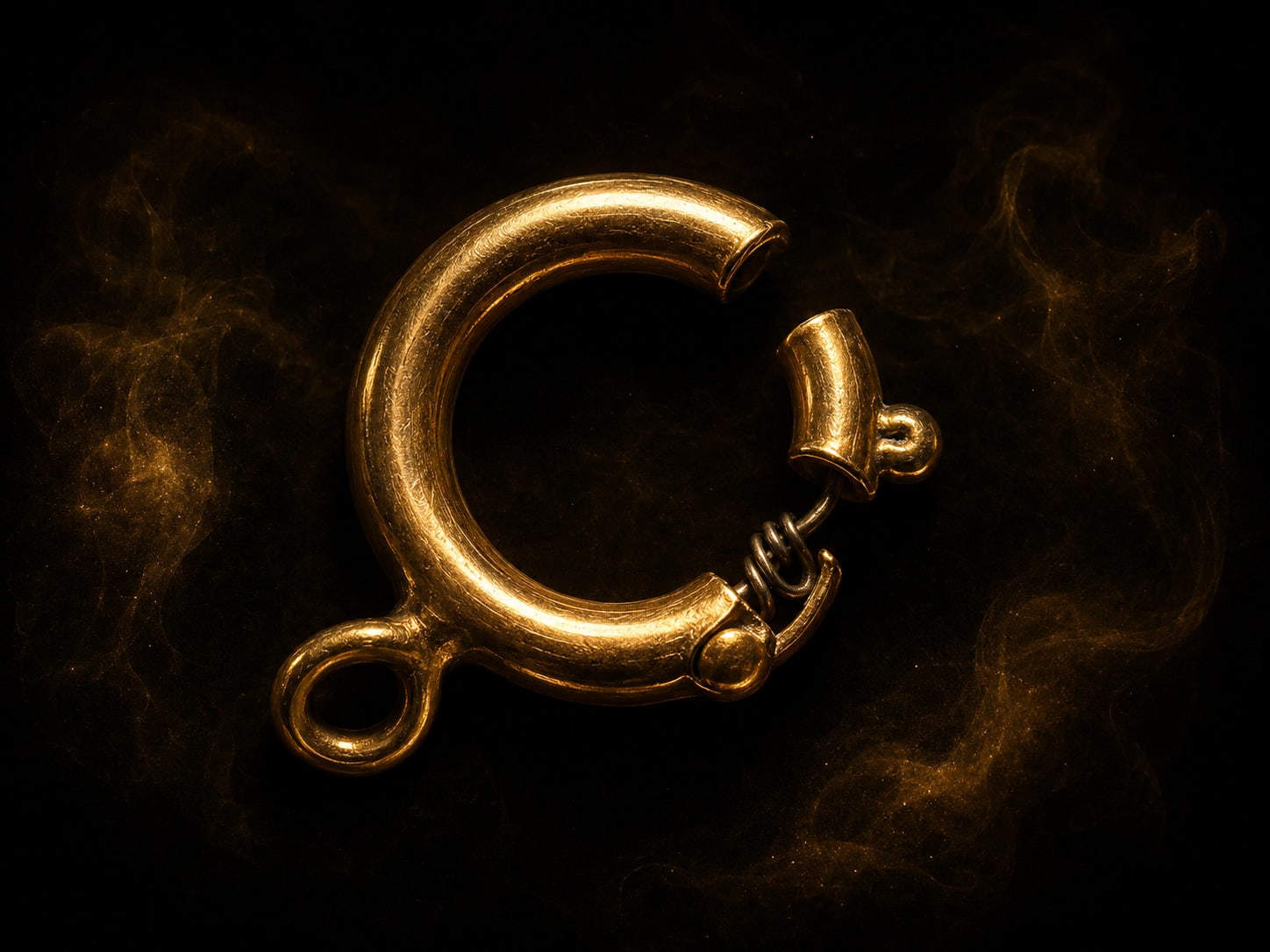
Start with the workshop answer, because it accounts for nearly every case. Spring-ring and lobster clasps contain a small spring that fatigues with thousands of openings, until one day it no longer seats. Fine chains fail at their weakest joint, usually a solder point or a link that has been kinked and straightened, and a chain worn to bed or under a sweater gets kinked constantly. Higher-karat gold is softer than a lower-karat alloy, so a delicate 22 or 24 karat chain thins across years of rubbing against a collar. Rings have their own version: fingers swell in heat and late in the day, then shrink in cold weather and after weight loss, which is why a ring that fit in August slides off in January as you pull a glove away.
The other half of the explanation is about attention rather than metal. Objects break at a steady background rate, but the ones you notice land in a week you were already braced for bad news. A chain that snaps on an ordinary Tuesday gets fixed and forgotten; the same chain snapping the week a relationship is wobbling feels like a message, because building stories out of coincidence is what minds do.
02The Broken Jewelry Theory, and what it claims
If you searched this after a piece broke, you have probably met the Broken Jewelry Theory by name. It grew on TikTok, where the hashtag has drawn well over fifteen million views, and it has since been written up beyond the app, by lifestyle outlets such as Bustle and even by the jewelry trade press at JCK. The claim runs like this: jewelry sits against your skin and absorbs the energy around you, so a piece breaks because it took on more negativity than it could hold, or because it shielded you from something aimed at you. In warmer versions the break is a release, a signal that an attachment is finished and the object let go on your behalf.
The idea did not come from nowhere. Protective charms and amulets worn to keep harm away are an old and widespread folk practice, and the theory reads a broken piece as one of those charms having spent itself. That lineage is real. What is not established is the mechanism: there is no way to test whether an object absorbs anything, and the mechanical causes above already account for the breakage, so the theory sits over an ordinary event as a belief rather than a competing explanation of it.
It is fair to say why it appeals. It turns an upsetting loss into a story where you were looked after, which is kinder than "the spring wore out". The version to watch is the one that turns outward and has you scanning your contacts for who might be sending you bad energy, because that reading grows anxiety rather than settling it. Our look at dream omens and warnings, and why they do not hold up covers the same pattern.
03What jewelry stands for, and why the loss stings
Jewelry does a strange amount of work for a small object. A ring can mark a marriage, a graduation, or a promise to yourself. A chain can be the last thing a grandmother wore. Unlike most possessions, jewelry is worn on the body all day and forgotten until the moment it is gone, which is why the blank spot on your neck or finger is felt before you have worked out what happened.
That is the real reason a broken engagement ring frightens people in a way a broken costume chain never does. Both are metal. Only one carries a promise, and when it fails, the promise is what flashes through the mind first. The grounded reading of that flash is not that a hidden force acted on the ring. It is that you got a sudden look at how much the thing the ring stands for matters to you, and possibly at a worry you had not put into words.
04When it happens in a dream instead
A dream about jewelry falling off works on the same principle, one step further inward. Dreams assemble memory, emotion, and imagination during sleep, and they reach for objects that already carry weight. So a dream of a ring sliding off in water, a clasp opening as you walk, or a necklace shattering in your hands tends to show up in a stretch of life where a bond, a commitment, or a piece of your identity feels less secure than you would like. The dream is using the object because that is the shortest route to the feeling, and our dream dictionary entry on jewelry gathers the associations people bring to the symbol. Sometimes it is simpler still: if you noticed a loose clasp yesterday, the dream may be day residue with no further message, and that reading is worth trying first.
What the dream does not do is predict a breakup, a death, a betrayal, or a financial loss. No reliable evidence shows dream content forecasting outside events, and our piece on whether dreams are prophetic walks through why people are so convinced they do. If it keeps returning, that repetition usually means the underlying worry has not been settled rather than that the stakes are rising, the ground covered in our guide to why recurring dreams repeat. If it arrives as a nightmare that leaves you shaken, what nightmares actually mean is the better starting point. It is a close cousin of teeth falling out in a dream, a valued thing coming loose without your permission.
05What to do after a break, or after the dream
The practical steps are short. Keep every piece, including the stone and the broken links, because a jeweler can usually solder a chain, replace a clasp, retip prongs, or resize a band for far less than a replacement costs. Have rings sized for winter as well as summer, and take chains off for sleep, showers, and the gym, where most kinking and snagging happens.
The reflective step is just as short. Note what the piece meant and who gave it to you, then notice what you felt in the first second, before the explanations started, because that first feeling is the honest part. If the loss or the dream sits on you for weeks, feeds real fear about a relationship, or arrives alongside distress, poor sleep, or persistent nightmares, that is worth raising with a qualified clinician, or with a faith leader if the concern is a spiritual one. A broken clasp is not a reason to worry. Sustained distress is a reason to talk to someone.
06Which piece it was: necklaces, bracelets, rings, and gold
A necklace breaking is the most common version, because a chain has the most failure points and takes the most abuse, and the symbolic readings attached to it involve the throat and communication or a bond worn close to the heart. A gold necklace draws extra attention because gold is the metal most tied to value, permanence, and inheritance, so its failure feels like a bigger contradiction than a steel chain snapping. Losing gold jewelry carries the double sting of sentimental and monetary value, the financial half of which our guide to what money in a dream means takes on its own, and that mix is why it sends more people looking for a spiritual explanation than any other version.
A bracelet falling off is usually a catch that was never fully closed. A ring breaking, meaning a cracked shank or a stone gone from its setting, is metal fatigue at the thinnest point of a band resized or worn for decades, while a ring slipping off is fit, cold, and weight change.
Hover or tap a row to highlight it.
| What happened | What it commonly reflects | How firm the reading is |
|---|---|---|
| A necklace chain snaps | Wear at a solder point or a kinked link; symbolically, a bond or something held close to you | Mechanical cause well understood; symbolic reading is interpretive |
| A gold necklace breaks | The same wear, made more noticeable because gold reads as permanent and valuable | Symbolic weight comes from what gold represents, not from the metal itself |
| A bracelet falls off | Usually a catch left unclosed or a worn safety clasp | Mechanical cause is the usual answer |
| A ring cracks or a stone drops | Metal fatigue at a thin or resized shank, or worn prongs | Mechanical cause well understood; a jeweler can confirm it |
| A ring slips off the finger | Fingers shrink in cold, after weight loss, or after illness | Mechanical cause is the usual answer |
| Losing gold jewelry | Ordinary loss, felt harder because the value is both financial and sentimental | No evidence of meaning beyond the value you placed on it |
| An heirloom piece fails | Decades of wear, old solder, and thinned metal | Age is almost always the explanation |
| A wedding or engagement ring breaks | The same metal fatigue; emotionally, it touches whatever the promise means to you now | Interpretive, and worth reflecting on rather than fearing |
07Gifts, heirlooms, and wedding rings
These three drive the most anxious searching. A piece given by someone significant carries that person inside it, so when it breaks the mind jumps to the relationship rather than to the clasp. The useful question is not what the break foretells but what came up in you when it happened, and relief is worth noticing as honestly as grief is.
An heirloom breaking is the one people take hardest, because it feels like failing a custodian's job. Here the mechanical explanation is almost certainly the right one: an heirloom has old solder, thinned prongs, and a chain kinked by two or three generations of ordinary living, and a good jeweler repairs most of them. Grief may still arrive alongside the break, and it belongs to the person who wore it rather than to the metal.
A wedding or engagement ring breaking is the most frightening version, and the one most often read as an omen. The causes are the same as for any other ring, except that wedding bands are worn constantly for years, which makes fatigue more likely. If it happens during a rough patch in the marriage, the honest reading is that the timing sharpened a worry you already had, the same pattern our guide to what wedding dreams mean finds behind panic at a dream ceremony. That worry is worth a conversation with your partner, not a verdict delivered by jewelry.
08Christian readings, held as belief
The Bible has a great deal to say about jewelry and nothing to say about a clasp breaking, and being clear about that gap is more respectful than filling it. Christian readers land on the same handful of passages, each belonging to its own narrative rather than to a rule for reading dreams.
Genesis 24:22 and 24:53 describe gold and silver ornaments given to Rebekah as part of a betrothal, read as covenant and commitment. Exodus 32:2 to 4 has the people give up their gold earrings to be melted into the golden calf, read as adornment turned into idolatry. Isaiah 3:18 to 23 lists the finery of the daughters of Zion being taken away, which comes closest to the image of jewelry lost and is held as a warning about pride and misplaced trust in display. Luke 15:22 has the father put a ring on the returning son's hand, read as restored belonging.
Those are themes a Christian reader may reflect on, presented here as what the tradition holds. None states that a broken necklace means anything about your future, and the later Christian dream dictionaries that do assign such meanings are interpretive works rather than scripture. Our A to Z of biblical dream symbols draws the same distinction across many images.
09Islamic tradition and what it does and does not say
In Islamic sources, jewelry appears as adornment and as a feature of Paradise. The Quran refers to ornaments drawn from the sea in 16:14 and describes the adorned with bracelets of gold and pearls in 35:33. Neither passage, and no other, assigns a meaning to dropped or broken jewelry in a dream.
The tradition does hold that some dreams matter. The story of Yusuf in 12:4 to 6 and the king's dream in 12:43 to 49 are the passages usually cited, and they are specific narratives rather than a general symbol code. The detailed object-by-object readings people find online, in which ornaments point to joy, wealth, status, marriage, temptation, or burden, come from the dream dictionaries associated with Ibn Sirin. Those are later interpretive tradition, attributed to him rather than written into scripture. Our overview of what Islam says about dreams covers how that distinction is drawn.
10Other traditions and modern spiritual readings
Several older traditions treated dreams as worth interpreting without producing a fixed jewelry code. The ancient Greeks practiced dream incubation at the healing sanctuaries known as Asclepieia, where a dream was an encounter to be read within ritual and with a guide. In Hindu thought, the Mandukya Upanishad discusses the dream state as a state of consciousness in its own right rather than as a catalogue of symbols. Chinese Zhougong dream lore does catalogue symbols as traditional omens, which makes it the closest of the three to what modern readers expect. Our piece on dream interpretation across cultures sets these traditions side by side.
Modern spiritual writers, the ones the Broken Jewelry Theory grew out of, read a piece falling off as a prompt about release, protection, communication, commitment, or transition. Those are symbolic beliefs offered as reflection tools, and held that way they are harmless and sometimes clarifying. Presented as evidence that something will happen to you, they have crossed a line this site does not cross.
11Common questions about jewelry falling off or breaking
Can jewelry carry negative energy?
That is a belief held in several spiritual traditions and in the popular Broken Jewelry Theory, and it is not something anyone has demonstrated. There is no known mechanism by which metal absorbs the mood of a room or the ill will of a person. People do experience an object as loaded with feeling, especially a piece tied to a person, and that experience is real even though it lives in the association rather than in the metal.
What does jewelry mean spiritually?
Across traditions, jewelry is read as adornment, status, covenant, and protection. Christian sources link it to betrothal and to warnings about display, Islamic sources present it as adornment and as a feature of Paradise, and folk practice worldwide has used worn charms as protection. All of that is belief and tradition rather than established fact, and none of it assigns a meaning to a piece breaking on a particular day.
What does losing jewelry symbolize?
Symbolically, losing a valued worn object is read as being about attachment, separation, or a change in status or identity, since jewelry marks all three. In a dream, it more often reflects a current worry about a bond or a role than anything about the object itself. Practically, most jewelry is lost through unclosed catches and loose fit rather than through anything meaningful.
What does it mean when your gold bracelet falls off?
Usually it means the catch was not fully closed, or the safety clasp has worn, which is the most common single cause of a lost bracelet. Gold in lower karats is alloyed for strength, while higher-karat gold is softer and wears thinner over years. The spiritual readings attached to it, release, protection spent, or a bond loosening, are beliefs offered for reflection and are not evidence about your future.
Is a broken necklace a warning?
Some folk beliefs and a good deal of social-media content frame it that way. There is no reliable evidence that a broken necklace forecasts conflict, loss, or harm, and chains fail where they were soldered or kinked.
What if I dreamed my wedding ring broke?
That dream tends to appear when something about the commitment feels uncertain, unspoken, or under strain, and it is best read as a question rather than a verdict. It does not predict a separation, and it is not a sign about your partner. If it keeps returning, the more useful move is to name the worry it is circling and talk about it while awake.
Broken jewelry: belief or mechanics?
What explains most cases of a necklace chain snapping?
What is the Broken Jewelry Theory?
What does a dream of a ring slipping off usually reflect?
Pick an answer to begin.
If a piece broke this week and you came here uneasy, the most likely story is the dullest one, a spring that had opened one time too many on a day you had no room for it. DreamTold treats dreams and their symbols as a window into your own mind rather than a forecast, so if the image stayed with you, look up what else was in the dream in the dream dictionary or start with the most common dreams and what they mean. This guide is educational and meant for reflection, not medical advice. If a loss, a recurring dream, or persistent distress is affecting your daily life, speak with a qualified clinician.
Dream terms
Tap a term to see what it means.
Day residue. Fragments of the previous day that reappear in a dream, such as a loose clasp you noticed or an evening spent searching for an earring.
Broken Jewelry Theory. A widely shared online belief that jewelry breaks because it absorbed negative energy or shielded the wearer, held as belief rather than demonstrated.
Dream incubation. The ancient Greek practice of sleeping at a healing sanctuary in order to receive a dream that would then be interpreted within ritual.
Ibn Sirin. The figure traditionally associated with later Islamic dream interpretation, whose attributed dictionaries are interpretive tradition rather than scripture.
Symbol. An image a dream uses to stand in for something that matters to you, drawing on your own associations rather than on a fixed universal code.
12Sources
Every claim on this page that comes from somewhere else, with the somewhere else. Scripture and hadith are linked so you can read them in context rather than trusting a paraphrase.
- BibleGateway: Exodus 32:2
- BibleGateway: Genesis 24:22
- BibleGateway: Isaiah 3:18
- BibleGateway: Luke 15:22
- Ibn Sirin dictionary (PDF): Ibn Sirin
Related
articles.
Cooking in a Dream, and Cooking for Other People
Cooking in a dream meaning, covering care, effort, burnt or raw food, and cooking for people who never came. Psychological and spiritual readings, side by side.
Read: Cooking in a Dream, and Cooking for Other People
Fruit in Dreams: Ripe, Rotten, and What Each Is Read As
Fruit in dream meaning depends on ripe, rotten or out of season, and on who handed it to you. Jewish, Christian, Islamic and Indian readings, all attributed.
Read: Fruit in Dreams
Pillow Dream Meaning: Rest, Comfort, and the Thing Under Your Head
A pillow feels too ordinary to mean anything, which is the wrong test. It is the one object physically present while you dream, and that is the place to start.
Read: Pillow Dream Meaning