

Wolf Dream Meaning
A wolf dream meaning depends on what the wolf was doing: chasing, guarding a pack, calm, or attacking. See what psychology and tradition each say about it.
 Featured
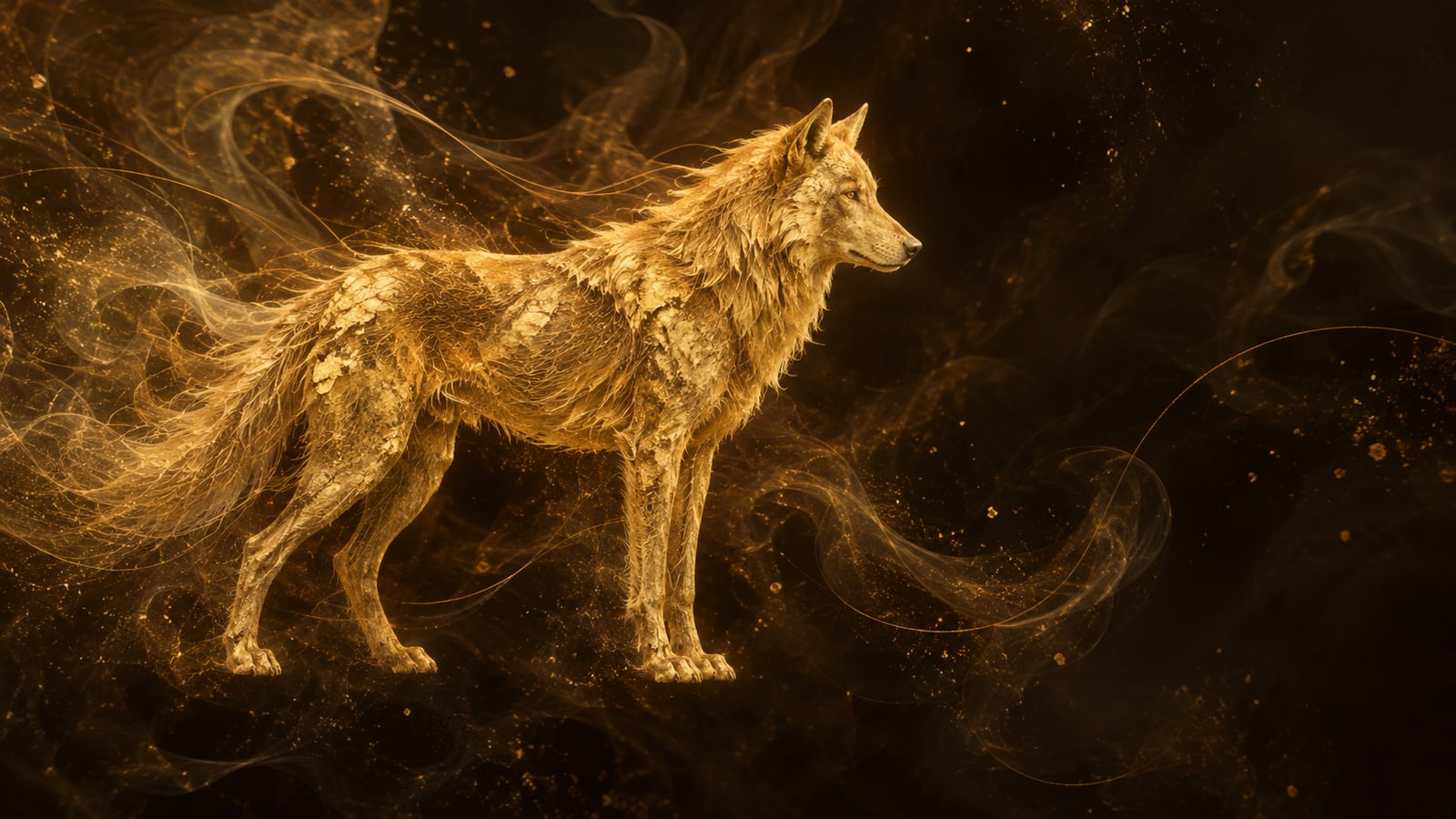
A wolf in a dream usually stands for something that feels bigger than you and closer than you'd like: a threat you can't outrun, an instinct pushing its way up, or a fierce kind of protectiveness. Psychologists who work with dream imagery tend to read wolves as instinct, fear or a boundary being tested, while religious traditions read them as danger, deception or, in a few passages, peace between old enemies. What changes the reading most is what the wolf did, whether it came alone or with a pack, and how you felt when you woke up.
If you woke up shaken, that reaction makes sense. A wolf is one of the oldest predators in human stories, and a dream that puts one at your throat or at your heels is going to leave a mark. The wolf dreams people report fall into a handful of scenes, and each one carries its own readings, from psychology and from the traditions that hold them.
Key Takeaways
Chased or attacked
Usually read as a threat or pressure that feels like it is gaining on you; being chased is one of the most widely reported dream themes of all.
A calm or protective pack
Many dreamers describe fear giving way to calm, and the feeling in the dream does most of the work in reading it.
Lone wolf or pack
A single wolf tends to feel like one specific threat or person, a pack like a group or a family; no study has tested either reading.
Christian and Islamic readings
Christian readers draw on four Bible passages about wolves, and the Islamic dream tradition attributed to Ibn Sirin and al-Nabulsi reads a wolf as a treacherous enemy.
How often people dream of wolves
No study has counted wolf dreams; the closest survey found 15.9% of students had dreamed of wild, violent beasts.
01The wolf dreams people describe
People who post their wolf dreams online describe a fairly consistent set of scenes. None of these has been counted in a study, so there's no ranking of which is most common, but they come up again and again.
- A pack that chases you. One dreamer described a pack resting in snow that suddenly turned and chased them; they killed three wolves with a spear while a larger wolf watched from nearby (Reddit report of a pack chase in snow).
- A single wolf that bites or snaps. A recurring childhood dream of a black wolf stepping out of a snowy forest and biting the dreamer's hand (Reddit report of a recurring black wolf). Another dreamer described a white wolf released by two men in a dark tunnel, chasing them and snapping at their ankle, a dream that kept returning for more than 20 years (Reddit report of a recurring white wolf chase).
- A wolf that goes for the throat. A white wolf and a black wolf came into a house, and the black wolf attacked the dreamer's throat (Reddit report of a black wolf attack).
- A pack that surrounds you and turns calm. One dreamer was surrounded by a pack in a beautiful setting, felt calm, warm and accepted, and then became the pack's leader (Reddit report of a calm wolf pack). Another saw a pack walk into their bedroom; some wolves lay on the bed and the floor, and the fear gave way to calm and a sense of being protected (Reddit report of a pack in the bedroom).
- A wolf that simply watches. A wolf watching calmly from a garden, with no fear at all on waking (Reddit report of a wolf watching from a garden).
- Wolf pups. Giving birth to four wolf pups, then escaping with them from people who wanted to take them away (Reddit report of wolf pups).
The feelings people wake with vary just as much. Some describe terror after a chase (Reddit report of a recurring white wolf chase). Some describe calm and warmth after being surrounded. One felt sadness and sympathy for a wolf that people were chasing (Reddit report of sympathy for a chased wolf), and another described confusion and irritation, with no fear at all, in a childhood wolf-chase dream that kept repeating (Reddit report of a childhood wolf chase). These are real accounts of real experiences. They aren't a measured rate, and nobody has studied which emotion is most common after a wolf dream.
If your dream was a chase more than a wolf, the page on being chased by an animal in a dream covers that side in more detail.
02How often people dream about wolves
No study has measured wolf dreams on their own. The closest data comes from the Typical Dreams Questionnaire, a survey of broad recurring dream themes. In Nielsen and colleagues' 2003 study of 1,181 Canadian university students, 81.5% said they had dreamed of being chased or pursued without being physically hurt, 42.4% had dreamed of being physically attacked, 15.9% had dreamed of wild, violent beasts, 16.8% of creatures that were part animal and part human, and 8.0% of being an animal themselves.
Those numbers tell you that being chased is one of the most common dreams there is, and that dreams of dangerous animals are far from rare. They don't tell you how many of those beasts were wolves. The questionnaire had no wolf item, so any claim that wolf dreams are "common" or "rare" is a guess.
Hover or tap a row to highlight it.
| Dream theme (1,181 students) | Ever dreamed it |
|---|---|
| Chased or pursued, not physically injured | 81.5% |
| Physically attacked | 42.4% |
| Creatures, part animal and part human | 16.8% |
| Wild, violent beasts | 15.9% |
| Being an animal | 8.0% |
03A wolf chasing or hunting you
This is the wolf dream people ask about most, and it's the one with the most support behind a psychological reading, though not a wolf-specific one. Being chased is a near-universal dream theme, as the Typical Dreams figures show. The most defensible reading is that the dream is carrying a sense of threat or pressure: something you feel is gaining on you, and a wolf is a vivid shape for it.
Some analysts go a step further. David Bedrick, writing in Psychology Today, draws on the Jungian analyst Barbara Hannah, who wrote that animals in dreams "almost invariably represent instincts." In Bedrick's reading, an animal pursuing you may be an instinct or impulse you've pushed away, showing up as something that won't stop following. That's an interpretive view from a named practitioner rather than a research finding, and it isn't specific to wolves, but many dreamers find it useful.
If you became the hunter in the dream, as the dreamer with the spear did, some people read that as a shift in how they're facing whatever the wolves stand for. That reading is personal rather than established, and it depends on how the moment felt to you.
04A wolf that bites or attacks
A bite to the hand, a snap at the ankle, a lunge at the throat: these dreams tend to stay with people longest. Psychologically, the reading follows from the chase dream. An attack is threat that has arrived, and the Typical Dreams data shows that dreams of physical attack were reported by 42.4% of the students surveyed, again without naming the animal.
Where the wolf strikes can feel meaningful, and you can ask yourself what that part of the body does in your waking life, what your hands hold, where your feet are trying to carry you, what you'd say if you could. That's a way of looking at your own dream, not a rule anyone has tested.
In the Islamic dream-interpretation tradition, as reported by The Islamic Dream Book from material attributed to Ibn Sirin and al-Nabulsi, a wolf may represent a treacherous enemy, an unjust person who preys on the weak, or a deceiver. Within that tradition, an attacking wolf can be read as predatory opposition from someone in your life.
05A pack that surrounds you or comes into your home
These dreams often start in fear and end somewhere else. The dreamer in the bedroom expected an attack that never came. The dreamer surrounded outdoors felt accepted. Research hasn't looked at "a pack surrounds me" as its own theme, so here the feeling in the dream does most of the work.
A contemporary dream dictionary, DreamScriptures, reads a pack as belonging, loyalty, family-like bonds and group dynamics, and notes that being welcomed by a pack feels very different from being chased or shut out by one. That's a symbolic reading, labelled as interpretation on the site itself.
It helps to know what a real wolf pack is. The wildlife biologist L. David Mech spent 13 summers watching free-living wolves on Ellesmere Island and concluded in a 1999 paper in the Canadian Journal of Zoology that a typical wild pack is a family: two parents and their offspring, with the parents guiding the group. So, if your dream pack settled around you and lay down on your bed, the image you're working with, in waking terms, is closer to a family closing ranks than a gang closing in. That fact doesn't decide what your dream means, but it can change how the image sits with you.
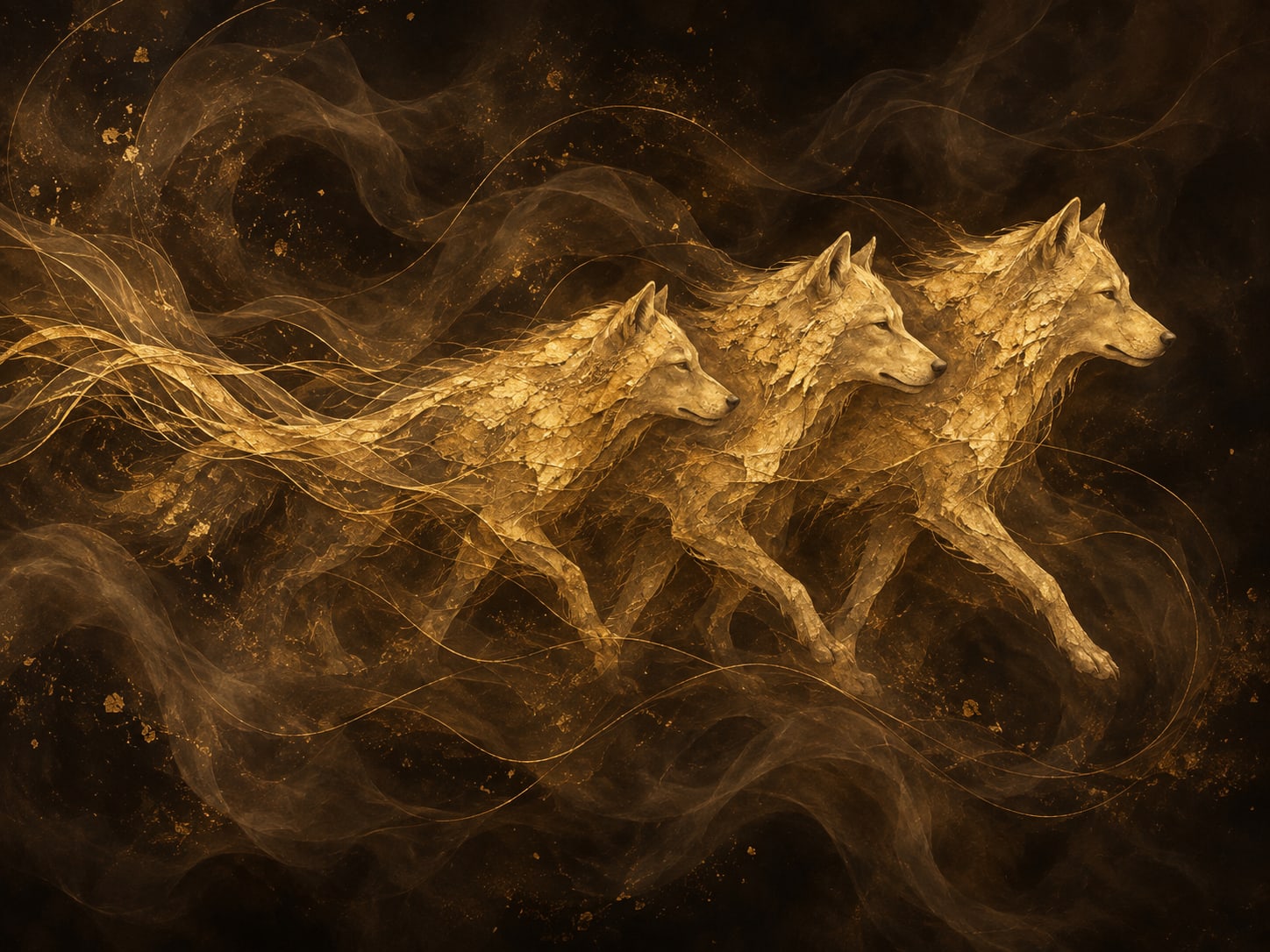
For a pack surrounding you in a threatening way, Christian writers can draw on Matthew 10:16, discussed further down, where the disciples are sent out "as sheep in the midst of wolves."
06A wolf that simply watches
A single wolf standing at a distance, watching, with no attack and no fear, is a quieter dream, and people often wake from it feeling curious rather than frightened. No study has found a typical meaning for it.
DreamScriptures reads a lone wolf as independence, self-reliance, solitude or isolation, depending on how you felt about it. Jung's approach points somewhere else: in "Approaching the Unconscious," from Man and His Symbols, he ties animal imagery to instinct and the older, less rational layers of the mind, and he puts the dreamer's own associations ahead of any fixed dictionary entry. On that view the useful question is what a watching wolf brings to your mind, and whether its calm felt like being guarded or being sized up.
07Wolf pups, and protecting them
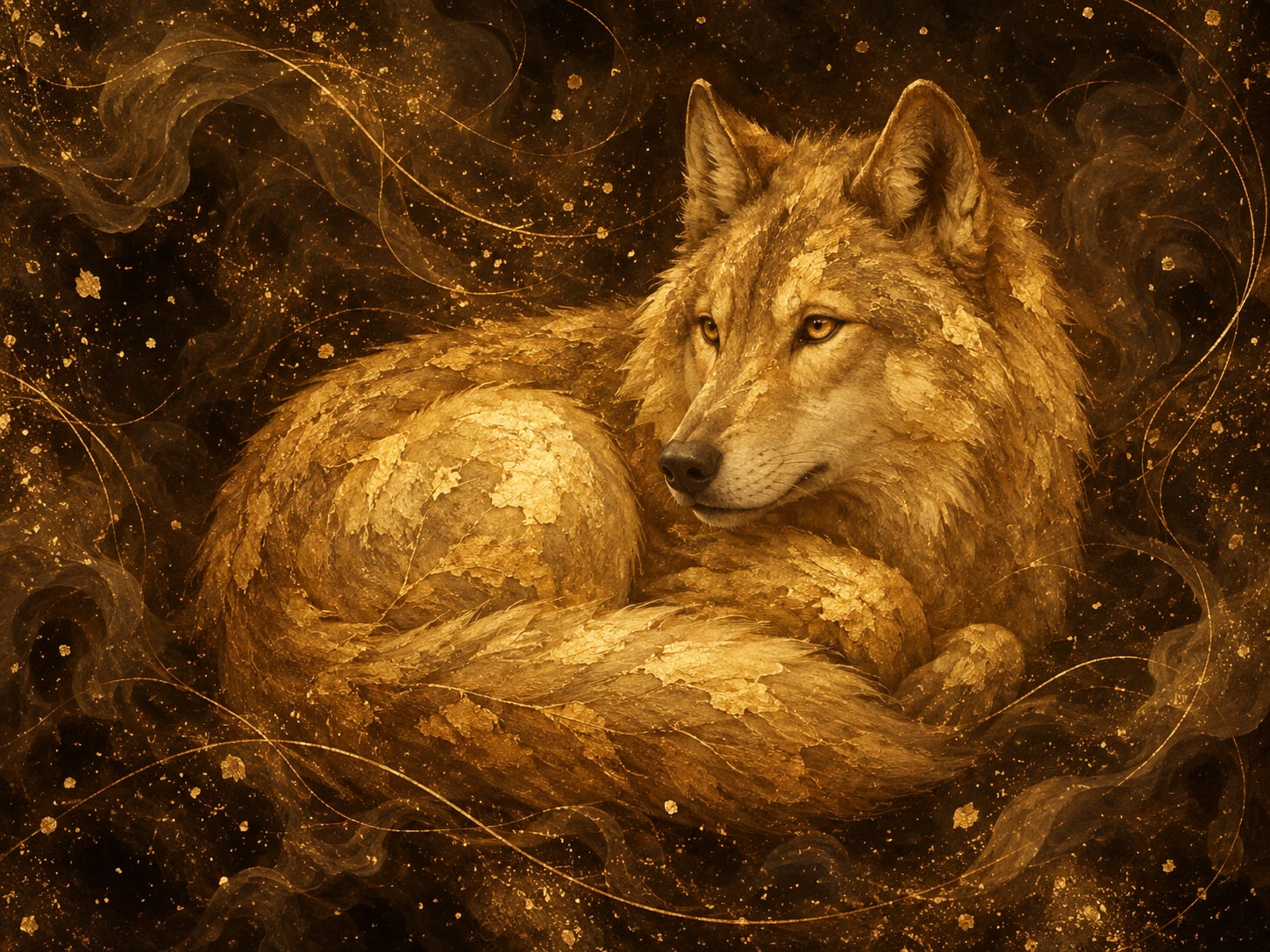
Dreams of giving birth to wolf pups, or of running to keep pups safe, tend to be about protectiveness more than threat. The dreamer who escaped with four pups was the one being chased, but by people, and the wolves were hers to defend.
No research has tested this scene. A psychological reading that fits the dream as told is care for something new, wild or vulnerable in your life, and a fear that others will take it away. The detail that matters is who was trying to take the pups and how the escape ended. For more on dreams where a familiar animal becomes the thing you protect, the page on dog dreams covers the closest domestic cousin.
08Does a single wolf mean something different from a pack?
This is the question dreamers keep asking themselves. One person who had recurring wolf dreams as a child put it plainly: "Does the fact that it was usually a single wolf, rather than a pack, mean anything?" (Reddit).
The short answer is that it can, but only in the readings people bring to it, not in any measured way. Dream dictionaries commonly treat a lone wolf as self-reliance or isolation and a pack as family, belonging, group pressure or hierarchy. No study has tested either claim.
What you can do is notice the difference in your own dream. A single wolf tends to feel like one specific threat, one person, or one part of yourself. A pack tends to feel like a group, a family, a crowd, or a situation larger than any single person. If the pack was hostile, it may fit a sense of being outnumbered. If it was calm, it may fit a sense of being held by a group.
One common reading should be set aside, though. The popular idea of the "alpha wolf" came from watching captive wolves, often unrelated animals housed together, and Mech himself helped spread it in his 1970 book before his 1999 paper replaced it with the family model. "Lone wolf" survives as a useful phrase for a solitary person, but it isn't a scientific description of how wolves live. If your reading of a dream pack leans on dominance and rank, it's leaning on an outdated idea of wolves, and the family version may fit your dream better.
09White wolves, black wolves, howling and turning into a wolf
Color. Online dream material often says a white wolf means purity, guidance or protection and a black wolf means shadow, hidden fear or danger. Those claims circulate widely, but no research supports a color effect. The reports themselves cut both ways: a black wolf bit one dreamer's hand, and a white wolf chased another for two decades. In the most famous wolf dream on record, Freud's patient saw white wolves, and Freud tied their whiteness to the patient's own memories, sheep and his father, not to any general meaning of white.
Howling. Dream dictionaries link howling to communication, a call to belong, warning or loneliness. DreamScriptures leans on your emotion and the setting rather than a fixed meaning. In one report, the dreamer roared and the surrounding pack howled back, and the feeling was calm and warm. That's an experience, not evidence that a howl signals connection.
Turning into a wolf. In the Typical Dreams study, 8.0% of students reported having dreamed of being an animal and 16.8% of part-animal, part-human creatures, with no breakdown for wolves. Online dictionaries read becoming a wolf as meeting your instincts, independence or a "wild self," and the page on running on all fours as an animal in a dream covers that scene more closely. Jung's approach would treat it as imagery about instinct, but his text doesn't give a wolf-specific reading, and no study has separated frightening animal changes from empowering ones.
10What psychology and sleep science can say
Two lines of research into why we dream help explain why a wolf dream can feel so charged, even though neither can tell you what your particular wolf means.
The first is the continuity hypothesis, the idea that dream content reflects waking concerns, emotions, relationships and interests. In a 2000 study in Perceptual and Motor Skills, Michael Schredl found that activities like walking and talking turned up in dreams more often than focused thinking activities, which fits the idea that dreams draw on emotionally relevant parts of life. His 2010 review reported that in psychiatric patients and people with sleep disorders, daytime symptoms and problems show up in dreams. Applied cautiously, a wolf dream might carry recent wildlife on a screen, a fear, a conflict in a group, a stretch of isolation or a question of loyalty. No one has tested continuity for wolves specifically.
The second is REM sleep and emotion. Scarpelli and colleagues, in a 2019 review in Frontiers in Psychology, describe evidence that REM sleep is involved in processing emotionally salient waking experiences, with waking emotion and dreaming sharing some of the same brain systems. Tempesta and colleagues' 2018 review in Sleep Medicine Reviews reached a similar view on REM and emotional material while noting important open questions. In a small experiment, Lara-Carrasco and colleagues found that overnight adjustment to upsetting images was altered by partial REM deprivation in 35 healthy adults and was linked to the emotions in their dreams. Nishida and colleagues linked REM sleep in a nap to better consolidation of emotional memories.
None of these studies looked at wolves. What they suggest is that an intense dream may be part of how your sleeping brain handles emotional material, and a wolf is a very efficient image for fear, threat or fierce loyalty.
11Freud's Wolf Man and Jung's animals
The most famous wolf dream in psychology belongs to Sergei Pankejeff, the patient Freud called the Wolf Man. In From the History of an Infantile Neurosis, written in 1914 and published in 1918, Pankejeff recalled a childhood dream of six or seven white wolves sitting in a walnut tree outside his window, staring at him. He connected the wolves to a frightening wolf illustration from his childhood, to fairy tales like "Little Red Riding-Hood" and "The Wolf and the Seven Little Goats," and to a fear of being eaten.
Freud interpreted the dream through those associations and his own theory about a repressed early memory and fear of the father. The Freud Museum's account shows how he worked from the dream as told to its hidden content. It was one man's case, read through one man's memories, and it doesn't give a universal meaning for wolves. What it does show is a method many people still use: start with what a wolf means to you, from the stories you grew up with to the illustration you remember.
Jung didn't publish a single definition of a wolf in dreams. He treated animal imagery as connected with instinct and the archaic layers of the psyche, and he insisted on the dreamer's own associations. Later Jungian writers, including Barbara Hannah as quoted by Bedrick, kept that emphasis on animals as instinct.
12Wolves in the Bible and Christian readings
The Bible doesn't give a rule for what dreaming of a wolf means. Christian readers who look for meaning usually start from four passages, and each lends itself to a different kind of dream. These are Christian interpretations built on scripture, not predictions.
- Matthew 7:15 warns of false prophets who come in sheep's clothing but inwardly are "ravenous wolves." A threatening or deceptive wolf dream is often read in this light as a call for discernment about someone who seems harmless.
- Matthew 10:16 sends the disciples "as sheep in the midst of wolves," telling them to be wise and harmless. A pack surrounding you can be read devotionally as opposition, vulnerability, or the need for prudence.
- Isaiah 11:6 describes the wolf living with the lamb. A calm wolf, or a pack that lies down beside you, can be read as reconciliation, peace, or hostility that has been changed.
- John 10:12 describes a wolf scattering the sheep while a hired hand runs away. A wolf dream can be read here as danger to a community, or as a contrast between a true shepherd and a guardian who can't be relied on.
The passages themselves are about false prophets, discipleship, a coming peace and faithful care, not about dreams. Applying them to a personal dream is a devotional choice.
13Wolves in Islamic dream interpretation
In the Islamic dream-interpretation tradition, The Islamic Dream Book reports that material attributed to Ibn Sirin and al-Nabulsi reads a wolf as a treacherous enemy, an unjust person who preys on the weak, or a deceiver. It also links the wolf to Surah Yusuf in the Qur'an, where Joseph's brothers falsely claim a wolf has eaten him, so a wolf can carry the idea of a false accusation.
That source is a modern editorial site reporting the tradition, not a critical edition of the original texts, and it says the material is "reported from" these scholars. A wolf pack can be described in this tradition as collective threat or predatory opposition, but that is a later extension of the tradition rather than a securely attributed passage.
14Other traditions
Wolves appear in stories across many cultures, but Hindu, Buddhist and classical Chinese sources do not set out a fixed dream meaning for a wolf that can be traced to a primary text. One modern site, the Zhougong Dream Guide, describes its wolf entry as a Chinese folklore lens and links wolves with wild intelligence, pack loyalty, exile, hunger and alertness. It's a contemporary guide, so it tells you how that site reads wolves rather than what Chinese tradition as a whole holds.
In some online dream dictionaries, a wolf dream is read as an omen of betrayal or an approaching enemy. No study has shown that dreaming of a wolf predicts betrayal, harm, protection or any future event. Those beliefs belong to the people who hold them.
15When the same wolf keeps coming back
Several dreamers describe the same wolf, or the same chase, returning for years, a pattern the page on why recurring dreams repeat looks at more broadly. One had the white wolf in the tunnel for more than two decades. Another had a black wolf biting their hand throughout childhood. A recurring dream like this often tracks something that has also recurred in waking life, a pattern, a relationship, a kind of pressure, though no study has linked recurring wolf dreams to any particular cause.
A recurring wolf dream is worth mentioning to a doctor or therapist when it's distressing, keeps breaking up your sleep, affects how you function during the day, or comes as part of a wider sleep or mental-health concern. There's no set number of repeats that makes it necessary. The American Academy of Sleep Medicine's 2010 Best Practice Guide for nightmare disorder in adults recommends imagery rehearsal therapy, in which you recall the nightmare, change its storyline or ending while awake, and rehearse the new version. The guide gives it its strongest level of recommendation, Level A.
16What is known and what is still open
What's established: being chased and being attacked are among the most widely shared dream themes; dreams of wild, violent beasts are reported by a meaningful minority; dream content tends to follow waking concerns and emotions; REM sleep seems involved in handling emotional material; real wild wolf packs are families; and imagery rehearsal therapy helps with persistent nightmares.
What's still open: how often people dream specifically of wolves; which wolf scenario is most common; which emotions most often follow; whether wolf color, howling or turning into a wolf carries any typical meaning; and whether a wolf dream links to any particular life stage or stressor. The symbolic readings, from lone wolf as isolation to white wolf as guidance, come from dream dictionaries and traditions, not from studies.
17Common questions about wolf dreams
What does it mean when a wolf chases you in a dream?
Psychologically, a chase dream usually carries a sense of threat or pressure that feels like it's gaining on you, and being chased is one of the most widely reported dream themes of all. Some Jungian-influenced writers, like David Bedrick, read a pursuing animal as an instinct you've pushed away. Neither reading is specific to wolves.
Is a wolf dream a good or bad sign?
It depends on the reading you use and on the dream itself. In the Islamic tradition reported by The Islamic Dream Book, a wolf is usually read as an enemy or deceiver, while Isaiah 11:6 gives Christian readers a peaceful image of the wolf beside the lamb. Nothing shows that a wolf dream predicts good or bad events.
What does it mean if you dream of wolves attacking you?
An attack dream usually carries a threat that has already arrived, and dreams of being physically attacked were reported by 42.4% of the students in the 2003 Typical Dreams survey, without naming the animal. In the Islamic tradition reported by The Islamic Dream Book, an attacking wolf can be read as predatory opposition from a treacherous person.
What does it mean when wolves come into your house in a dream?
These dreams often start in fear and end in calm, as in one report where a pack walked into a bedroom, lay down on the bed and floor, and left the dreamer feeling protected. A contemporary dream dictionary, DreamScriptures, reads a pack as belonging and family-like bonds, and real wild packs are families, according to L. David Mech's 1999 research.
What does a calm or friendly wolf mean in a dream?
Dream dictionaries often read a calm wolf as trusted intuition, inner strength or protection, though no study backs a fixed meaning. Dreamers who report a calm pack often describe feeling accepted or guarded, and that feeling is the best guide to what the dream was carrying for you.
What does a wolf mean spiritually?
Christian readings draw on four biblical passages that use wolves for false prophets, hostile surroundings, a coming peace, and danger to the flock. The Islamic tradition attributed to Ibn Sirin and al-Nabulsi reads a wolf as a treacherous enemy or false accusation.
Does dreaming of wolves mean something is wrong with me?
No. Dreams of dangerous animals and of being chased are common, and a wolf is a natural shape for strong feelings. If the same frightening dream keeps returning and disrupting your sleep, a doctor or therapist can help, and imagery rehearsal therapy is the approach the American Academy of Sleep Medicine's guide recommends for persistent nightmares.
Reading your wolf dream
In the 2003 Typical Dreams Questionnaire study of 1,181 students, how many had dreamed of being chased or pursued?
What did L. David Mech conclude about typical wild wolf packs in his 1999 paper?
In the Islamic dream-interpretation tradition reported by The Islamic Dream Book, what is a wolf usually read as?
Pick an answer to begin.
18Holding both readings
A wolf dream can hold a psychological reading and a traditional one at the same time without either cancelling the other. The psychology points you toward your own waking life: what feels like it's chasing you, what you're guarding, where your instincts are pulling. The traditions offer older images: the deceiver in sheep's clothing, the enemy of the Islamic dream books, the wolf lying down with the lamb. Start with what the wolf did, whether it came alone or with others, and how you felt when you woke, and you'll have most of what you need to place your dream among the ones people have described for as long as they've been dreaming of wolves.
A wolf dream is a prompt for reflection, not a diagnosis of your sleep or your state of mind: if one keeps returning, frightens you or is wearing down your sleep, it is worth raising with a doctor or therapist. For the other animals and symbols that turn up in dreams, the DreamTold dream dictionary is the place to look next.
Dream terms
Tap a term to see what it means.
Typical Dreams Questionnaire. A questionnaire that asks whether people have ever had each of a list of broad, common dream themes, such as being chased.
Continuity hypothesis. The idea that dream content reflects waking-life experiences, concerns, emotions and interests.
REM sleep. Rapid eye movement sleep, a sleep stage linked with vivid dreaming and the processing of emotional memories.
Imagery rehearsal therapy. A treatment for nightmares in which the dream's storyline or ending is changed and the new version rehearsed while awake.
Wolf Man. Freud's name for his patient Sergei Pankejeff, whose childhood dream of white wolves in a tree became a famous case.
19Sources
Every claim on this page that comes from somewhere else, with the somewhere else. Scripture and hadith are linked so you can read them in context rather than trusting a paraphrase.
- American Academy of Sleep Medicine: 2010 Best Practice Guide for nightmare disorder in adults
- BibleGateway: Isaiah 11:6
- BibleGateway: John 10:12
- BibleGateway: Matthew 10:16
- BibleGateway: Matthew 7:15
- digitalcommons.unl.edu: 1999 paper in the Canadian Journal of Zoology
- dreamscience.ca: Nielsen and colleagues' 2003 study of 1,181 Canadian university students
- dreamscriptures.com: DreamScriptures
- freud.org.uk: Freud Museum's account
- frontiersin.org: Scarpelli and colleagues, in a 2019 review in Frontiers in Psychology
- Journal of Sleep Research (Wiley): Lara-Carrasco and colleagues
- journals.sagepub.com: 2000 study in Perceptual and Motor Skills
- noinputbooks.aphasic-letters.com: From the History of an Infantile Neurosis
- psychologytoday.com: David Bedrick, writing in Psychology Today
- PubMed: 2010 review
- PubMed: Nishida and colleagues
- PubMed: Tempesta and colleagues' 2018 review
- reddit.com: Reddit report of a black wolf attack
- reddit.com: Reddit report of a calm wolf pack
- reddit.com: Reddit report of a childhood wolf chase
- reddit.com: Reddit report of a pack chase in snow
- reddit.com: Reddit report of a pack in the bedroom
- reddit.com: Reddit report of a recurring black wolf
- reddit.com: Reddit report of a recurring white wolf chase
- reddit.com: Reddit report of a wolf watching from a garden
- reddit.com: Reddit report of sympathy for a chased wolf
- reddit.com: Reddit report of wolf pups
- theislamicdreambook.com: The Islamic Dream Book
- wolf.org: his 1999 paper
Related
articles.

Being Followed in a Dream: Meaning
Being followed in a dream meaning isn't the same as being chased. Learn what the research says, and what your own version of the dream might be about.
Read: Being Followed in a Dream
Running on All Fours as an Animal in a Dream
Running on all fours as a wolf, dog, or big cat in a dream often brings a rush of freedom and speed. Here is what each animal identity can add to the meaning.
Read: Running on All Fours as an Animal in a Dream
Being Chased While Running on All Fours in a Dream
Dreamed of dropping to all fours while being chased? See what running on all fours in a dream can mean, and why the chase and the posture are two threads.
Read: Being Chased While Running on All Fours in a Dream