

Insects in Dreams: Small Irritations and What Swarms
What insects in dreams usually mean: small irritations, disgust, and the shift from one bug to a swarm, plus what a 2011 research review actually found.
 Featured
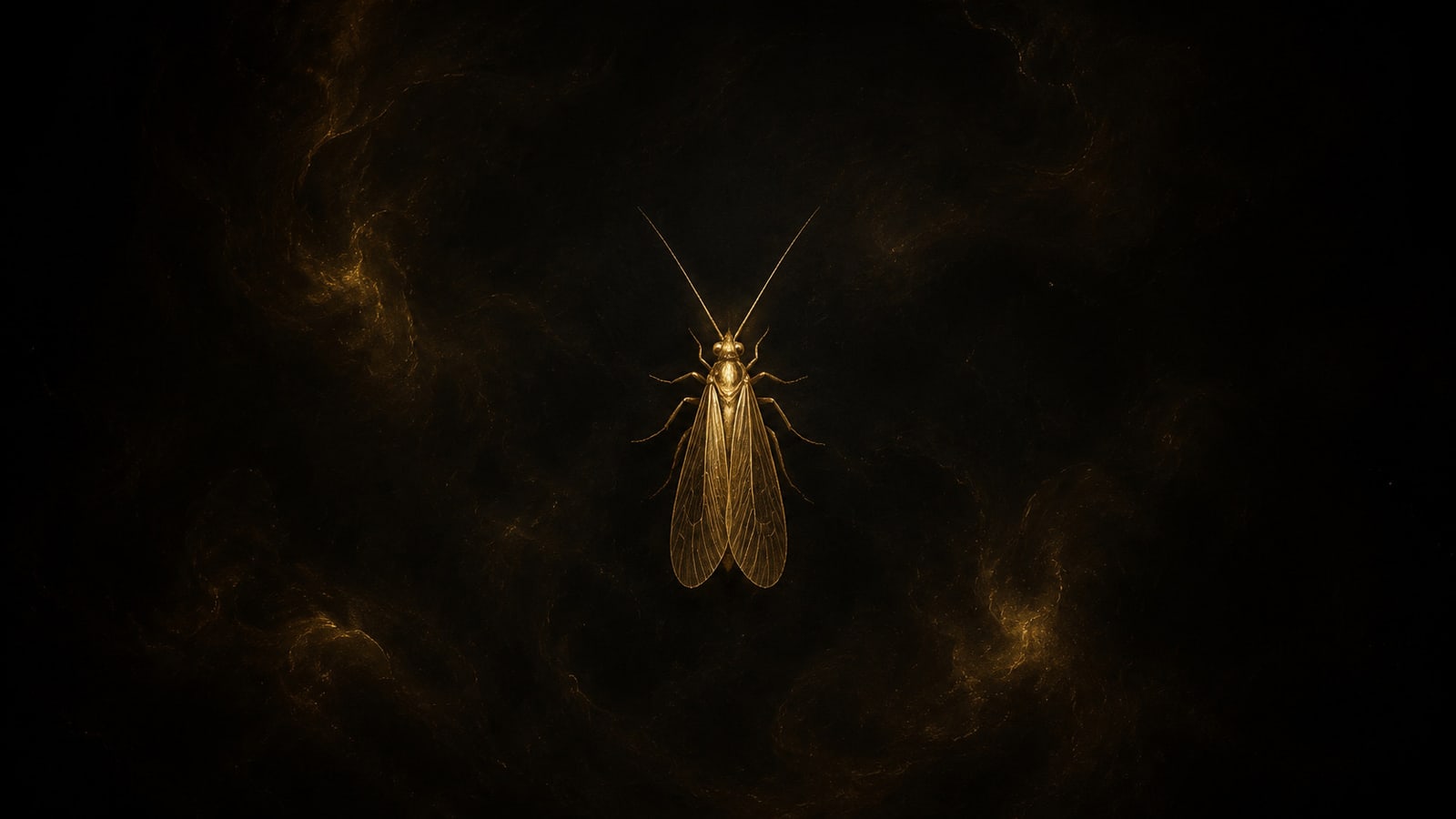
An insect in a dream usually points at something small that will not leave you alone: a nagging task, a remark that stuck, a low-level worry that keeps coming back after you push it aside. The language already carries the reading, because we say something is bugging us. What changes the meaning most is number and contact. One insect tends to track a single irritation, while a swarm or an infestation tends to track overwhelm, the feeling that a problem is multiplying faster than you can deal with it. None of this predicts anything, and a recent bite, an itchy night, or a real bug problem at home is often the whole explanation.
Key Takeaways
Small and persistent
The core reading is irritation, something minor that keeps returning rather than one large threat.
Number changes everything
One insect reads as a single annoyance; a swarm or infestation reads as overwhelm and loss of control.
Disgust, not just fear
Insects trigger revulsion and contamination feeling, a different emotional register from being chased by something big.
There is real research
A 2011 review in the journal Insects surveyed insect dreams across interpretation, psychiatry, and culture, and found no fixed meaning for them.
Check the waking seeds first
A real infestation, a fresh bite, or a documentary about locusts will all seed these dreams.
Traditions are belief
Biblical, Islamic, and folk readings are held as belief and reflection, never as evidence that something will happen.
01The core reading: something is bugging you
The most common insect dream is not a horror scene. It is a small creature that keeps showing up, and a dreamer who cannot quite get rid of it. That maps onto a specific kind of waking problem: not the crisis you are actively fighting, but the papercut you keep noticing. An unanswered message. A bill you have looked at four times. The dreaming mind reaches for insects because insects behave the way those problems behave: small, hard to catch, and far more irritating than dangerous.
The emotional register matters. Most insect dreams leave people annoyed, itchy, and faintly repelled rather than terrified. If you woke feeling hunted, the dream is probably borrowing the insect for something else, and our guide to what being chased in a dream means covers that register better. If you woke wanting to shower, you are in insect territory.
Two questions then do most of the interpretive work before any symbol list. How many were there, and did any of them touch you. Number separates irritation from overwhelm; contact separates a problem you are watching from one that has crossed into your personal space. Our dream dictionary entry for insects holds that short version for quick reference.

02Why insects reach the disgust reflex, not just the fear one
Insects are unusual among dream symbols because they are tied so directly to a physical response. Most feared dream images work through fear, which prepares you to escape. Insects work through disgust, which prepares you to avoid contact and to clean.
Waking research treats that reaction as a system rather than a quirk. Valerie Curtis, Mícheál de Barra and Robert Aunger, writing in Philosophical Transactions of the Royal Society B in 2011, describe disgust as an evolved behavioral immune system that steers people away from cues associated with pathogens, with the cockroach among their examples of what people avoid. A study of Connecticut residents by Stephen Kellert, published in Conservation Biology in 1993, found that the general public viewed most invertebrates "with attitudes of fear, antipathy, and aversion."
Neither study is about dreams, and it would be dishonest to present them as if they were. What they establish is that the raw material is loaded before you fall asleep, so when a dream needs an image for something unclean that has got in where it should not be, insects are the readiest one available. That is why an insect dream leaves a residue into the morning, a skin-crawling feeling a dream about a locked door does not produce.
03What the research actually says about insect dreams
There is a real paper behind this symbol, which is rare in this corner of the internet. Barrett A. Klein, then at Cornell University, published "The Curious Connection Between Insects and Dreams" in the journal Insects in December 2011. It is a literature survey rather than a study of sleepers, and the distinction matters: Klein gathered examples from dream interpretation, psychiatry, science and popular culture, and did not measure how often insects appear in anyone's dreams. If you see a page quoting a percentage for insect dreams and crediting this paper, the number did not come from it.
What the review does document is worth knowing. Insects in dreams show up repeatedly as objects of fear and dread, and as material people have wanted to explain for centuries. Artemidorus, whose second-century Oneirocritica is the oldest surviving dream manual of its kind, viewed insects as symbols of cares and anxieties, which is close to the everyday reading people still arrive at on their own. Klein also cites a 1985 study of 78 four-to-six-year-olds concluding that children's insect dreams reflect a symbolic feeling of powerlessness attributed to being small, and Medard Boss's analysis of 823 dreams from one deeply depressed patient over three years, in which insects appeared at a particular stage of the series.
Read honestly, that material supports one modest conclusion: insect dreams are common and unsettling enough that people across centuries have built interpretations for them, and none of those interpretations has been established as correct.
04From one insect to many: swarms and infestations
One insect is an irritation. A swarm is a system, and the jump from one to many changes the dream completely. When dreamers describe swarms, infestations, walls that move, or bugs pouring out of a cupboard, the feeling they report is almost never fear of being hurt. It is futility. You kill some and more arrive. You clear one room and find the next one worse. That is the emotional shape of a problem multiplying faster than your capacity to handle it, which is a very different waking situation from one annoying thing.
The detail people most often remember is the source. An infestation dream where you find the nest tends to feel resolvable; one where you never find it leaves the worst residue, and it lines up with waking situations where the symptoms are obvious and the cause is not.
James Hillman, writing from archetypal psychology in 1988, offered three explanations for human fear of insects, one of which read dreams of insect invasion as a loss of centralized control, tied to the sheer number of insects in the world. Klein's review reports that framing, and it is worth naming for what it is: an interpretive idea from one school of psychology, not a finding and not a diagnosis. What a swarm dream does reliably signal, in most people's own accounts, is that something feels like too much. Because those dreams tend to repeat while the situation stays unresolved, they show up often in the pattern described in our piece on why recurring dreams repeat.

05The scenes readers ask about most
Insects crawling on you
Contact is the line between watching a problem and being in it. Crawling dreams are the ones people describe as hardest to shake, and they often have a real physical seed: a bite from the day before, warm bedding, an itch your sleeping brain wove into a scene. Older traditions read the scene harshly. Artemidorus assigned death to insects crawling on the dreamer's body and lingering illness to an overabundance of them on the skin. Klein's review records those as historical interpretation, and they are exactly what modern fear-based pages recycle without saying where it came from. It is a second-century reading, not evidence about your health or your future.
Insects in the house
A house in a dream usually stands for personal territory, so insects inside it point at something unwelcome that got past a boundary: a person, an obligation, or news that has entered a space that felt private. The room often matters more than the insect, with a kitchen leaning toward provision and cleanliness, a bedroom toward rest, and a basement toward what has been stored and ignored. The flattest explanation still deserves first pass, because if you have ants in the kitchen, your dream is reporting the news.
Bugs crawling on the wall
Bugs on a wall are the watching version of the symbol. Nothing is touching you, but the room is no longer neutral, and attention keeps snagging on movement at the edge of vision. Dreamers commonly link that to a situation they are monitoring rather than confronting. Black or unidentifiable insects tend to intensify the feeling, because a worry you cannot name is harder to plan against than one you can. That is a common association rather than a fixed code, and a black insect is not a darker omen than a brown one. Killing them fits the same frame: squashing one and feeling relief usually reflects dealing with the small thing, while squashing one and immediately seeing three more belongs with the swarm reading above.
Hover or tap a row to highlight it.
| Scene | What it commonly points to | How firm the reading is |
|---|---|---|
| One insect you keep noticing | A single small irritation that will not resolve | Common self-report, not a studied finding |
| A swarm or infestation | Overwhelm, a problem multiplying faster than you can act | Common self-report; matches Hillman's reading of invasion imagery as loss of control, which is interpretation |
| Insects crawling on your skin | A problem that has crossed into personal space; often a real bite or itch | Common self-report; Artemidorus read it as an omen of death, which is tradition, not evidence |
| Insects inside the house | Something unwelcome past a personal boundary, or a literal bug problem | Common self-report |
| Bugs on a wall, watched from a distance | A situation being monitored rather than confronted | Common self-report |
| Killing or clearing them | Dealing with the irritation; futility if they return | Common self-report |
| Bees or ants working | Effort, industry, and collective work rather than threat | Common self-report; matches long-standing cultural associations |
06When the insect has a name of its own
A few insects carry associations strong enough to shift the reading. Ants read as industry and collective effort, and dreamers usually notice whether the column is purposeful or relentless. Bees split between productive work and a community you belong to, with stinging as the obvious exception. Cockroaches carry contamination most heavily of any common insect, and also carry stubborn survival, which is why some dreamers wake with an odd respect for them. Flies attach to rot and to the nagging quality of something you keep waving away. Moths and butterflies sit apart from the disgust group and are read as transformation, a habit of modern dream dictionaries rather than an old tradition.
Spiders are a large subject with a different emotional signature, closer to entanglement and craft than to irritation, and they are not insects at all. Our separate guide to what spiders in dreams mean handles that symbol properly.
07The waking seeds worth checking first
Three ordinary explanations account for a large share of insect dreams. A real infestation at home puts insects in your attention all day, and attention is the main raw material of dream content. A recent bite, a rash, or warm and itchy bedding gives the sleeping brain a genuine skin sensation to build a scene around. Media does the rest, because a documentary about locust swarms, a cicada year in the news, or a horror film will all seed the imagery for a few nights.
Naming those first is not a way of dismissing the dream; it stops you hunting for a hidden message in something your day already explains. If a seed accounts for the imagery and the dream still carries a strong feeling, the feeling is the part worth sitting with. If the insects arrived alongside unusually intense dreaming in general, our explainer on why dreams get so vivid covers the ordinary causes. One thing does deserve a different response: persistent sensations of insects on or under the skin while you are awake are a medical matter, not a dream symbol, and are worth raising with a doctor.
08What traditions hold, named as belief
Insects appear across scripture and tradition, and it is worth being precise about what those texts address, because none of them is a dream code.
In Christian tradition, the passages people reach for are narrative or instructional rather than interpretive. Exodus 8 describes plagues of gnats and flies sent on Egypt, Joel 1:4 describes successive waves of locusts stripping the land, and Proverbs 6:6-8 holds up the ant as a model of diligence: "Go to the ant, you sluggard; consider its ways and be wise." A Christian reader may reflect on those themes, judgment, loss, and industry among them, but the Bible does not assign a meaning to insects appearing in a modern dream. Our overview of biblical dream symbols from A to Z draws the same distinction across other images.
In Islamic tradition, the Quran treats particular insects with respect rather than dread. Surah An-Nahl 16:68-69 describes the bee being inspired to make its homes and to produce honey, and Surah An-Naml 27:18-19 tells of the ant that warns its colony as Solomon's army approaches. The Quran also treats some dreams as significant within specific narratives, most famously in Surah Yusuf, without providing a symbol dictionary. Later manuals in the tradition associated with Ibn Sirin do read insects by type, number and context, and those are held as interpretive tradition rather than revelation. Our guide to what Islam says about dreams draws that distinction more fully.
In Hindu thought, the relevant material is not a symbol list at all. The Mandukya Upanishad discusses dreaming as one of four states of consciousness rather than cataloguing what individual images mean, so the tradition's contribution here is a way of thinking about the dreaming state, not a reading of insects.
Modern spiritual writers commonly read insects as prompts about persistence, release, or transformation, with the butterfly carrying most of that weight. Those are reflective beliefs, offered as such. What we will not repeat is the claim, common on ministry blogs and video channels covering this symbol, that dreaming of insects indicates spiritual attack, sickness sent by someone, or a curse. It is held with real conviction and stated there as fact, and it is not evidence of anything happening to you. A frightened reader deserves to know that plainly, and our piece on dream omens and warnings explained covers why prediction claims about dreams do not hold up.
09When an insect dream is worth talking about
Most insect dreams need nothing more than a note in the morning and an honest look at what has been nagging you. If they are frequent, distressing, and costing you sleep, that pattern is worth raising with a clinician, and our guide to nightmares and what they mean explains what usually helps. The same applies if they arrived alongside a new medication or a marked change in mood, and most of all to the waking skin sensations above.
10Common questions about insect dreams
What is the spiritual meaning of insects in a dream?
Spiritual readings hold insects as prompts about persistence, small disturbances, or transformation, with butterflies read as change and cockroaches or flies as something needing to be cleared. Those readings belong to modern spiritual writing and to older folk traditions, held as belief rather than established as fact. No tradition's reading is evidence that an event will happen to you.
What do insects represent in dreams?
Most commonly they represent small, persistent irritations and a feeling of contamination or unease, rather than one large threat. Artemidorus, in the oldest surviving dream manual, described insects as symbols of cares and anxieties, and that reading has held up as the everyday one.
What does it mean to dream of bugs crawling on the wall?
Bugs on a wall are the watching version of the symbol, where nothing has touched you but the space no longer feels neutral. Dreamers often connect it to a situation they are keeping an eye on rather than confronting, and the noticing is usually a more useful detail than the insect itself.
Is any insect a good omen in a dream?
We do not treat any dream image as an omen, good or bad, because there is no evidence that dream content forecasts events. Some insects carry positive associations that make a dream feel encouraging: bees for productive work and community, ants for diligence, butterflies for transformation. Those are cultural associations worth reflecting on, not predictions.
What does an infestation dream mean?
An infestation usually tracks overwhelm rather than danger, particularly when you clear insects that keep returning or search for a source you never find. It is also the scene most likely to have a literal cause, so if you have an actual pest problem, treat that as the first explanation.
Test your insect dream knowledge
What changes an insect dream's reading most?
What did Klein's 2011 review in the journal Insects actually do?
What is the honest reading of the old claim that insects crawling on you foretells death?
Pick an answer to begin.
If an insect dream has stayed with you, the useful question is not which insect it was but what has been nibbling at your attention lately, and whether it is one thing or many. DreamTold treats dreams as a window into your own mind rather than a forecast, so if another image from the same night is still nagging, look it up in the dream dictionary, and our roundup of the most common dreams and what they mean puts this one in company. This guide is educational and meant for reflection, not medical advice. If distressing dreams or lost sleep are affecting your daily life, speak with a qualified clinician.
Dream terms
Tap a term to see what it means.
Dream symbol. A recurring image in dreams that people attach meaning to, which reflects the dreamer's associations rather than carrying a fixed universal code.
Disgust response. The avoidance reaction to cues of contamination or disease, described in research as a behavioral immune system, and the reason insects unsettle people differently from large predators.
Entomophobia. An intense fear of insects, discussed in the dream literature as one reason insect imagery carries such emotional charge.
Oneirocritica. The second-century dream manual by Artemidorus, the oldest surviving work of its kind, which treated insects as symbols of cares and anxieties.
Dream incorporation. The way real sensations from the sleeping body, such as an itch, a bite, or warmth, get woven into the content of a dream.
11Sources
Every claim on this page that comes from somewhere else, with the somewhere else. Scripture and hadith are linked so you can read them in context rather than trusting a paraphrase.
- attalus.org: Artemidorus
- BibleGateway: Exodus 8
- BibleGateway: Joel 1:4
- BibleGateway: Proverbs 6:6-8
- Ibn Sirin dictionary (PDF): Ibn Sirin
Related
articles.
Black and White Striped Snake Dream Meaning: Duality Explained
Black and white striped snake dream meaning: a black and white choice, a camouflaged warning, and what several traditions each say it means.
Read: Black and White Striped Snake Dream Meaning
Red and Black Striped Snake Dream: Is It a Warning?
Woke up shaken by a red and black striped snake dream? Learn what the coral snake connection is, why fear matters more than color, and what traditions say.
Read: Red and Black Striped Snake Dream
Black Cat Dream Meaning: Luck, Warning, and What the Superstition Misses
A black cat in a dream usually reflects instinct, privacy, and boundaries. What the cat was doing carries the meaning, and the luck belief is regional.
Read: Black Cat Dream Meaning