

Lion Dream Meaning: Power, Courage, and What You Are Facing
A lion in a dream points to power. The useful question is whose: a force bearing down on you, or your own strength. Scenes, scripture, and honest limits.
 Featured
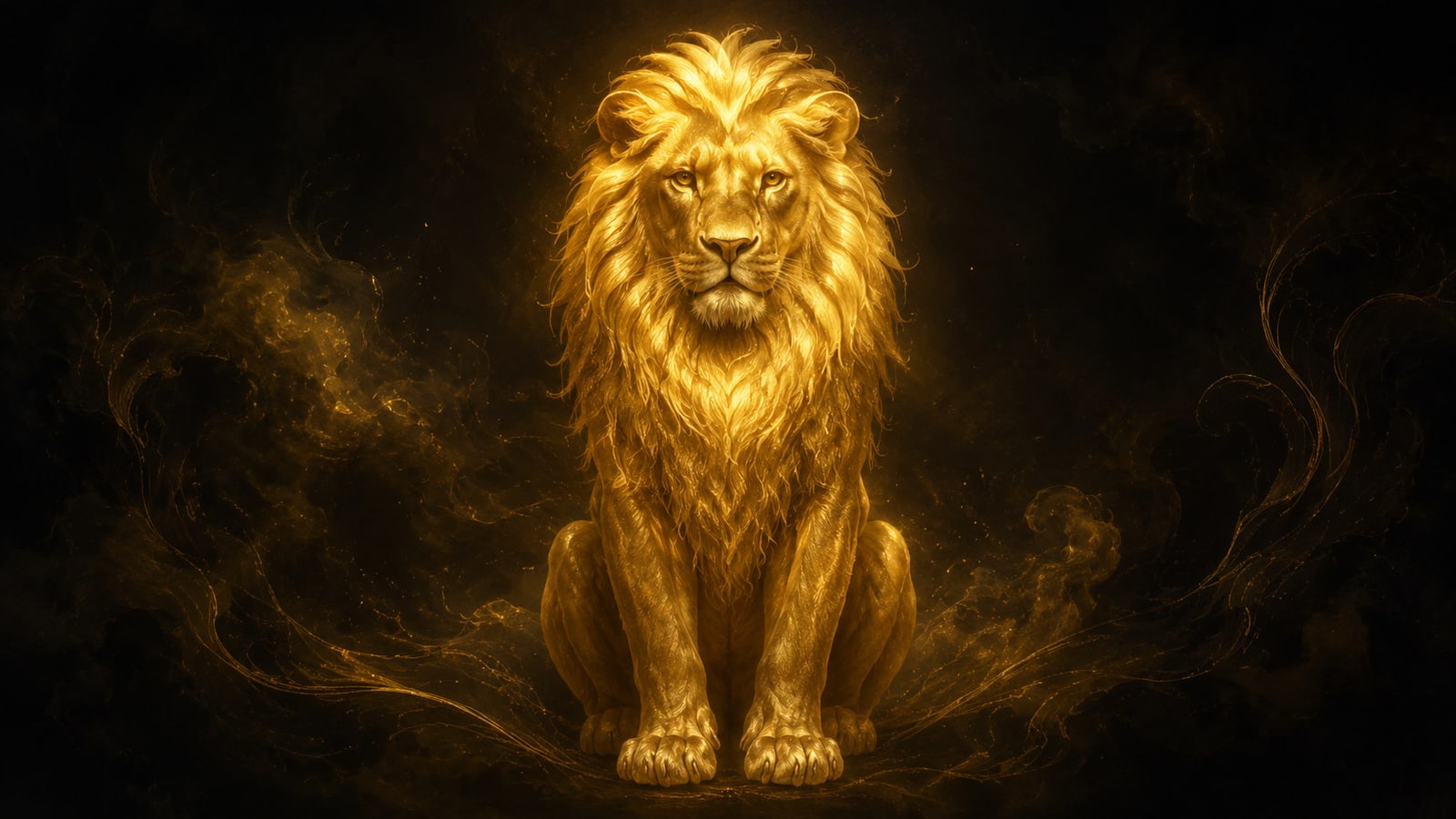
A lion in a dream usually points to power, and the more useful question is whose power it was. The common reading across dream writing is power, courage, pride, and authority, which is a fair starting point but stops one step short of being helpful. A lion you ran from and a lion that walked calmly beside you both carry the theme of force, yet they are close to opposite dreams: one tends to track a pressure bearing down on you from outside, the other strength you are starting to claim as your own. Most pages lump them into a single list of meanings. Everything below works from the split instead.
Key Takeaways
The theme is power
Across dream writing the lion is consistently read as power, courage, pride, and authority, which is the starting point rather than the answer.
Whose power matters most
A lion you flee and a lion you walk beside point in opposite directions, so the scene, not the animal, carries the reading.
Indoors is the loudest version
A predator inside the house is a strong image of something powerful reaching a place you treat as safe.
Animals in dreams are mostly ordinary ones
In a study of 2,716 dreams, dogs, horses, and cats were the most frequent animals, and about a fifth of dream animals were the dreamer's own pets.
Scripture uses lions in several ways
Daniel's lions' den, the lion of Judah, and the roaring lion of 1 Peter are held as very different images within Christian tradition, and none is a rule for reading a dream.
Nothing here forecasts anything
A lion dream is a prompt for reflection about your waking life, not evidence about what will happen next.
01The question that sorts a lion dream
Start with the relationship, not the animal. Where did you stand, and what was your body doing? Running, hiding, frozen, watching from a distance, standing your ground, or moving alongside it? That single detail reorganises the dream.
When the lion is bearing down on you, chasing you, or roaring from somewhere you cannot see, the dream is usually organized around something external and larger than you: a person with authority over you, a confrontation you have been putting off, a family situation with someone forceful in it. When the lion is calm, familiar, or on your side, it tends to sit with your own capacity: authority you have recently taken on, a stand you are working up to, anger you have been keeping polite.
Fear alone does not sort it, since both versions can frighten you. Direction is the clearer signal: coming at you reads outward, moving with you reads inward. Our dream dictionary entry for lions carries that split as a quick reference.
02What a lion commonly reflects in waking life
A lion is not a subtle animal, so it tends to appear alongside something that is not subtle in your life either. The same few situations come up: the boss, parent, or institution whose approval carries real weight; a confrontation you can see coming and would rather avoid; your own anger, which people who dislike conflict often meet in dreams first; a stretch where you have been asked to lead and are not sure you are big enough for it.
Pride sits in there too, and it cuts both ways: a lion can turn up around genuine self-respect and around the kind of pride that stops you asking for help. Neither is a verdict on your character. Treat the dream as a question. Where am I dealing with something powerful, and am I facing it or running from it?
Recent events matter more than symbol lists allow for. Dreams draw on memory, emotion, and imagination, so a lion after a week of conflict is doing something ordinary with material already in your head. If the same lion keeps returning, take that pattern to our piece on why recurring dreams repeat.
03How often animals actually appear in dreams
This changes how remarkable your dream is. In the UK Library Study, published in Imagination, Cognition and Personality in 2021, Schredl and Blagrove analyzed 2,716 most recent dreams from 4,849 participants aged 6 to 90 and found that 18.30 percent contained animals. Children reported animal dreams more often than adolescents and adults, which fits a long-standing pattern of animal figures thinning out with age.
Two further details are useful. The most frequent animals were dogs, horses, and cats, roughly 20 percent were the dreamer's own pets, and about 30 percent showed bizarre features such as talking or being larger than in real life. The typical dream animal is a familiar one behaving strangely, not an exotic predator.
The lion did not appear among the most common animals there, and the study did not analyze lions separately, so nothing in it tells you what a lion means. What it does tell you is that a lion is an unusual dream animal, and unusual images are the ones the mind reaches for when the everyday ones will not carry the feeling. There is no dream-science literature specific to lions, and any page offering you one is offering something that does not exist.
04A lion attacking you
An attack is the version people search at three in the morning, and it is usually the least mysterious. It commonly tracks a situation where you feel outmatched and cornered, where the pressure has arrived rather than merely loomed. The useful detail is not the attack but what happened next: did you fight, freeze, get help, or survive it?
Freezing is worth a word of reassurance. Not being able to move or fight back is one of the most common experiences in threatening dreams, and it is not a comment on your courage. During REM sleep the body's voluntary muscles are largely switched off, and that ordinary feature of sleep shows up inside the dream as heaviness and powerlessness, a mechanism our guide to lucid dreams and your body sets out in full. If the attack woke you and left you shaken, that is closer to nightmare territory, and our guide to what nightmares are and what they mean covers that ground.
05Escaping or fleeing from a lion
Running from a lion is a chase dream in a specific costume, and chase dreams are among the most reported dreams anywhere. The reading that holds up best is avoidance: something you already know about and have decided, for now, not to turn and face. The lion form says the avoided thing has weight.
Escaping is not proof you will get away with anything, and being caught is not proof of the opposite. Worth noticing is the flavor of the escape, because relief that turns into exhaustion is a different feeling from relief that turns into resolve. For the wider pattern, see what being chased in a dream means, and for the animal versions specifically, being chased by an animal.
06A lion in the house
This variant deserves the most attention, because the setting does as much work as the animal. A house in a dream is commonly read as your own life and mind, the rooms standing in for parts of it, so a predator indoors is a strong image of something powerful arriving where you are supposed to be safe.
The room tends to matter. A lion in the hallway or living room, where visitors go, often sits with something you cannot keep at the door: a family conflict, money pressure, a person whose moods set the temperature of the household. A lion in the bedroom, the most private room, tends to sit with something closer in, such as a relationship, your health, or a fear you have not said out loud. A lion you are trying to keep behind a door reads as containment, and the effort of containing it is usually the real subject.
Notice too whether you were protecting anyone. These dreams frequently include children, pets, or a partner, and that detail points at where you feel responsible rather than threatened. None of it means an intrusion is coming; it is a picture of how exposed something currently feels.
07Calm lions, caged lions, lionesses, and cubs
A calm or friendly lion is the version that most contradicts the fear-based reading, and it is common enough that any page treating lions as automatically ominous is misleading you. Walking beside a lion, or having one sit quietly in the room, tends to accompany strength you are comfortable with, often during a period when you have taken on more authority or finally said something you had been holding back.
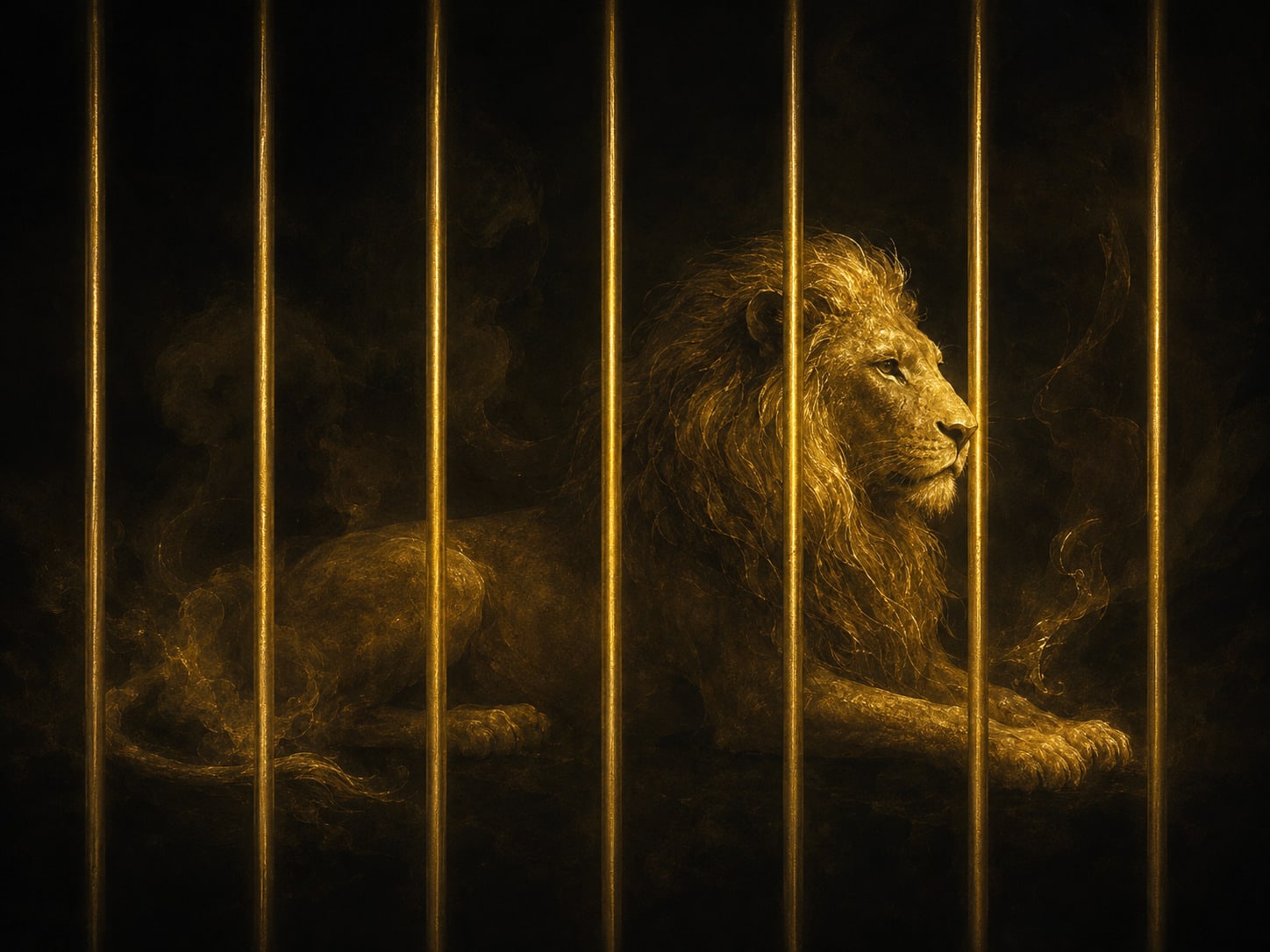
A caged lion moves the theme to restraint. Sometimes the restraint is yours, and the dream arrives alongside anger, ambition, or a part of yourself you keep managed. Sometimes the cage holds a threat you consider handled, and the dream is asking how sturdy the bars really are. Whether you felt relief or pity at the cage tells you which.
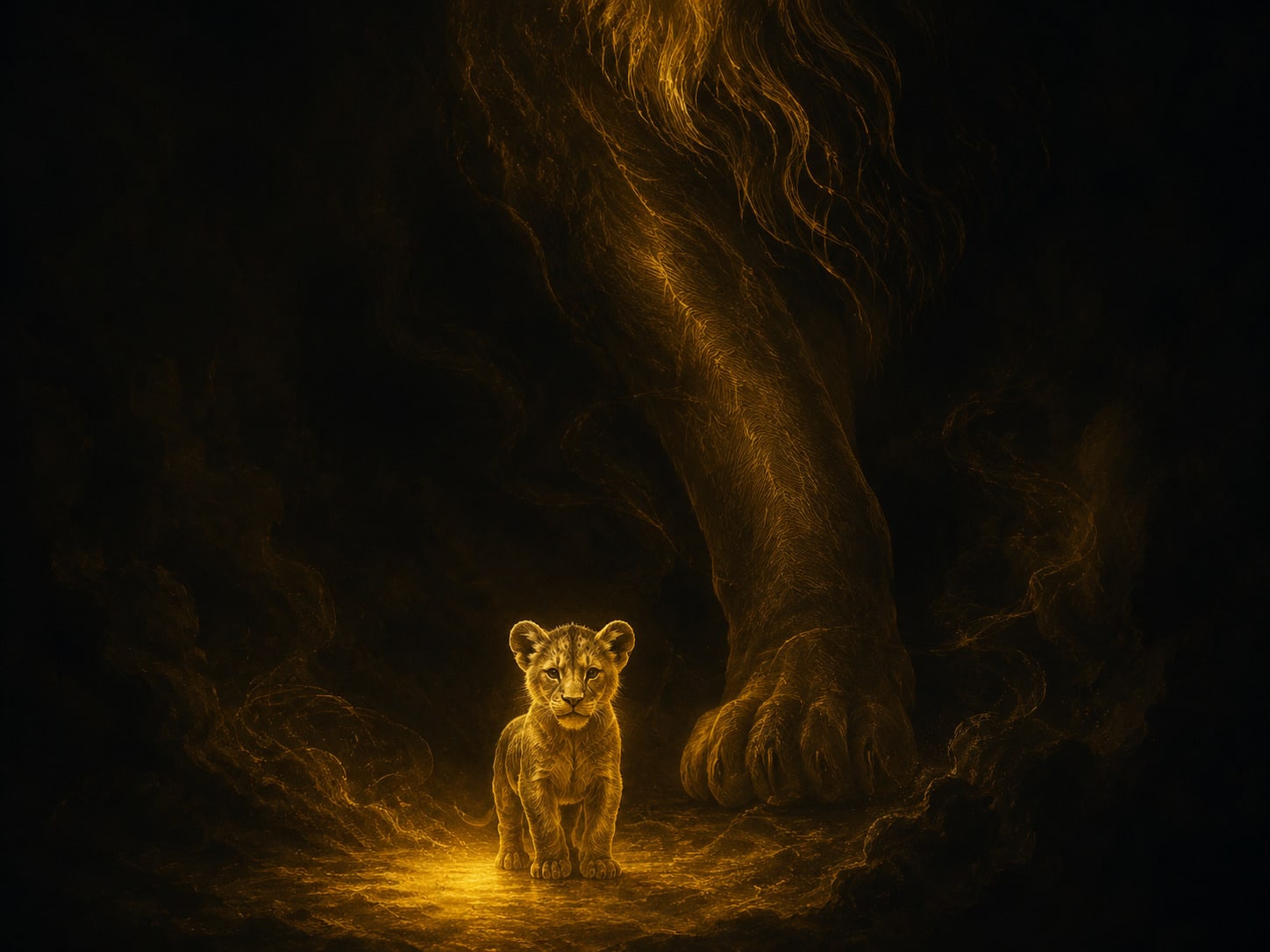
A lioness carries a different note for a straightforward reason: lionesses do most of the hunting and most of the raising of cubs, so these dreams commonly sit with protection, competence, and practical responsibility rather than display or status. Cubs shift it again, toward something new and demanding you feel answerable for, whether a child, a project, or a fragile stage of something you care about.
Hover or tap a row to highlight it.
| Scene | What it commonly points to | How firm the reading is |
|---|---|---|
| A lion attacking you | Pressure that has arrived rather than loomed, and feeling outmatched by it | Common self-report and standard dream-writing reading, not a studied finding |
| Fleeing or escaping a lion | Avoidance of something you already know about and have weighed | Fits the wider chase-dream pattern; still self-report |
| A lion inside your house | Something powerful reaching a place you treat as safe, such as home, family, or health | Common self-report, not a studied finding |
| A calm or friendly lion | Strength or authority you are on comfortable terms with | Common self-report, not a studied finding |
| A caged lion | Force held back: your own restraint, or a threat you believe is contained | Common self-report, not a studied finding |
| A lioness | Protection, competence, and practical responsibility | Reading drawn from the animal's real behavior, not from research |
| Lion cubs | Something new and demanding that you feel answerable for | Common self-report, not a studied finding |
| A lion in Ibn Sirin-style Islamic dream lore | A ruler, a person of rank, or a formidable enemy | Historical interpretive tradition, not scripture |
08The lion in Christian tradition
The Bible uses lions as an image of danger, of royal strength, and of divine rescue, depending on the passage, and those differences are the point: no single verse hands you a rule for reading a dream.
The best-known passage is Daniel 6, where Daniel is thrown into a den of lions for continuing to pray after a royal edict forbids it. He is found alive at dawn, telling the king that God sent an angel who shut the mouths of the lions, so they had not hurt him. The tradition reads this as a story of faithfulness under pressure and deliverance, and the lions in it are the danger Daniel is delivered from, not a symbol to be decoded.
Elsewhere the lion marks strength and legitimacy. Genesis 49:9 addresses Judah as a lion's cub in Jacob's blessing over his sons, and Revelation 5:5 names "the Lion of the tribe of Judah" as the one able to open the scroll, which Christian tradition reads as a title of Christ. Proverbs 28:1 puts it plainest: the wicked flee though no one pursues, but the righteous are as bold as a lion. These are images of courage and rightful authority, held as belief within the tradition rather than as instructions for a dream journal.
Then there is 1 Peter 5:8, the verse behind most of the frightening pages you will find: "Be alert and of sober mind. Your enemy the devil prowls around like a roaring lion looking for someone to devour." Ministry blogs and dream-interpretation video channels commonly present this verse as evidence that a lion dream signals a spiritual attack on the dreamer. That reading exists and is sincerely held by those who teach it, and it is not what the passage itself is doing. In its own context the sentence instructs readers to stay watchful and level-headed, and the lion is a simile for an adversary. Nothing in it concerns sleep or dream images. If you arrived here frightened by that framing, it is fair to know both that the verse is real and that the leap from it to your dream is one the interpreter made. Our overview of biblical dream symbols from A to Z sets out how these passages are used.
09The lion in Islamic dream tradition
Two things are worth separating. The Quran treats certain dreams as significant within specific narratives, most famously in the story of Yusuf, but it supplies no symbol-by-symbol dictionary and assigns no fixed dream meaning to lions.
What people usually mean by the Islamic reading comes from the later interpretive tradition associated with Ibn Sirin, in which a lion is read as a powerful or domineering ruler, a person of rank such as a judge or official, or a formidable enemy, with a calm lion attributed to just authority and an aggressive one to tyranny. That tradition is genuine and long-running, and it is worth stating honestly that the surviving dictionaries circulating under Ibn Sirin's name were compiled centuries after his death, their attribution to him disputed by scholars, with later writers such as al-Nabulsi expanding the material further. It is tradition held as guidance, not revelation and not prediction. For a fuller treatment, see our piece on what Islam says about dreams.
10Lions in Hindu thought and other traditions
In Hindu tradition the lion carries strength and dharma rather than menace. Durga is depicted riding a lion as her mount, and her mastery of it is read as consciousness holding the raw instincts of anger, pride, and greed in check. Narasimha, the man-lion, is held as an avatar of Vishnu who appears to protect a devotee, a story read as the triumph of protection and knowledge over tyranny. Classical Hindu philosophy also approaches dreaming differently from a symbol list: the Mandukya Upanishad describes the dream state, svapna, as one of four states of consciousness, with the self named taijasa within it and turned inward on impressions and desires. That is a framework for what dreaming is, not a code for what a lion means.
Older systems elsewhere, from Greek dream incubation to Chinese omen catalogues, handle animal dreams on their own separate assumptions, as our survey of dream interpretation across cultures sets out. None establishes that a lion dream forecasts an event, and the wider question of whether dreams predict anything is handled in our piece on whether dreams are prophetic.
11When a lion dream is worth talking about
Most lion dreams need nothing more than a few minutes of honest thought about where the pressure in your life sits. The picture changes when the dream costs you something. If it keeps returning, wakes you regularly, makes you anxious about going to bed, or arrives alongside low mood, trauma symptoms, or a change in medication, speak with a clinician who can look at your sleep and wellbeing together. Repeated distressing dreams are a recognized thing to get help with. If your worry is a spiritual one, a faith leader in your own tradition is the right person to talk it through with.
12Common questions about lion dreams
Is it good to see a lion in a dream?
Neither good nor bad on its own. What changes the feeling is your position in the scene: a lion attacking or chasing you usually accompanies pressure you feel outmatched by, while a calm lion you are near or walking with usually accompanies strength you are comfortable with. Both are common, and neither is evidence about your character or your future.
Does dreaming of a lion mean good luck?
There is no evidence that any dream image predicts luck, good or bad. Some folk traditions treat a lion as an auspicious sign of strength or status, and others treat an aggressive one as a warning of conflict; both are beliefs rather than findings. Dreams draw on memory, emotion, and imagination during sleep, which is a poor mechanism for knowing the future.
What is the spiritual meaning of a lion in a dream?
Different traditions answer differently. Christian tradition holds lions as images of danger, of royal strength, and of divine rescue in different passages; Islamic dream lore associated with Ibn Sirin reads a lion as a ruler or a formidable enemy; Hindu tradition treats the lion as strength held under conscious control. All are held as belief and offered for reflection, not as a decoding of your dream.
What is the biblical meaning of a lion in a dream?
The Bible does not assign a dream meaning to lions, so anything presented as the biblical meaning is an interpreter's reading rather than a text. The passages people draw on are Daniel 6, where Daniel survives a night in the lions' den; Genesis 49:9, which calls Judah a lion's cub; Revelation 5:5, with its Lion of the tribe of Judah; and 1 Peter 5:8, where an adversary is compared to a roaring lion. Read in their own contexts these are about deliverance, lineage, authority, and vigilance, not a rule for reading last night's dream.
Test your lion dream knowledge
What most changes the reading of a lion dream?
What did the UK Library Study find about animals in dreams?
What is 1 Peter 5:8 actually about in its own context?
Pick an answer to begin.
If a lion has been turning up in your sleep, the most useful thing you can do is answer its question rather than decode it: where is the power in your life right now, and are you facing it or avoiding it. DreamTold treats dreams as a window into your own mind, so if another image from the same night stayed with you, look it up in the dream dictionary. This guide is educational and meant for reflection, not medical advice. If frightening dreams, lost sleep, or distress around sleep are affecting your daily life, speak with a qualified clinician.
Dream terms
Tap a term to see what it means.
Dream symbol. A recurring image people attach meaning to. Symbols are prompts for reflection about waking life, not a fixed code with one correct translation.
REM sleep. The rapid eye movement stage where the brain is highly active, vivid dreaming is most likely, and the body's voluntary muscles are largely switched off.
Chase dream. A dream in which you are pursued and usually trying to escape. One of the most commonly reported dream types, often accompanying avoidance in waking life.
Ibn Sirin tradition. The body of Islamic dream interpretation circulated under the name of the eighth-century scholar Ibn Sirin, compiled and expanded by later writers, and held as interpretive tradition rather than scripture.
Taijasa. In the Mandukya Upanishad, the name given to the self in the dream state, svapna, one of four described states of consciousness.
13Sources
Every claim on this page that comes from somewhere else, with the somewhere else. Scripture and hadith are linked so you can read them in context rather than trusting a paraphrase.
- BibleGateway: 1 Peter 5:8
- BibleGateway: Daniel 6
- BibleGateway: Genesis 49:9
- BibleGateway: Proverbs 28:1
- BibleGateway: Revelation 5:5
- Ibn Sirin dictionary (PDF): Ibn Sirin
Related
articles.

X-Ray Dream Meaning: Being Seen Through
What an x-ray dream usually means: exposure, scrutiny, and the wish to be truly known, plus the health worry angle and what faith traditions actually hold.
Read: X-Ray Dream Meaning
Running on All Fours as an Animal in a Dream
Running on all fours as a wolf, dog, or big cat in a dream often brings a rush of freedom and speed. Here is what each animal identity can add to the meaning.
Read: Running on All Fours as an Animal in a Dream
Wolf Dream Meaning
A wolf dream meaning depends on what the wolf was doing: chasing, guarding a pack, calm, or attacking. See what psychology and tradition each say about it.
Read: Wolf Dream Meaning